
All posts
What to eat with gestational diabetes: meals, snacks, and the numbers your meter should show
The targets your meter should hit, how many carbs to keep (the ADA floor is 175 g), a sample day of meals and snacks, and when insulin is the next step.
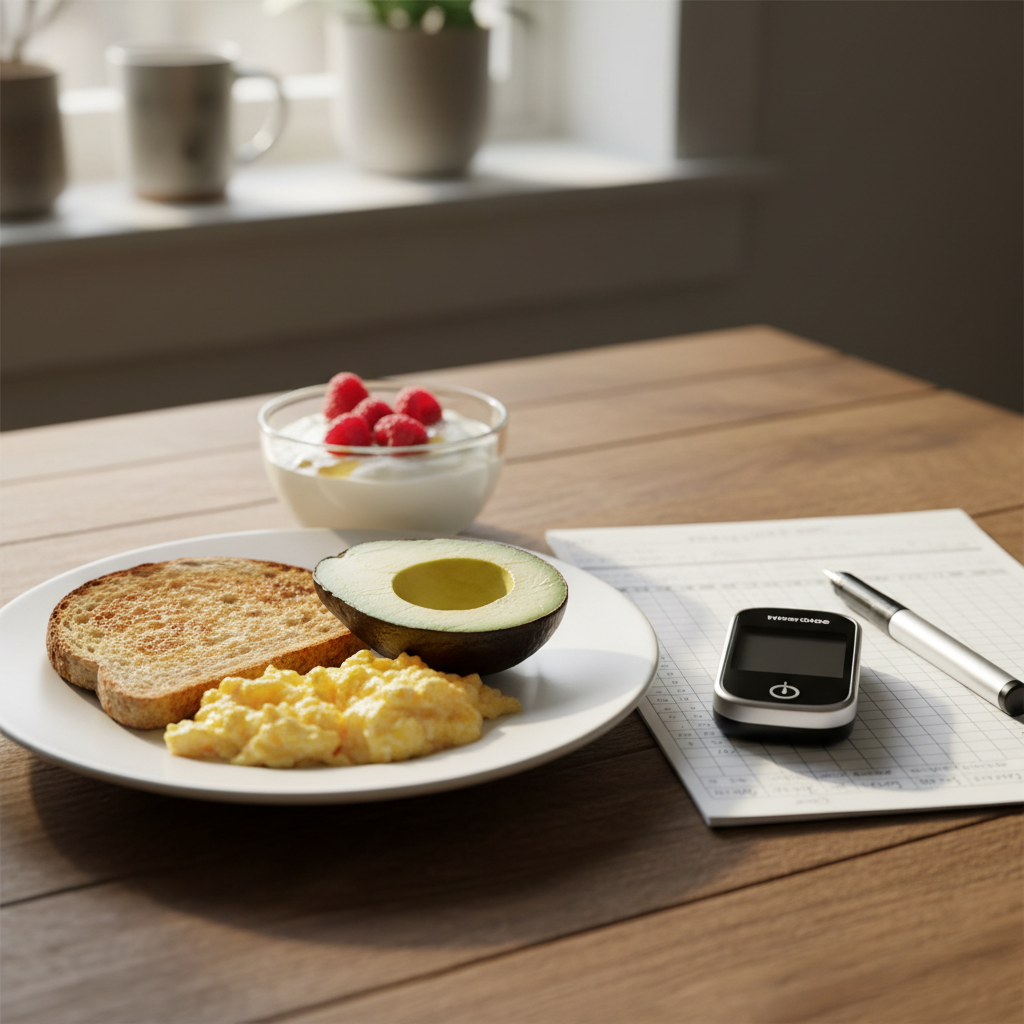
The 3-hour test came back high, and now there is a glucose meter on the counter, a stack of handouts, and an appointment with a dietitian that is still two weeks out. In between, you still have to eat. That gap between the diagnosis and the first real conversation about food is where people panic, and where the worst internet advice gets followed.
This post is the companion to the one on what to eat before a glucose test in pregnancy. That one was about the test. This one is about the weeks after it. One rule sits above everything here: the plan from your OB, midwife, dietitian, or diabetes educator overrides anything on this page. They have your numbers and I do not.
The short version
- The targets: fasting under 95 mg/dL, and either under 140 one hour after a meal or under 120 two hours after. Your clinic picks the one-hour or two-hour check.
- Carbs stay in. The ADA's floor for pregnancy is 175 grams of carbohydrate a day. Spread them across three meals and two or three snacks, and the meter usually calms down.
- Breakfast is the hardest meal. Keep it smaller on carbs and heavier on protein than the rest of the day.
- Walk after meals. ACOG suggests 10 to 15 minutes after each one, on top of 30 minutes of moderate exercise most days.
- If the fasting number will not move on a good diet, that is biology. Insulin is the standard next step, and it does not cross the placenta.
- Get retested 4 to 12 weeks after the baby arrives, and then every one to three years for the rest of your life.
The numbers your meter should show
Start with the targets, because every food decision below exists to hit them. The American Diabetes Association's 2025 patient handout on blood glucose monitoring in gestational diabetes gives three lines:
- Fasting, when you wake and before breakfast: under 95 mg/dL
- One hour after the start of a meal: under 140 mg/dL, or
- Two hours after the start of a meal: under 120 mg/dL
The ADA's 2026 Standards of Care, section 15 lists the same targets as Recommendation 15.8 and notes that the clock starts when you take the first bite. Most clinics ask for four checks a day: fasting plus one after each main meal. Some ask for more. ACOG's patient FAQ on gestational diabetes says to keep a record of every reading and bring it to each prenatal visit, and it notes that phone apps and emailed logs count.
Here is the part that I think should be printed at the top of every handout. The same ADA section says that studies suggest about 70 to 85 percent of people diagnosed with gestational diabetes can manage it with lifestyle changes alone. Food and walking are the treatment for most people, and the meter is how you find out whether you are one of them.
Carbs stay in: the floor is 175 grams a day
The first instinct after a diagnosis is to cut carbs to nothing. It feels logical. The guidelines say not to.
The ADA's pregnancy section gives the Dietary Reference Intake minimums for anyone who is pregnant: at least 175 grams of carbohydrate, at least 71 grams of protein, and 28 grams of fiber a day. It then says that an eating pattern that severely restricts any macronutrient should be avoided, and it names the ketogenic pattern specifically. Your body answers a carb shortage by making ketones, and the ADA notes that some clinics check fasting ketones for exactly that reason.
So the job is to spread the carbs out across the day. UF Health's gestational diabetes diet page puts it simply: less than half your calories should come from carbohydrate, and you should eat three small-to-moderate meals and at least one snack, never skipping either. ACOG says three meals and two to three snacks a day is the common prescription, and that a snack at night is often part of it.
What 175 grams looks like when it is spread out:
- Breakfast: 15 to 30 grams. One slice of whole-grain toast is about 15. A cup of plain Greek yogurt is around 8.
- Lunch and dinner: 30 to 45 grams each. Half a cup of cooked brown rice or a medium sweet potato is roughly 20 to 25.
- Two or three snacks: about 15 grams each. An apple, a cup of milk, or six whole-grain crackers.
Those ranges are a starting point that many dietitians use. Yours will adjust them to your meter, and that is the whole point of the meter.
The other half of every plate is what keeps the carbs from spiking. Tegan Bissell, a registered dietitian and diabetes educator at the Cleveland Clinic, calls non-starchy vegetables "freebie" foods in Cleveland Clinic's guide to the gestational diabetes diet, because broccoli, green beans, peppers, cucumbers, and salad greens carry almost no carbohydrate. Pair every carb with protein or fat, and it digests more slowly.
A day of eating that usually works
Here is a day built from the Cleveland Clinic and UF Health examples, with the portions those pages give. Treat it as a template to test against your own readings, and change whatever the meter tells you to change.
Breakfast is the meal most people get wrong. Every diabetes educator I have read says insulin resistance runs highest in the morning, so the same bowl of oatmeal that reads 115 at lunch can read 160 at 8 a.m. Bissell's sample breakfast is 6 ounces of low-fat Greek yogurt, 12 almonds, and a handful of berries. Two eggs with a slice of whole-grain toast and half an avocado is another one that tends to hold. Cereal with milk and a glass of juice is the breakfast the meter punishes hardest.
- Breakfast: Greek yogurt with almonds and berries, or eggs with one slice of whole-grain toast
- Morning snack: a cheese stick and a small apple, or half a cup of cottage cheese
- Lunch: one slice of 100 percent whole-wheat bread, 3 ounces of grilled chicken, a slice of cheese, a pile of broccoli, and berries
- Afternoon snack: carrot sticks with hummus, or an ounce of mixed nuts
- Dinner: 6 ounces of salmon, half a cup of brown rice, half the plate green beans, a tablespoon of butter or olive oil
- Bedtime snack: a tablespoon of peanut butter on whole-grain crackers, or a cup of milk

The bedtime snack deserves its own sentence. ACOG says small snacks, "especially at night," help avoid dips and spikes, and the reason is the fasting number. A long gap between dinner and breakfast gives your liver time to release glucose overnight, and a small snack with protein and a little carbohydrate before bed often brings the morning reading down. It does not work for everyone. Test it for a week and let the meter decide.
A few things that come up constantly:
- Fruit is fine, in a serving, with something. A medium apple or a cup of berries alongside yogurt or nuts behaves very differently from a glass of juice. UF Health lists 2 to 4 fruit servings a day and prefers whole fruit over juice every time.
- Milk counts as a carb. A cup has about 12 grams. UF Health lists 4 servings of low-fat dairy a day, so it is in the plan, but count it.
- Read the label on yogurt. Flavored yogurt can carry 20 grams of added sugar, and UF Health flags both added sugar and artificial sweeteners as things to watch.
- Eat the same kinds of things at the same times. Megan Asterino-McGeean, a diabetes educator quoted in the Cleveland Clinic piece, recommends consistent meal times and consistent food types because the meter is easier to read when the inputs do not change every day.
Walking after meals
ACOG's FAQ gives two pieces of exercise advice. The first is the standard pregnancy recommendation: 30 minutes of moderate aerobic exercise at least five days a week, or 150 minutes total. The second is specific to gestational diabetes: "in addition to weekly aerobic exercise, it's a good idea to add a walk for 10 to 15 minutes after each meal."
I want to be honest about the evidence on that second one, because it is thinner than the advice sounds. A randomized crossover study from Boise State compared three 10-minute walks after meals with one 30-minute walk a day in women with and without gestational diabetes and found that neither changed the one-hour or two-hour post-meal readings. The study was small and the walking was moderate. The authors called the evidence on timing "largely inconclusive."

I would still take the walk. The 150 minutes a week has the stronger evidence behind it, and three short walks are an easy way to get there. Working muscle pulls glucose out of the blood without needing insulin, which is why so many people see a lower two-hour reading on the days they walk. And it is free, it takes no planning, and it gets you out of the kitchen at the exact moment the dessert conversation happens.
When food is not enough
Some numbers will not move no matter what you eat. The fasting reading is the usual culprit. It is set overnight by your liver and your placenta's hormones, and no dinner choice fully controls it. If your fasting number sits above 95 for a week on a good diet, that is a conversation about medication, and it is not a failure.
ACOG's FAQ says insulin is the recommended medication in pregnancy because it does not cross the placenta. The ADA's 2026 Standards agree, calling insulin the preferred agent for gestational diabetes in Recommendation 15.17, and in Recommendation 15.21 they say metformin and glyburide should not be first-line because both cross the placenta. Some ob-gyns still prescribe a pill in specific situations, and that is a decision for you and them.
If you start insulin, the targets tighten slightly. The ADA's Table 15.2 gives a fasting range of 70 to 95 and a one-hour range of 110 to 140 for insulin-treated gestational diabetes, and your checks may move to before meals and bedtime as well. Your eating plan does not change much. You still want the carbs spread out, you still want the bedtime snack, and you still want the walk.
After the baby
For most people the diabetes goes away when the placenta does. The follow-up matters more than it sounds. The ADA's Recommendation 15.30 says to screen at 4 to 12 weeks postpartum with a 75-gram glucose tolerance test, and 15.31 says to keep screening for type 2 diabetes or prediabetes every one to three years for life. The CDC's page on gestational diabetes puts the reason plainly: "About half of women with gestational diabetes go on to develop type 2 diabetes."
That is a sobering number and also a useful one. Gestational diabetes is the earliest warning most people ever get about their metabolism, years before anything else would show up. The same habits that get you to delivery, protein at breakfast, carbs spread through the day, a walk after dinner, are the habits that lower that lifetime risk. The ADA also notes that breastfeeding lowers the later type 2 risk, so that counts too.
Put the postpartum test on the calendar before the baby comes. In the fog of the first three months it is the appointment most likely to get dropped.
How BodyBuddy helps
A gestational diabetes plan is a lot of small instructions on a lot of paper: carb grams per meal, four meter checks a day, a snack at 9 p.m., a walk after dinner, a log to bring to Thursday's appointment. Each one is easy. Doing all of them every day for twelve weeks is the hard part. BodyBuddy is an AI coach that texts you every day over iMessage, and it is built for exactly this stretch.
Upload a photo or PDF of the meal plan from your dietitian or the handout from your clinic in the BodyBuddy app and it turns the plan into daily steps, then texts you through the day so the two of you keep it going. Text it a photo of your plate and it tells you the carbs, protein, and calories on it, which is how you learn what 30 grams actually looks like in your own kitchen. Text it your meter reading after lunch and it keeps the log with your clinic's target line on it, so the record you bring to the visit is already written. There is a short guide on importing a doctor's or dietitian's plan if you want to see how the upload works.
BodyBuddy is not medical care and does not replace your OB, midwife, dietitian, or diabetes educator. It does not decide whether you need insulin; your practice does. It helps you follow their plan.
FAQ
What should I eat for breakfast with gestational diabetes?
Something small on carbohydrate and heavy on protein. Morning insulin resistance is the highest of the day, so the Cleveland Clinic's sample breakfast of Greek yogurt, almonds, and berries, or eggs with one slice of whole-grain toast, tends to hold where cereal and juice do not. Test your own breakfast for three mornings and keep the one that reads under your target.
Can I eat fruit with gestational diabetes?
Yes. UF Health lists 2 to 4 servings a day and prefers whole fruit over juice. Eat it as a serving, with protein or fat alongside, and avoid it at breakfast if your morning numbers run high.
What is a good bedtime snack for gestational diabetes?
A small amount of carbohydrate with protein: peanut butter on whole-grain crackers, a cup of milk, or cheese with an apple. ACOG notes that night snacks help avoid overnight dips and spikes. Try one for a week and compare your fasting readings.
Why is my fasting blood sugar high when I ate well?
Because the fasting number is set overnight by your liver and your pregnancy hormones. Yesterday's dinner has only a small say in it, and diet moves it less than any other reading. If it stays above 95 for a week, tell your care team; insulin is the standard next step, and the ADA says it is the preferred medication in pregnancy.
Does gestational diabetes go away after birth?
Usually, yes. Your blood sugar typically returns to normal once the placenta is delivered. The ADA recommends a 75-gram glucose test at 4 to 12 weeks postpartum and screening every one to three years after that, because about half of people who had gestational diabetes develop type 2 diabetes later.
What to do this week
Write your three target numbers on a sticky note and put it on the meter. Change breakfast first, because it is the reading that improves fastest. Add a 10-minute walk after dinner tonight. Try a small bedtime snack for seven nights and watch the fasting number. Log every reading, even the bad ones, because the bad ones are the information your ob-gyn needs.
If you want the plan turned into daily texts, with the carb targets, the meter checks, and the walk showing up at the right hours, upload it to BodyBuddy and let the two of you carry it to delivery.
Related BodyBuddy guides
- What to eat before a glucose test in pregnancy: the 1-hour and 3-hour tests explained
- What to eat before a HYROX race: race week, the night before, and race morning
- What to eat before a knee replacement: the 4-week prehab plan
- What to eat before a long hike: the week before, the night before, and the trail
- What to eat the week before your wedding: a 7-day plan with no crash diet
Everyone gives you a plan.BodyBuddy texts you until it happens.
BodyBuddy keeps you on track—from meals to doctor's appointments and everything in between.