
All posts
What to eat before a knee replacement: the 4-week prehab plan
The 4-week prehab plan before a knee or hip replacement: protein targets, iron and anemia, vitamin D, BMI and A1c thresholds, and the last-week countdown.
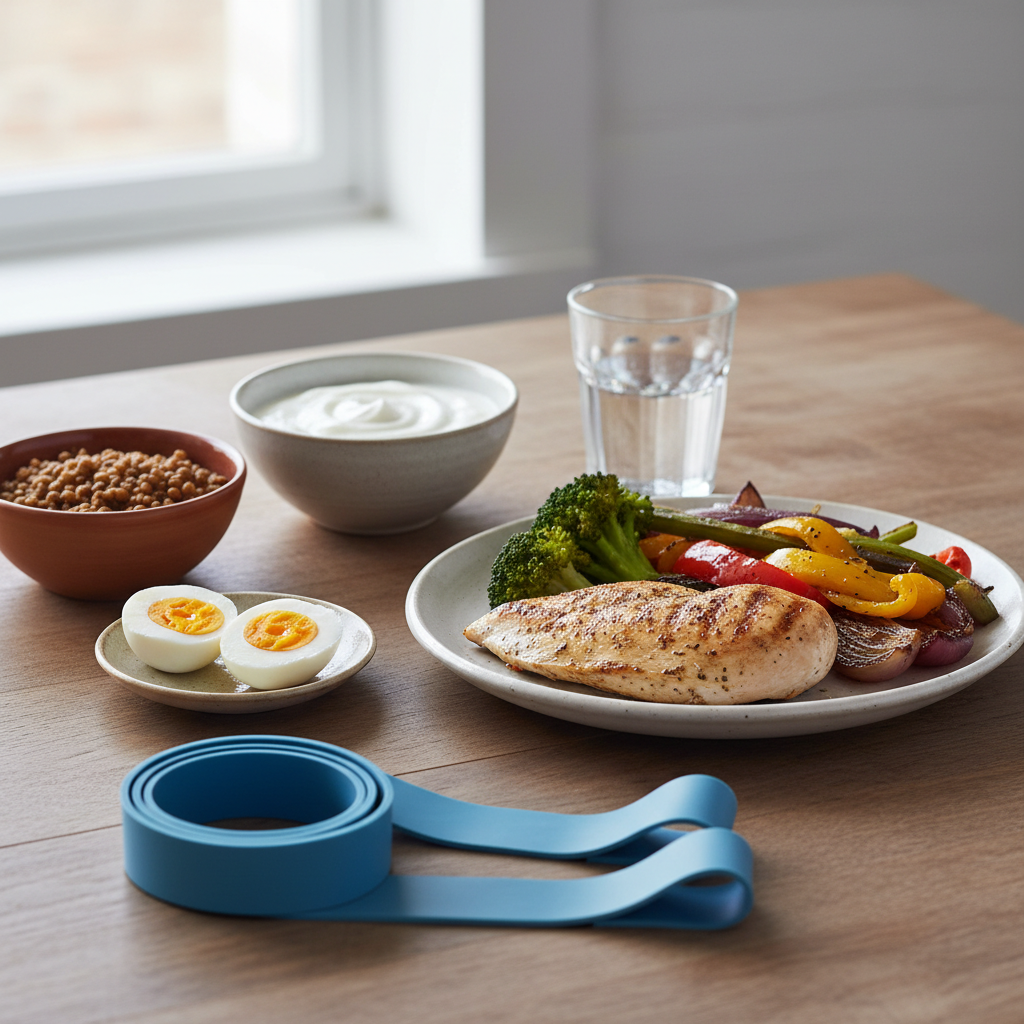
Your surgeon has given you a date for the new knee, a packet of instructions, and a blood test order. The four to six weeks before a knee or hip replacement are the one stretch where what you eat changes how fast you get back on your feet, and most of the useful work happens before the fasting rules kick in.
This post is part of a series on what to eat before a specific event, and the general rules for the night before any operation, the fasting cutoffs, and the supplements to stop are in the earlier post on what to eat before surgery. This one covers what is specific to a joint replacement. Your surgeon's packet and your pre-admission nurse override anything written here.
The short version
- Six weeks out: eat 25 to 30 g of protein at each of four meals and do the exercises on your prehab sheet. The exercise is what makes the protein count.
- Four weeks out: get the blood test done. A low hemoglobin usually means iron, and oral iron needs six to eight weeks to work.
- The weight and sugar numbers: many surgeons want a BMI under 40 and an A1c under 8. Both take months to move, and crash dieting in the last few weeks makes outcomes worse.
- The last week: stop herbal supplements, keep the iron, vitamin D, and calcium, eat normally, and follow the fasting sheet to the minute.
- The week after: stock the freezer, the fiber, and the water before you go in. You will not be standing at a stove, and the pain medication slows your gut.
Why the weeks before a knee replacement matter
A knee replacement takes muscle. A 2025 review of perioperative protein nutrition in Experimental Physiology reports a 14% drop in quadriceps muscle volume two weeks after a total knee replacement in patients over 65. The same review found older patients in hospital eating under 0.6 g of protein per kilogram of body weight a day, so the week around the operation is the week you are least likely to eat enough.
A knee replacement also takes blood. A BMJ Open meta-analysis of iron before hip and knee replacement says up to one in three people arriving for the operation are already anemic, mostly from iron deficiency, and that anemia raises the odds of a transfusion, complications, and a longer stay. The ERAS Society's consensus for hip and knee replacement puts the prevalence at 15% to 39% and grades the fix, identify and correct anemia before the operation, as a strong recommendation backed by high-quality evidence.
So the prehab window has two jobs: build muscle and build blood. Both take weeks, which is why this plan starts at six.
Six weeks out: protein at every meal and the exercise band
The protein review recommends more than 1.2 g of protein per kilogram of body weight a day before orthopaedic surgery, against the usual 0.8. For a 180 lb (82 kg) person that is about 100 g a day. Alberta Health Services' pre-surgery eating handout turns it into a plate: a meal with about 25 to 30 g of protein, four times a day.
The part most packets leave out is that protein alone did not deliver strength in the trials. The review describes knee replacement patients who took 20 g of essential amino acids twice a day from a week before surgery. They lost 5% to 12% less muscle than the placebo group and still did not reliably get stronger. The authors' explanation is that nobody was exercising. Protein is raw material. The exercise sheet is the instruction for where to put it.
The Joint PREP feasibility study from the University of Bristol ran that combination in frail patients over 65 at three NHS hospitals for up to 12 weeks before a hip or knee replacement: a physiotherapist-designed home programme with a resistance band, a 20 g protein jelly pot a day, and six phone calls. 68% kept up the exercises and 58% kept up the protein, which tells you the protein is the harder habit.
At home this looks like:
- Pick four protein anchors you will eat this week and buy them twice over. Eggs, Greek yogurt, a rotisserie chicken, canned fish, cottage cheese, and tofu all work.
- Eat protein within a few hours of your prehab exercises. Joint PREP asked for it within three.
- If you cannot eat that much, Alberta says a protein supplement with at least 10 g per serving is the backup. Pick one now, before your appetite drops.
Four weeks out: the blood test, iron, and vitamin D
Most surgeons order blood work about a month out, and the number to ask about is hemoglobin. A 2021 HSS Journal review of preoperative optimization sets the line at 12 g/dL for women and 13 g/dL for men, says to draw it four weeks before the operation, and recommends delaying surgery until it is above that line. It also reports that about 40% of joint replacement patients are iron deficient, whether or not they are anemic yet.
Iron is the usual fix, and timing is the usual problem. The BMJ Open meta-analysis found that iron given before surgery to anemic hip and knee patients cut the risk of a transfusion by 39% across 2,178 people and shortened the hospital stay by about two days. It also notes that in most trials oral iron was given for less than the six to eight weeks it needs, which is why some clinics give an infusion when the date is close. If yours is low, ask whether the plan is tablets or an infusion.
Vitamin D is the quieter number. A 2024 meta-analysis in JBJS Reviews covering 146,054 knee replacement patients found that people who were deficient had worse function scores, more revisions, infections, and stiffness, and longer stays, and that supplementation improved outcomes in 6 of the 10 studies. If yours is low, your surgeon sets the dose, and the HSS handout below lets you keep taking vitamin D, calcium, and iron when everything else gets stopped.
Weight, BMI, and A1c: the numbers some surgeons check
Two thresholds come up at the first consult. The HSS Journal review recommends delaying surgery for a BMI of 40 or above and sets an A1c threshold of 7.5%. Cleveland Clinic's orthopaedic optimization program fast-tracks anyone with a BMI of 40 or higher or an A1c above 8% to a metabolic team, because an A1c above 8 carries a higher infection risk after a joint replacement. The exact number is your surgeon's call, and it is worth asking.
Here is the honest part. Those numbers move over months. Cleveland Clinic plans four to six months of work before a joint replacement, and saw A1c fall 1 to 3 points over three months with that support. What does not work is losing weight fast at the end. A 2024 analysis of the NSQIP database looked at hip replacement patients who lost more than 10% of their body weight in the six months before surgery and found longer stays, more readmissions, more returns to the operating room, and more complications. Starving yourself toward a cutoff makes you a worse candidate on the day.
If you are near a threshold, ask your surgeon the number and the date it will be checked, then count the weeks. If it is a month away, the protein plan above is the plan, and a very low calorie diet is the thing the data warns against.

The last week: the countdown
The last week is about not undoing six weeks of work. The HSS total joint replacement guide is the most specific hospital handout I found for this stretch.
- Fourteen days out: stop all nutritional and herbal supplements. The exceptions, in HSS's words, are calcium, iron, and vitamin D. Keep taking those.
- Smoking and alcohol: the ERAS consensus asks for four weeks or more without cigarettes, graded strong with high-quality evidence, and recommends alcohol cessation programs for heavy drinkers.
- The day before: your regular diet, protein meals included. The night before, HSS asks for 20 to 24 oz of clear fluids and no solid food after midnight.
- The morning of: clear fluids only, at least 20 oz before you arrive, and if your sheet says so, a 10 oz carbohydrate drink three hours before surgery. The ERAS consensus allows clear fluids until two hours before anesthesia and solids until six, and says the carb drink may help how you feel but is not an essential routine step for joint replacement.
- Your medication list, including the iron and any diabetes drugs, goes in the bag.
Stock the house for a week off your feet
You will come home on a walker or crutches, and for several days you will not carry a plate across the kitchen. HSS tells patients to prepare meals ahead and store them in the freezer, and to move anything you use regularly to arm height. The shopping has two aims.
Protein, because the muscle loss peaks in the first two weeks. Buy things that need no cooking and one hand: Greek yogurt, cottage cheese, hard-boiled eggs, sliced rotisserie chicken, canned tuna, and the protein shake you chose earlier. Freeze chili or lentil soup in single servings you can microwave standing on one leg.
Fiber and water, because the HSS guide names anesthesia and pain medication as the reasons constipation is so common after a joint replacement. It warns against bulk fiber supplements, which make things worse if you are not drinking enough, and describes starting with a stool softener and a senna laxative. Food fiber is safer: prunes, pears, oats, beans, and berries.
How BodyBuddy helps
A prehab packet is twenty pages read once in the car. BodyBuddy is an AI coach that texts you every day over iMessage, built for the stretch between the consult and the operation.
Upload a photo or PDF of your surgeon's packet in the BodyBuddy app and it turns it into a daily plan: the protein target, the exercise days, when the iron starts, when the supplements stop, and the fasting cutoff for your surgery time. Then it texts you each day so the two of you get it done together. Ask it whether the packet says to keep taking vitamin D and it answers from your own sheet.
Text it a photo of dinner and it tells you the protein, calories, and carbs on the plate. That is the easiest way I know to learn whether dinner got you to 30 g, and the running count is what turns a target into a habit.
After the operation, upload the discharge sheet and the physical therapy plan and the daily texts carry on through recovery, with the laxative plan, the exercise reps, and the protein count still in view. There is a page about that at bodybuddy.app/coaching/post-op-recovery.
BodyBuddy is not medical care and does not replace your surgeon or physical therapist. It helps you follow their instructions. For a fever, a leaking wound, calf pain, or chest pain after surgery, call the office or 911.
FAQ
How long before knee replacement surgery should you stop eating?
Most hospitals ask for no solid food after midnight. The ERAS consensus allows solids until six hours before anesthesia and clear fluids until two hours before, and HSS asks for nothing at all in the three hours before the operation. Your pre-admission sheet sets the exact time.
Should I lose weight before a knee replacement?
Only slowly, and only if your surgeon has set a target. Many surgeons use a BMI cutoff of 40. Losing more than 10% of your body weight in the six months before a hip replacement was linked to more complications in a large database study, so a crash diet in the final month is the one thing to avoid.
Should I take iron before knee replacement surgery?
If your preoperative hemoglobin is low, usually yes, and your surgeon prescribes it. Iron before hip and knee replacement cut transfusions by 39% in a meta-analysis of anemic patients. Oral iron needs six to eight weeks, so ask for the blood test early, and do not start iron on your own without a result.
Can I drink coffee the morning of knee replacement surgery?
Black coffee is on HSS's clear fluid list, so it is usually fine until the cutoff. Milk and cream break the fast. If your sheet says water only, follow the sheet.
What to do this week
Open the packet and find three things: the protein target if it gives one, the date of the blood test, and the exercise sheet. If there is no blood test date, call and ask for one at least four weeks out. Then buy four protein anchors and a resistance band, and cook one freezer meal this weekend so it is waiting by the time you are on crutches.
If you want the packet turned into a daily text with a running protein count, upload it to BodyBuddy and let it carry the six weeks.
Related BodyBuddy guides
- What to eat the week before your wedding: a 7-day plan with no crash diet
- What to eat before a blood test: which labs need fasting and what breaks it
- What to eat before a colonoscopy: the 3-day countdown
- What to eat before wisdom teeth removal (and what to stock for the week after)
- What to eat before surgery: a two-week pre-op nutrition plan
Everyone gives you a plan.BodyBuddy texts you until it happens.
BodyBuddy keeps you on track—from meals to doctor's appointments and everything in between.