All posts
What to eat before wisdom teeth removal (and what to stock for the week after)
The fasting rule for sedation, what to eat the night before and the morning of, and a protein-first soft-food list for the week after wisdom teeth removal.
Your oral surgeon gave you a date, a fasting rule, and a prescription to fill on the way home. The food part of the week is on you, and it is mostly a shopping problem. The week after is where people get caught short, standing in front of an open fridge on day two with nothing they can swallow.
This post is part of a series on what to eat before a specific event, after the one on what to eat before surgery. Your surgeon's pre-op and post-op sheets override anything on this page, and the fasting rule in particular is theirs to set.
The short version
- A few days out: eat normally, have a proper protein dinner the night before, and do the soft-food shop now.
- The fasting rule: with IV sedation or general anesthesia, most offices say no food for 6 to 8 hours and clear liquids until 2 hours before. Local anesthetic only usually means a normal light meal first. Your sheet wins.
- The morning of: clear liquids until the cutoff if your sheet allows them, short sleeves, and someone else drives.
- Days 1 and 2 after: cool or lukewarm liquids and smooth foods. No straws, nothing hot, nothing fizzy.
- Days 3 to 7: soft solids like eggs, soft pasta, mashed potatoes, and flaky fish. Still nothing crunchy, seedy, or sticky.
Why the food rules exist: the clot
Every rule on the after-surgery sheet protects one thing, the blood clot that forms in each empty socket. Cleveland Clinic's dry socket page explains what happens when it fails: the clot does not form or gets knocked loose, and the bone and nerves underneath are exposed. That is dry socket. The same page puts the odds at about 2% to 5% of all extractions, more common after wisdom teeth, usually showing up within the first three days. If you have no symptoms by day five, you are likely in the clear. Smokers are more than three times as likely to get it. Straws and hard swishing are on the list of causes too.
So the food rules are clot rules. Straws create suction inside the mouth, which the University of Rochester's oral surgery handout says can pull the clots out of the sockets. Cleveland Clinic's wisdom teeth removal page puts carbonated drinks and alcohol in the same category and asks for five days off both. Hot liquids can worsen swelling or bleeding, per UMass Memorial Health. Seeds and small grains get trapped in the sockets. I find a rule easier to keep once I know what it is for, and here it is a clot the size of a pea.
A few days out: eat normally and shop
The week before calls for no special diet. Eat the way you usually do. A few things do matter.
- Have a real dinner the night before, with a solid serving of protein. Alberta Health Services' pre-surgery eating handout puts a protein meal at about 25 to 30 grams, which is a palm-sized piece of chicken or fish, three eggs, or a cup of Greek yogurt. You will under-eat for several days after this, so make the last normal meal count.
- Do the soft-food shop now, while you can chew and drive. The lists are further down.
- Tell the surgeon about every pill and supplement you take, and do not stop any on your own. Cleveland Clinic's instructions are plain: list all medications, vitamins, and supplements, and talk to your provider before stopping anything. Some surgeons pause fish oil and similar blood-thinning supplements. That call is theirs.
- Alcohol is off the table. The University Dental Hospital of Manchester's IV sedation leaflet asks for none in the 48 hours before sedation because it changes how the drugs work, and no smoking for 24 hours before. After surgery, Rochester wants no smoking for seven days because of dry socket.
The fasting rule
How long you fast depends on the kind of anesthesia you are getting, and this is the one place where you follow the sheet to the minute.
The American Society of Anesthesiologists' guideline, summarized in this Cleveland Clinic Journal of Medicine piece, allows a light meal up to 6 hours and clear liquids up to 2 hours before an elective procedure under general anesthesia. The 2023 ASA update reaffirmed the 2-hour clear-liquid rule and noted that up to 400 mL (about 13 ounces) is an appropriate amount. Its examples of noncaloric clear liquids are water, broth, black tea, and black coffee.
Oral surgery offices tend to run stricter. Cleveland Clinic says people "typically fast for six to eight hours" before sedation. Manchester's dental hospital asks for two or six hours without food depending on your history, with water and clear fluids allowed until two hours before. Some offices still say nothing at all from midnight. The fast keeps your stomach empty so nothing comes up and goes into your lungs while you are sedated, and each surgeon sets their own margin.
If your sheet has no fasting instruction, that usually means local anesthetic only, an injection that numbs the gum while you stay awake. The practical move there is a normal light meal an hour or two before you go, because you will not want to chew for the rest of the day. If you are unsure, ask. The office answers "can I eat breakfast?" every morning.
The morning of
- If clear liquids are allowed, have water or black coffee until the cutoff, then stop. Nothing with milk, pulp, or fizz. If you are local-only, eat the light meal.
- Take your usual medications at the usual time unless the office said otherwise, and bring them with you. That is Manchester's instruction.
- Wear loose clothing with short sleeves. The sedation team needs your arm for a blood pressure cuff and an IV line. Manchester also asks for no nail varnish, which interferes with the monitors.
- Someone else drives. Cleveland Clinic says no driving for at least 24 hours after sedation. Manchester wants a responsible adult in the building before they start and with you for the 24 hours after.
- If you slipped and ate, say so at check-in. A rescheduled appointment beats the alternative.
Days 1 and 2: cool, smooth, and nothing through a straw
Rochester's handout is the most specific I found on the first day. Nothing to eat or drink for the first hour after surgery. After that, lots of liquids and soft, cool foods, with hot food and drink off the menu for 24 hours. No rinsing or brushing on day one. The AAOMS patient page says to drink from a cup or a squeeze bottle instead of a straw, and from the day after surgery to rinse gently with half a teaspoon of salt in a glass of warm water.
In a bowl, days one and two look like this:
- Greek yogurt, cottage cheese, or a protein drink in a glass. UMass Memorial lists thin smoothies, milkshakes, protein drinks, and milk once the bleeding stops.
- Smoothies eaten with a spoon, made without seeds or berry skins.
- Lukewarm broth or a blended soup, cooled past steaming.
- Applesauce, pudding, custard, Jell-O, mashed banana, and ice cream, all on Rochester's day-of list.
- Still water, lots of it. UMass Memorial rules out sodas and sparkling water, and Cleveland Clinic keeps them out for five days.
Alcohol stays out while you are on pain medication, which is UMass Memorial's rule, and AAOMS adds that it slows healing.
Days 3 to 7: soft solids, still nothing crunchy
By day three most people can manage food that needs a little chewing. Rochester's list for "after the first few days" is fish, chicken, meatloaf, mashed potatoes, cooked vegetables, soups, and cereals. Healthline's soft-food list starts day three with scrambled eggs, instant oatmeal, and toast, and says many people are back to normal eating within a week.
What works in this stretch:
- Scrambled or soft-boiled eggs
- Well-cooked pasta with a smooth sauce
- Mashed potatoes, with butter or cheese for calories
- Flaky baked fish, which falls apart with a fork
- Shredded rotisserie chicken in soup
- Well-cooked vegetables: carrots, squash, cauliflower
- Oatmeal, soft bread without the crust, soft tofu, refried beans
Off the list for at least the first week, from Rochester, Healthline, and UMass Memorial combined: chips, hard pretzels, popcorn, nuts, seeds, jerky, rice and quinoa (the grains lodge in the sockets), anything acidic or spicy, and anything sticky or chewy. UMass Memorial keeps crunchy, chewy, and sticky foods out for two weeks, and Cleveland Clinic brings them back around weeks three and four.

The protein-first shopping list
Here is my opinion, and the reason this post exists. Most soft-food lists are dessert lists. Pudding and ice cream get you through day one, but a week of them leaves you underfed while your gums rebuild tissue. Alberta's handout puts the pre-surgery target at 25 to 30 grams of protein four times a day, and the food being soft is no reason to abandon that number.
Buy the soft protein first, then the rest:
- Plain full-fat Greek yogurt, cottage cheese, and a few single-serve protein drinks. A tub of unflavored protein powder stirs into mashed potatoes, oatmeal, and smoothies, which Alberta suggests for anyone with a low appetite.
- Eggs, a dozen at least, and milk or soy milk for smoothies and oatmeal.
- A rotisserie chicken and a piece of salmon or cod for day three onward.
- Soft tofu and a can of refried beans.
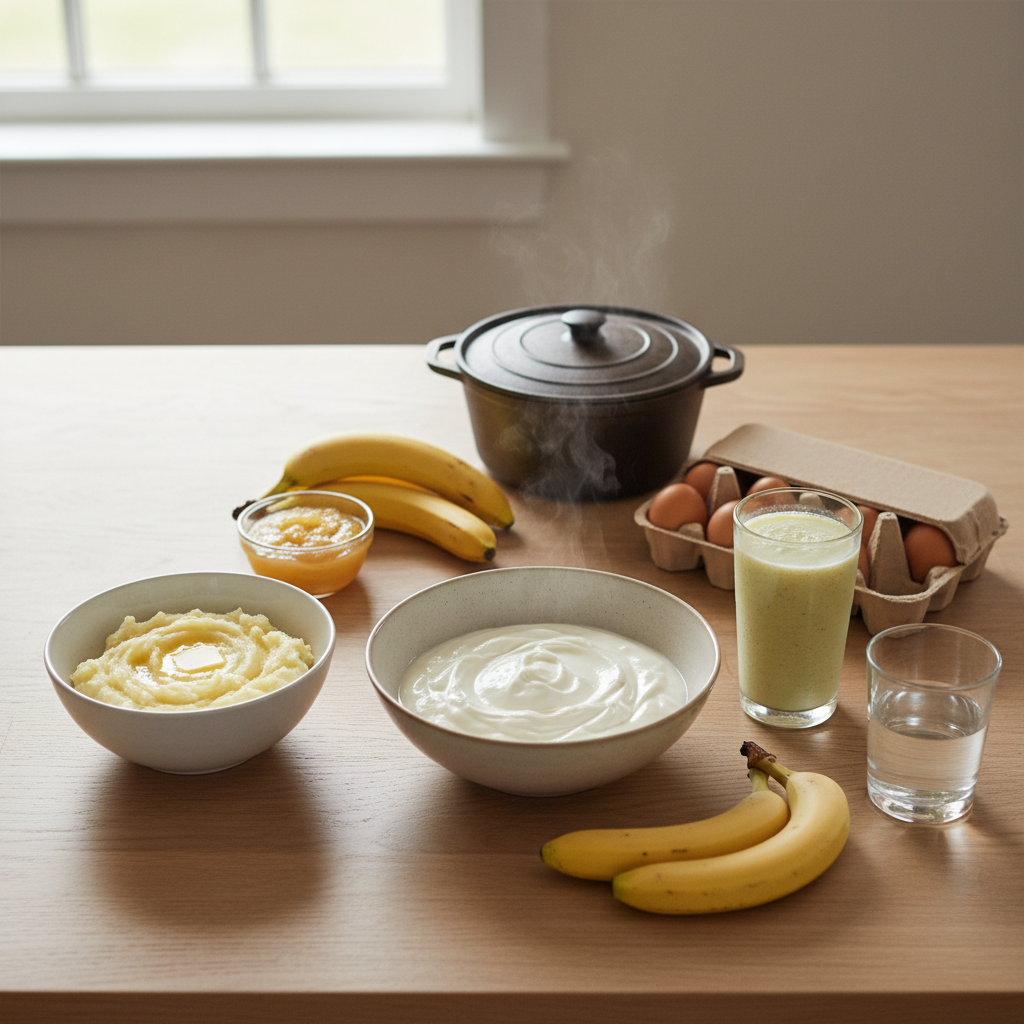
- Then the filler: potatoes, bananas, applesauce, broth, a blended soup or two, oats, soft bread, pudding, and ice cream.
Make a pot of soup the day before and portion it. Buy a squeeze bottle if you tend to reach for straws.
How BodyBuddy helps
Everyone reads the post-op sheet once, in the car, with a mouth full of gauze. BodyBuddy is an AI coach that texts you every day over iMessage, built for the stretch between an appointment and doing what the sheet says.
Upload a photo or PDF of your surgeon's pre-op and post-op instructions in the BodyBuddy app and it turns them into a daily plan: the fasting cutoff, when the gauze comes out, when the salt-water rinses start, how long the no-straw rule runs, and the signs that mean you call the office. Then it texts you each day to help you stick to it. Ask it whether you can have coffee on the morning of and it answers from your own sheet.
During recovery, text it a photo of whatever you managed to get down. A bowl of yogurt, half a plate of eggs, or a smoothie all count, and it tells you the protein and calories so you can see whether you are eating enough while your appetite is low. The two of you get it in every day, even when the day is yogurt and broth.
There is a page about dental recovery at bodybuddy.app/coaching/dental.
BodyBuddy is not dental care and does not replace your oral surgeon or dentist. It helps you follow their instructions. For bleeding that will not stop, pain that gets worse after day three, or a fever, call the office.
FAQ
How many hours before wisdom teeth removal should I stop eating?
With IV sedation or general anesthesia, most oral surgery offices ask for 6 to 8 hours without food. The ASA guideline allows a light meal up to 6 hours before, but surgeons often set a longer margin. Your office's sheet is the number that counts.
Can I drink water before wisdom teeth removal?
Often yes, until 2 hours before, which is the ASA clear-liquid rule and what Manchester's dental hospital follows. Water, black coffee, and black tea count as clear. Some offices still say no water at all, so check the sheet.
Can I eat before wisdom teeth removal with local anesthetic?
Usually yes. Local anesthetic numbs the gum while you stay awake, so a full stomach carries none of the risk it does under sedation. A normal light meal an hour or two before is sensible. Confirm with the office, since some pair local with sedation.
When can I eat solid food after wisdom teeth removal?
Soft solids like eggs, mashed potatoes, soft pasta, and flaky fish are usually fine from about day three. Crunchy, chewy, and sticky foods wait at least a week, and UMass Memorial says two. If chewing hurts, go back a step for a day.
Why can't I use a straw after wisdom teeth removal?
A straw creates suction in the mouth that can pull the blood clot out of the socket, which causes dry socket. Rochester asks for a full week without one. Drink from a cup or a squeeze bottle.
What to do this week
Put the fasting cutoff and the no-straw end date in your calendar. Do the soft-food shop now, protein first, and make one pot of soup before the day. Confirm who is driving and that they can stay. Then put the post-op sheet on the fridge.
If you would rather have the sheet turned into daily texts, with a running count of whether you are eating enough, upload it to BodyBuddy and let it carry the week.
Related BodyBuddy guides
- What to eat before a blood test: which labs need fasting and what breaks it
- What to eat before a colonoscopy: the 3-day countdown
- What to eat before surgery: a two-week pre-op nutrition plan
- What to eat the week before a marathon: a 7-day carb-loading plan
- Cristiano Ronaldo's Daily Routine: Diet, Workout, Sleep & Recovery
Everyone gives you a plan.BodyBuddy texts you until it happens.
BodyBuddy keeps you on track—from meals to doctor's appointments and everything in between.