
All posts
What to eat before a colonoscopy: the 3-day countdown
What to eat before a colonoscopy, day by day: when to stop iron, the low-fiber days, the clear-liquid list, the colors to skip, and when to stop drinking.
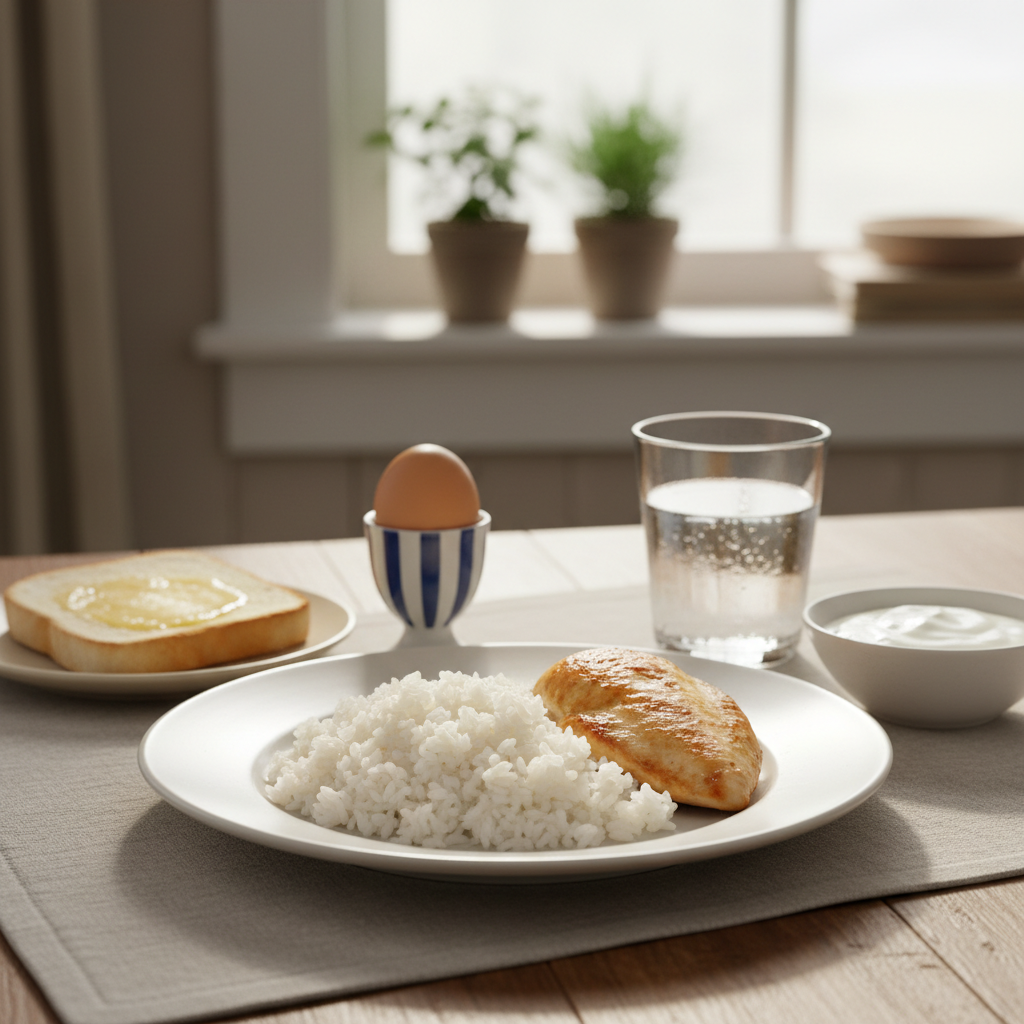
The colonoscopy itself takes about half an hour and you sleep through it. The part people dread is the three days before, when the instruction sheet starts dictating what you eat. Most of that dread comes from not knowing what is coming, so here is the whole countdown in one place, with the reasons behind each rule.
This is part of a series on what to eat before a specific event, and this one covers what to eat before a colonoscopy. Your clinic's prep sheet overrides anything on this page. Clinics differ on the exact days and hours, and a prep done to the wrong schedule can mean a repeat procedure.
The short version
- Five to seven days out: stop iron supplements and any multivitamin with iron in it. Ask your prescriber about blood thinners and diabetes medication.
- Three days out: switch to a low-fiber diet. No fruit, vegetables, nuts, seeds, beans, corn, or whole grains.
- The day before: clear liquids only, nothing red, purple, or orange. The first half of the prep goes down in the evening.
- The morning of: the second half of the prep, four to six hours before the procedure. Stop all liquids when your sheet says, usually two to four hours before arrival.
Why the diet before a colonoscopy matters
The doctor is looking for polyps, some of them a few millimeters across, on the inside wall of a tube that is normally full of stool. Everything you eat in the last three days either clears out or stays behind as residue that hides the wall. If the view is poor, small polyps get missed, and the clinic may ask you to come back and do the whole thing again.
The US Multi-Society Task Force on Colorectal Cancer updated its bowel prep guidance in March 2025, and the headline for patients is that the diet rules have loosened. For average-risk people, the task force now recommends limiting dietary restriction to the day before, using either clear liquids or a low-fiber diet for the early and midday meals, plus a split-dose prep. The summary from the American Society for Gastrointestinal Endoscopy adds that extended restrictions offer no additional benefit for those patients.
The evidence behind that is a meta-analysis of nine randomized trials covering 1,686 adults. People allowed a low-residue diet the day before had bowel preps about as clean as people on clear liquids only, tolerated the prep better, and were nearly twice as willing to do it again.
So why do so many clinics still hand out a three-day sheet? Habit, partly, and partly because some patients are at higher risk of a poor prep (chronic constipation, opioid use, diabetes, a bad prep last time), and for them the earlier restriction still helps. I think the trend is in the right direction. I also think you should follow the sheet you were given, because the person reading your colon is the person who wrote it.
A week out: stop iron and sort out your medications
The first change happens before the diet does.
- Iron. Iron turns stool dark and sticky, and it coats the colon wall. Memorial Sloan Kettering's prep instructions say to stop iron supplements and iron-containing multivitamins five days before. Some clinics say seven. Check the back of your multivitamin, because most of them have iron in them.
- Blood thinners and aspirin. Do not stop these on your own. If a polyp is removed during the procedure, bleeding risk matters, so the doctor who prescribed the medication decides whether and when you pause it.
- Diabetes medication. Insulin and some oral medications need adjusting on the clear-liquid day, when you are eating almost nothing. Ask before the day comes.
- GLP-1 drugs. Ozempic, Wegovy, Mounjaro, and Zepbound slow stomach emptying. MSKCC asks patients on these drugs to follow a clear-liquid diet the whole day before and to stop drinking eight hours before arrival, and anesthesia teams may have their own rules. Tell the clinic you take one when you book.
Two logistics jobs belong in this week too. Buy the prep kit and all the clear liquids now, because the day before is a bad time to discover the store is out of lemon gelatin. And arrange a ride. You will be sedated and no clinic will let you drive home or take a rideshare alone.
Three days out: the low-fiber diet
If your sheet says to start a low-residue or low-fiber diet, this is usually when. Northwestern Memorial Hospital's handout is the clearest version I found, and it starts three days before the procedure.
Foods to avoid for these three days:
- All fruit and vegetables, raw or cooked, including salad, berries, dried fruit, and juices with pulp. White potatoes without the skin are the one exception.
- Whole grains: oatmeal, bran, brown rice, whole-wheat bread, granola, popcorn.
- Nuts, seeds, and anything with them in it, including seeded bread, crunchy peanut butter, and chia.
- Beans, lentils, and whole-kernel corn. Corn in particular shows up intact on the camera.
- Tough or stringy meat.
- More than two cups of milk or milk products a day.
What you can eat, and there is more here than people expect:
- Eggs, tender chicken or turkey, fish, shellfish, ground beef, tofu.
- White bread, bagels, English muffins, white rice, plain pasta, tortillas, saltines, pretzels, corn flakes, Rice Krispies.
- Plain yogurt, cottage cheese, mild cheese, within the two-cup limit.
- Butter, oil, mayonnaise, smooth peanut butter, plain gravy.
- Peeled white potatoes, mashed or baked.
- Gelatin, sherbet, plain hard candy, coffee, tea, soda.
A sample low-fiber day looks like scrambled eggs on white toast with butter, a chicken and white rice bowl at lunch, cheese and saltines as a snack, and baked fish with mashed potatoes at dinner. It is bland. It is also three days, and the blandness is the point.
If your sheet only restricts the day before, follow the sheet. The task force says that is enough for most people.
The day before: clear liquids only
This is the day the rules become absolute. From the moment you wake up, nothing solid. Only liquids you can see through when you hold the glass up to a light.
MSKCC's list of what counts:
- Water, plain or carbonated or flavored.
- Clear broth, bouillon, or consommé with no solid pieces.
- Clear juices without pulp: apple, white grape, white cranberry, lemonade.
- Clear sodas: ginger ale, Sprite, 7UP, seltzer.
- Sports drinks like Gatorade or Powerade, in the allowed colors.
- Black coffee or plain tea with no milk or creamer.
- Gelatin, flavored ices, popsicles, and hard candy, in the allowed colors.
- Clear nutrition drinks such as Ensure Clear, Boost Breeze, or Pedialyte.
The color rule trips people up every time. Red, purple, and orange dyes can coat the colon and look like blood or inflamed tissue on camera, so MSKCC says to skip anything in those colors. Cherry gelatin, grape sports drink, and orange popsicles are all out. Yellow and green are fine. Lemon gelatin is the classic for a reason.
What breaks the clear-liquid rule: milk and cream, dairy alternatives, orange juice, smoothies, protein shakes, nectars, and alcohol. If you cannot see your hand through it, it is a meal.
Drink a lot. MSKCC's target is at least one 8-ounce cup every waking hour, and the variety matters, because a day of water alone leaves you dizzy and headachy. Warm broth at lunch, a sports drink mid-afternoon, and gelatin at dinner get you through the day with your mood intact. If you have diabetes, use sugar-free versions and check your blood sugar more often than usual.
The first half of the prep usually goes down in the evening. MSKCC starts it at 5 p.m. regardless of arrival time, and other clinics say 6 or 7 p.m. Chill it, drink it through a straw, and chase each glass with something clear you like. Stay near a bathroom from then on.

The morning of: the second half and the cutoff
Split dosing is the single biggest improvement in colonoscopy prep in the last fifteen years, and the task force recommends it for everyone. Half the prep the evening before, half the morning of. The second half is the one that actually cleans the colon, because stool keeps arriving overnight.
Two times matter on the morning of:
- When to start the second half. The task force says four to six hours before the procedure. MSKCC publishes a table by arrival time, so a 10 a.m. arrival starts the second dose around 6 a.m.
- When to stop drinking everything. The task force says the prep must be finished at least two hours before the procedure, which matches the standard anesthesia rule for clear liquids. Many clinics add margin. MSKCC asks patients to stop all liquids four hours before scheduled arrival. Your sheet has a specific time on it. Set an alarm.
By the end of the second dose, what comes out should be clear or pale yellow liquid with no solid matter. If it is still brown or cloudy when you are due to leave, call the clinic before you go in. They may give you more prep or move the appointment, and either is better than an inadequate exam.
Nothing to eat until after the procedure, and that includes gum and mints.
After: the first meal
You will be hungry and a little loopy from the sedation. Start light. Soup, eggs, toast, yogurt, and plenty of water go down well in the first few hours. A big greasy meal on an empty, irritated gut is a common regret. Skip alcohol for the rest of the day because of the sedation. Gas and cramping for a few hours are normal, since air is pumped in during the exam.
By the next day you can eat normally, and you can restart iron and anything else you paused once the clinic says so.
How BodyBuddy helps
The prep sheet is three pages with five different dates and times on it, and most people read it once when it arrives. BodyBuddy is an AI coach that texts you every day, and this is the kind of sheet it is built for.
Upload a photo or PDF of your prep instructions in the BodyBuddy app and it turns them into a daily plan: the day iron stops, the day low-fiber starts, the clear-liquid day, the 5 p.m. first dose, the morning cutoff. Then it texts you each day to help you stick to it. On the low-fiber days, text it a photo of dinner and ask whether anything on the plate is on your clinic's avoid list, and it answers from the sheet you uploaded.
It helps on the other side too. If the doctor finds polyps and hands you a follow-up interval or a diet change, upload that summary and BodyBuddy folds it into the daily texts. The same thing works for any instruction sheet from a doctor or dietitian.
BodyBuddy is not medical care and does not replace your gastroenterologist or the clinic's prep nurse. It helps you follow their instructions. If the prep is not working or you cannot keep it down, call the clinic.
FAQ
Can I drink coffee before a colonoscopy?
Yes, black, on the clear-liquid day, until your stop-drinking time. Black coffee and plain tea are on MSKCC's clear-liquid list. Milk, cream, and creamers are not, so a latte breaks the rule.
What can I eat two days before a colonoscopy?
If your clinic uses a three-day low-fiber diet, two days out is still low-fiber: eggs, tender meat, fish, white bread, white rice, pasta, plain yogurt, peeled potatoes. No fruit, vegetables, nuts, seeds, beans, corn, or whole grains. If your clinic only restricts the day before, two days out is a normal day.
Why can't I have red or purple drinks?
The dyes can stain the colon lining and look like blood or inflammation on the camera. MSKCC also excludes orange. Yellow, green, and clear are safe.
What if I ate something on the clear-liquid day?
Call the clinic and tell them what and when. A small slip early in the day may be fine. A meal late in the day often means rescheduling, because the prep cannot clear solid food in time. Hiding it risks a missed polyp.
Is the low-residue diet three days or one day?
Current guidance from the US Multi-Society Task Force says one day is enough for average-risk patients. Many clinics still use three days, and people with constipation, on opioids, or with a previous poor prep benefit from the longer version. Do whatever your sheet says.
What to do this week
Read the sheet once, today, and put four things in your calendar: the iron stop date, the low-fiber start, the clear-liquid day, and the exact stop-drinking time on the morning of. Then buy the prep and the clear liquids in yellow and green, and book your ride home.
If you want all of that carried for you without re-reading the packet, upload the sheet to BodyBuddy and let the daily texts walk you to the appointment.
Related BodyBuddy guides
- What to eat before a blood test: which labs need fasting and what breaks it
- What to eat before wisdom teeth removal (and what to stock for the week after)
- What to eat before surgery: a two-week pre-op nutrition plan
- What to eat the week before a marathon: a 7-day carb-loading plan
- Cristiano Ronaldo's Daily Routine: Diet, Workout, Sleep & Recovery
Everyone gives you a plan.BodyBuddy texts you until it happens.
BodyBuddy keeps you on track—from meals to doctor's appointments and everything in between.