
All posts
17 High-Protein Fast-Food Orders: Calories and Protein
Compare 17 high-protein fast-food orders using current official nutrition data, including calories, protein, sodium caveats, and practical ordering tips.
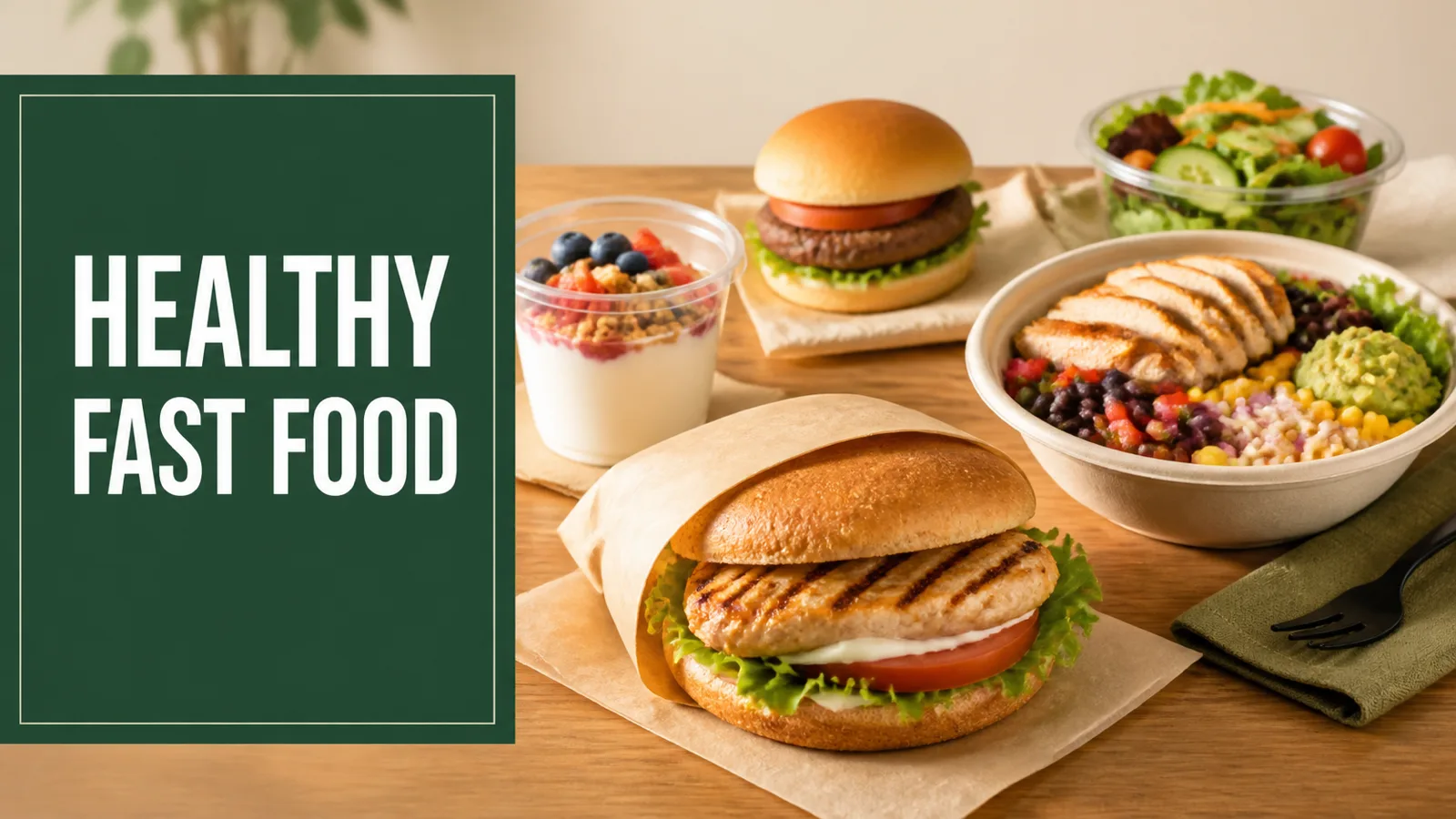
Fast food does not have to derail the way you want to eat. It also does not need to be dressed up as a perfect “clean” meal to earn a place in real life.
Sometimes you are between appointments, traveling, picking up breakfast before work, or simply too tired to cook. In those moments, the useful question is not, “Is fast food healthy?” It is, “Which available order fits my priorities better than the alternatives?”
For this guide, we prioritized orders that provide a meaningful amount of protein without automatically turning into a huge meal. Some are lean, protein-efficient choices. Others are fuller bowls or salads that include vegetables, beans, fruit, or grains. A few are richer or higher in sodium but can still be reasonable when they fit the rest of your day.
The most important distinction is that high protein does not automatically mean healthy for every person. Calories and protein are only two parts of the picture. Sodium, saturated fat, fiber, allergens, portion size, medical needs, and what else you eat all matter too.
How we selected these orders
Every calorie and protein figure below comes from a restaurant-owned U.S. nutrition page, menu, or nutrition guide available when this article was reviewed on August 12, 2026. We did not use crowdsourced calorie databases or third-party menu estimates.
We compiled this guide from official restaurant nutrition data, and no restaurant paid for inclusion or placement.
Most orders provide at least 17 grams of protein. We included one compact 12-gram snack and one custom Chipotle build whose total is transparently added from the individual ingredients in Chipotle’s own guide.
Unless stated otherwise, the numbers describe the standard item as the restaurant publishes it, including any sauce or dressing counted in that standard item. They do not include fries, chips, sugary drinks, or unlisted extras. Restaurant recipes, serving sizes, availability, and preparation can vary by location. Check the current restaurant listing when exact nutrition matters to you.
For days when you can prepare food at home, our 7-day high-protein meal plan includes exact meals, a grocery list, vegetarian swaps, and a prep schedule.

Lighter high-protein fast-food orders
These choices deliver a relatively substantial amount of protein for their calorie totals. “Lighter” does not mean low sodium or appropriate for every diet, but these are useful places to begin when protein and overall meal size are your main priorities.
1. Chick-fil-A 12-count Grilled Nuggets — 200 calories, 38g protein
The 12-count Grilled Nuggets are the standout protein-to-calorie option in this guide. Chick-fil-A lists the entrée at 200 calories and 38 grams of protein.
That number is for the nuggets alone. Dipping sauces can change the meal quickly, so choose one intentionally rather than assuming it is included in the nutrition above. Pair the nuggets with fruit, a side salad, or another fiber-containing food if you want a more complete meal.
Chick-fil-A notes that nutrition is based on standard formulations and may not reflect every customization or restaurant-level variation.
2. Starbucks Egg White & Roasted Red Pepper Egg Bites — 170 calories, 12g protein
These sous-vide egg bites are the smallest order on the list. Starbucks reports 170 calories and 12 grams of protein per standard serving.
Twelve grams may not be enough for a full meal on its own, but it can make a convenient snack or compact breakfast. It also leaves room to add fruit or another item without starting with a large calorie total. The bites contain egg and milk, and Starbucks warns that unpackaged products are handled around shared equipment.
3. Starbucks Turkey Bacon, Cheddar & Egg White Sandwich — 260 calories, 17g protein
For a more complete grab-and-go breakfast, Starbucks lists its Turkey Bacon, Cheddar & Egg White Sandwich at 260 calories and 17 grams of protein.
The sandwich combines egg whites, turkey bacon, white Cheddar, and a wheat English muffin. It is a straightforward choice when you want bread, protein, and a familiar breakfast format without moving into the calorie range of many sausage-and-croissant combinations. Store availability and exact preparation can vary.
4. Starbucks Spinach, Feta & Egg White Wrap — 290 calories, 20g protein
Starbucks’ Spinach, Feta & Egg White Wrap provides 290 calories and 20 grams of protein. The standard wrap includes egg whites, spinach, feta, and a sun-dried tomato cream-cheese spread inside a whole-wheat wrap.
It is one of the better combinations here when you want a portable breakfast with both protein and some vegetables. It also contains 840 milligrams of sodium, so someone limiting sodium may prefer a different option. Customizations can change the published values.
5. Chick-fil-A Egg White Grill — 300 calories, 27g protein
The Egg White Grill combines grilled chicken, egg whites, and American cheese on an English muffin. Chick-fil-A lists it at 300 calories and 27 grams of protein.
It is a particularly protein-forward breakfast choice, but its 990 milligrams of sodium are worth noticing. Chick-fil-A says ingredients and nutrition can differ by location. Order it as the sandwich alone if you want the published total; hash browns and sweetened drinks are separate.
6. McDonald’s Egg McMuffin — 310 calories, 17g protein
The Egg McMuffin is a familiar option made with an egg, Canadian bacon, American cheese, and an English muffin. McDonald’s lists the sandwich at 310 calories and identifies it as containing 17 grams of protein.
Those numbers cover the sandwich, not the breakfast meal. Skipping hash browns and a calorie-containing drink keeps the order aligned with the figures above. McDonald’s notes that formulation, serving size, preparation, and regional differences can affect actual nutrition.
High-protein sandwiches, strips, and bites
The next group offers useful protein in familiar fast-food formats. Several are higher in sodium, breading, or saturated fat than the lighter choices, so “high protein” should be treated as a description—not a blanket health claim.
7. Chick-fil-A Grilled Chicken Sandwich — 390 calories, 28g protein
Chick-fil-A’s Grilled Chicken Sandwich includes a grilled chicken breast, lettuce, and tomato on a multigrain bun. The official listing reports 390 calories and 28 grams of protein.
The published 390-calorie total includes one Honey Roasted BBQ packet. Additional sauces count separately, and Chick-fil-A cautions that ingredients and nutrition may differ by restaurant.
8. McDonald’s McDouble — 390 calories, 22g protein
If a burger is what you actually want, the McDouble is a more moderate option than many double-patty premium burgers. McDonald’s lists it at 390 calories, while the company’s U.S. protein guide reports 22 grams of protein.
This is the standard sandwich with two beef patties and one cheese slice. Fries and a drink are not included. It is still a salty, fast-food burger, but it can fit more easily into some calorie targets than a large burger combo.
9. McDonald’s 3-piece McCrispy Strips — 400 calories, 30g protein
Three McCrispy Strips provide 400 calories and, according to McDonald’s protein guide, 30 grams of protein.
That total is for the strips without a dipping sauce. Because they are breaded and fried, they are not nutritionally interchangeable with grilled chicken, but they offer a practical way to order a defined portion with substantial protein. Add a sauce only after checking its nutrition if calories or sodium are important to your plan.
10. Chick-fil-A Spicy Chicken Sandwich — 450 calories, 28g protein
Chick-fil-A’s standard Spicy Chicken Sandwich has 450 calories and 28 grams of protein. It is included because sometimes the sustainable choice is the item you genuinely want, ordered in a manageable format.
This sandwich contains 1,730 milligrams of sodium, which is a major caveat. Someone who has been told to limit sodium should not treat its protein content as a reason to ignore that number. It also contains milk, egg, soy, wheat, and sesame according to the restaurant’s listing.
11. Dunkin’ Turkey Sausage Sandwich on an English Muffin — 460 calories, 22g protein
Dunkin’s current U.S. nutrition guide lists the Turkey Sausage Sandwich on an English Muffin at 460 calories and 22 grams of protein.
It is a more substantial breakfast than the Starbucks and Chick-fil-A options above. It also contains 1,040 milligrams of sodium and 8 grams of saturated fat. Dunkin’ notes that seasonal conditions, ingredient substitutions, restaurant assembly, and regional differences can affect the actual result.
12. Dunkin’ Bacon & Cheddar Omelet Bites — 280 calories, 17g protein
Dunkin’s two-piece Bacon & Cheddar Omelet Bites provide 280 calories and 17 grams of protein.
They can be helpful when you want a compact breakfast without a sandwich or wrap. They are not automatically a lower-fat option: the official guide lists 10 grams of saturated fat. Think of them as a convenient protein choice, then decide whether their overall nutrition fits your needs.
Bowls and salads with protein
These orders are generally larger than the items above, but they can bring more vegetables, beans, or grains into the meal. Dressings and toppings contribute meaningful calories, so use the exact build rather than comparing only the names “bowl” and “salad.”
13. Custom Chipotle Chicken Salad Bowl — 370 calories, 42g protein
Order a salad with supergreens, chicken, black beans, fajita vegetables, and fresh tomato salsa. Skip rice, cheese, sour cream, guacamole, queso, and vinaigrette for this exact calculation.
Using the individual components in Chipotle’s official U.S. nutrition guide, the build totals 370 calories and 42 grams of protein: 15 calories and 1 gram from supergreens; 180 and 32 from chicken; 130 and 8 from black beans; 20 and 1 from fajita vegetables; and 25 and 0 from tomato salsa.
Because Chipotle employees assemble each bowl by hand, actual portions can differ. This is still one of the strongest combinations in the guide for protein plus beans and vegetables.
The same published portions total 1,235 milligrams of sodium, so the bowl is protein-efficient but not low-sodium.
14. Taco Bell Cantina Chicken Bowl — about 530 calories, 25g protein
Taco Bell describes its Cantina Chicken Bowl as seasoned rice, black beans, slow-roasted chicken, vegetables, guacamole, cheese, sour cream, and Avocado Ranch. Its official national bowls page states that the bowl has 25 grams of protein.
The 530-calorie listing includes the Avocado Verde Salsa packet served with the bowl. Taco Bell also shows a 570-calorie option that adds a Jalapeño Citrus Salsa packet. Treat the base served order as about 530 calories, and verify the build shown by your local restaurant before ordering if you need an exact number.
15. Sweetgreen Chicken Pesto Parm — 525 calories, 35g protein
The Chicken Pesto Parm includes roasted chicken, quinoa, spinach, spicy broccoli, tomatoes, parmesan, breadcrumbs, hot sauce, and pesto vinaigrette. Sweetgreen’s official current menu lists it at 525 calories and 35 grams of protein.
This is a fuller meal than grilled nuggets or an egg-white sandwich, but it also brings grains and vegetables. It contains wheat and milk. Sweetgreen offerings can change by region and season, so confirm that the local listing matches these figures.
16. Sweetgreen Kale Caesar — 545 calories, 41g protein
Sweetgreen lists the Kale Caesar at 545 calories and 41 grams of protein. Its standard build includes kale, romaine, roasted chicken, breadcrumbs, parmesan crisps, lemon, and Caesar dressing.
The dressing and cheese are already reflected in the published total, which makes the number more useful than an undressed-salad estimate. The salad contains milk, egg, fish, meat, and wheat. Availability and preparation may vary by location.
17. Panera Green Goddess Cobb Salad With Chicken — 580 calories, 40g protein
Panera’s June 2026 U.S. guide lists a whole Green Goddess Cobb Salad with Chicken at 580 calories and 40 grams of protein.
The whole salad also contains 1,980 milligrams of sodium, so it may not fit a sodium-restricted plan. Forty grams is a substantial protein total for a salad, but do not assume every Panera location is serving the identical recipe today. The company updates its nutrition guides and says bakery-cafe menus can vary. Check the current ordering screen for your location, especially if the ingredients or displayed calorie total differ from this guide.
How to make a fast-food order work better for you
Start by deciding what the meal needs to do. If you need a quick snack, 12 grams of protein from egg bites may be enough. If this is lunch after a workout, a 35- to 42-gram bowl or salad may make more sense. A larger protein number is not automatically better.
Then look at the whole order. The entrée may be 300 calories, but fries, sauce, and a sweetened drink can double the meal. That does not mean those additions are forbidden. It means they should be choices rather than invisible defaults.
Consider fiber and produce too. Grilled nuggets are remarkably protein-efficient, but they do not provide the beans, greens, fruit, or grains found in some bowls and salads. You can add a fruit cup, vegetables, beans, or another fiber-rich food based on what is available and what you have eaten elsewhere that day.
Finally, pay attention to sodium when it matters medically. Several restaurant meals contain a large share of a typical daily sodium limit. If a doctor or registered dietitian has given you specific instructions, those instructions should guide your order—not a generic internet list.
The best order is the one you can repeat without all-or-nothing thinking
Eating well is not a purity test. A fast-food lunch can be one ordinary meal inside a broader pattern. The goal is to make a useful choice, eat it, and continue with your day—not compensate, punish yourself, or promise to “start over” tomorrow.
BodyBuddy can help turn a broad intention like “eat more protein when I’m on the road” into a practical daily plan. You can tell BodyBuddy what you ordered over text, keep the rest of the day in context, and get accountability that adapts to real life instead of pretending every meal happens in a perfect kitchen.
Nutrition information changes. Before relying on any exact number—especially for allergy management or a clinician-directed diet—check the restaurant’s current U.S. listing and your local order details.
Related BodyBuddy guides
- 17 high protein snacks for weight loss that actually taste good
- Why Logging Food Over iMessage Can Beat a Calorie Tracker App
- How Much Protein on GLP-1? What Current Guidance Actually Says
- Cristiano Ronaldo's Daily Routine: Diet, Workout, Sleep & Recovery
- Free Meal Plan Template: Weekly Planner + Grocery List
Everyone gives you a plan.BodyBuddy texts you until it happens.
BodyBuddy keeps you on track—from meals to doctor's appointments and everything in between.