Nutrition|August 14, 2026|BodyBuddy Team

High-Protein Meal Plan: Free 7-Day Menu + Grocery List

Use this flexible 7-day high-protein meal plan with approximate protein per meal, a grocery list, prep steps, vegetarian swaps, and a free generator.

High-Protein Meal Plan: Free 7-Day Menu + Grocery List

A useful high-protein meal plan should make the week easier—not turn every meal into a math problem.
This flexible seven-day menu is for generally healthy adults. It averages about 99 grams of protein per day before the optional snacks and about 106 grams with the listed snacks. Most days land between roughly 90 and 115 grams.
That is a sample menu range, not a universal protein prescription. Your needs may be higher or lower based on body size, age, activity, pregnancy, health conditions, total food intake, and guidance from your clinician or registered dietitian.
How to use this plan: choose the meals you will realistically prepare, repeat favorites, and use the swaps rather than treating every ingredient as mandatory. Protein estimates are approximate; product labels should override them.
Prefer to choose your own meals? Use the free weekly meal plan template and grocery list.

The 7-day high-protein meal plan

Protein estimates use cooked weights unless noted. Add fruit, vegetables, grains, sauces, and fats according to your appetite and preferences; this guide does not prescribe calories.

Day 1

Breakfast — Greek-yogurt oat bowl: about 27g
  • 170g, about ¾ cup, plain Greek yogurt
  • 40g, about ½ cup dry, oats
  • 1 tablespoon peanut butter
  • Berries
Lunch — Chicken quinoa bowl: about 41g
  • 4 ounces or 113g cooked chicken breast
  • ¾ cup cooked quinoa
  • Greens, cucumber, tomato, and dressing
Dinner — Lentil tomato soup: about 27g
  • 1¼ cups cooked lentils
  • 1 ounce feta
  • Tomatoes, carrots, onion, garlic, and broth
Optional snack: 1 cup dairy or soy milk, about 8g
Approximate daily protein: 95g without the snack; 103g with it.

Day 2

Breakfast — Eggs and cottage cheese: about 25g
  • 2 eggs
  • ½ cup cottage cheese
  • Sautéed vegetables or sliced tomatoes
  • Toast if wanted
Lunch — Tuna chickpea salad: about 30–36g
  • One 5-ounce can or pouch of tuna, drained
  • ½ cup chickpeas
  • Greens, cucumber, lemon, and mustard or olive-oil dressing
Dinner — Salmon quinoa plate: about 37–42g
  • 5 ounces or 142g cooked salmon
  • ¾ cup cooked quinoa
  • Broccoli or another roasted vegetable
Optional snack: 1 cup dairy or soy milk, about 8g
Approximate daily protein: 92–103g without the snack; 100–111g with it.
Cook an extra salmon portion tonight for Day 4.

Day 3

Breakfast — Peanut-butter Greek-yogurt oats: about 30g
  • 170g plain Greek yogurt
  • 40g dry oats
  • 2 tablespoons peanut butter
  • Banana or berries
Lunch — Lentil quinoa salad: about 29g
  • 1 cup cooked lentils
  • ¾ cup cooked quinoa
  • 2 tablespoons pumpkin seeds
  • Chopped vegetables and vinaigrette
Dinner — Egg and chickpea skillet: about 36g
  • 2 eggs
  • ¾ cup chickpeas
  • ½ cup cottage cheese on the side
  • Tomatoes, spinach, onion, and spices
Optional snack: 1 cup dairy or soy milk, about 8g
Approximate daily protein: 95g without the snack; 103g with it.

Day 4

Breakfast — Overnight oats: about 27g
  • 170g plain Greek yogurt
  • 40g dry oats
  • ½ cup dairy or soy milk
  • Fruit and cinnamon
Lunch — Leftover salmon quinoa bowl: about 31–35g
  • 4 ounces cooked salmon
  • ¾ cup cooked quinoa
  • Greens and chopped vegetables
Dinner — Turkey meatballs and pasta: about 37g
  • 4 ounces cooked turkey meatballs
  • 2 ounces dry-weight whole-grain pasta, cooked
  • Tomato sauce and vegetables
Optional snack: 1 egg, about 6g
Approximate daily protein: 95–99g without the snack; 101–105g with it.

Day 5

Breakfast — Cottage-cheese fruit bowl: about 30g
  • 1 cup cottage cheese
  • 2 tablespoons pumpkin seeds
  • Fruit and cinnamon
Lunch — Chicken lentil soup: about 40g
  • 3 ounces or 85g cooked chicken
  • ¾ cup cooked lentils
  • Vegetables and broth
Dinner — Beef and black-bean bowl: about 35–37g
  • 4 ounces cooked lean ground beef
  • ½ cup black beans
  • Greens, salsa, peppers, and avocado
Optional snack: 1 cup dairy or soy milk, about 8g
Approximate daily protein: 105–107g without the snack; 113–115g with it.

Day 6

Breakfast — Egg and black-bean breakfast wrap: about 34g
  • 3 eggs
  • ½ cup black beans
  • 1 ounce cheese
  • Salsa and vegetables
  • One tortilla
Lunch — Leftover turkey meatballs and pasta: about 37g
  • 4 ounces cooked turkey meatballs
  • 2 ounces dry-weight whole-grain pasta, cooked
  • Tomato sauce and vegetables
Dinner — Salmon and chickpea tray: about 32–36g
  • 4 ounces cooked salmon
  • ½ cup chickpeas
  • Roasted vegetables
Optional snack: 1 cup dairy or soy milk, about 8g
Approximate daily protein: 103–107g without the snack; 111–115g with it.

Day 7

Breakfast — Greek-yogurt oat bowl: about 27g
  • 170g plain Greek yogurt
  • 40g dry oats
  • 1 tablespoon peanut butter
  • Fruit
Lunch — Chicken salad wrap: about 35–40g
  • 4 ounces cooked chicken
  • One wrap
  • Greens, tomato, cucumber, and dressing
Dinner — Lentil curry: about 33g
  • 1¼ cups cooked lentils
  • 100g plain Greek yogurt
  • Tomatoes, spinach, onion, and curry spices
Optional snack: 1 egg, about 6g
Approximate daily protein: 95–100g without the snack; 101–106g with it.

How the protein estimates were calculated

The numbers are intentionally rounded. Protein changes with brand, moisture, cooking method, and serving size, so use the package label when it differs.
The main reference values came from USDA FoodData Central:
  • Plain nonfat Greek yogurt: about 10.3g per 100g
  • Hard-boiled egg: about 12.6g per 100g, or roughly 6g per large egg
  • Dry oats: about 13.2g per 100g
  • Low-fat cottage cheese: about 10.4–11g per 100g
  • Roasted chicken breast: about 31g per 100g
  • Drained canned tuna: about 19–25.5g per 100g
  • Cooked salmon: about 22.1–25.4g per 100g
  • Cooked lentils: about 9g per 100g
  • Cooked chickpeas: about 8.9g per 100g
For consistency:
  • Meat and fish portions refer to cooked weight.
  • Tuna and canned beans refer to drained weight.
  • Lentils, beans, chickpeas, and quinoa are measured after cooking.
  • Bread, tortillas, pasta, soy foods, and packaged dairy alternatives vary substantially; their labels should override these estimates.
  • Totals count the main protein ingredients. Small contributions from vegetables, sauces, and some grains may not be included.

Vegetarian and plant-based swaps

Replace each main protein with a combination that provides a similar approximate amount:
  • Replace 4 ounces of chicken, turkey, beef, or fish with about 150g tempeh, often around 25–30g protein.
  • Or use 200g extra-firm tofu plus ½ cup edamame, generally around 25–35g combined.
  • Or use 1½ cups lentils plus ½ cup edamame, about 35g combined.
  • Replace the eggs-and-cottage-cheese breakfast with 200g extra-firm tofu and ½ cup black beans. Add a higher-protein tortilla or nutritional yeast if the package totals fall short of the meal you are replacing.
  • Replace Greek yogurt with a higher-protein soy yogurt. Check the label; if it contains less protein, add soy milk, edamame, seeds, or another labeled protein source.
  • Replace cottage cheese with higher-protein soy yogurt, seasoned extra-firm tofu, or a tofu-and-seed combination that reaches a similar amount according to the labels.
Tofu, tempeh, and plant-based yogurt vary substantially by product. Treat the label as the final number.
USDA's MyPlate protein-food guidance recommends varying protein sources and includes beans, lentils, nuts, seeds, eggs, seafood, poultry, and soy foods.

Make the week fit your kitchen

Want meals based on your preferences, foods you avoid, cooking time, and budget? Generate a custom week below.
Build your own meal plan
The generator provides general guidance, not medical nutrition therapy. Review the output against allergies, health conditions, and any plan from your clinician or registered dietitian.

Grocery list for one adult

These amounts cover the base menu with a small buffer. Buy additional milk, fruit, or yogurt if you plan to use every optional snack.

Protein and dairy

  • 40 ounces or about 1.1kg plain Greek yogurt
  • 16 ounces or about 450g cottage cheese
  • 1 dozen eggs
  • 1–2 quarts dairy or fortified soy milk
  • 1¼ pounds raw chicken breast
  • 1¼ pounds raw salmon
  • 1 pound lean ground turkey
  • ½ pound lean ground beef, or extra turkey or beans
  • One 5-ounce can or pouch of tuna
  • 2–4 ounces feta
  • 2–4 ounces cheddar or another cheese
  • Peanut butter
  • Small bag of pumpkin seeds

Beans and grains

  • 1 pound dry lentils
  • Two 15-ounce cans chickpeas
  • One 15-ounce can black beans
  • 2 cups dry oats
  • 1 cup dry quinoa
  • At least 4 ounces dry whole-grain pasta
  • Small package of wraps or tortillas

Produce

  • About 3 cups fresh or frozen berries
  • 7 pieces of easy fruit, such as bananas, apples, or oranges
  • 1 large box mixed greens
  • 2 heads or bags of broccoli
  • 3–4 bell peppers
  • 2 cucumbers
  • 1 pound carrots
  • 2 zucchini
  • 1 bag spinach
  • 3 onions
  • Fresh tomatoes or one box of cherry tomatoes
  • Two 28-ounce cans crushed or diced tomatoes
  • 2 lemons
  • 1–2 avocados
  • Garlic
  • Fresh parsley or cilantro if wanted

Pantry

  • Olive oil and vinegar
  • Mustard
  • Low-sodium broth
  • Tomato sauce
  • Salsa
  • Curry powder
  • Cumin, paprika, pepper, and preferred seasonings
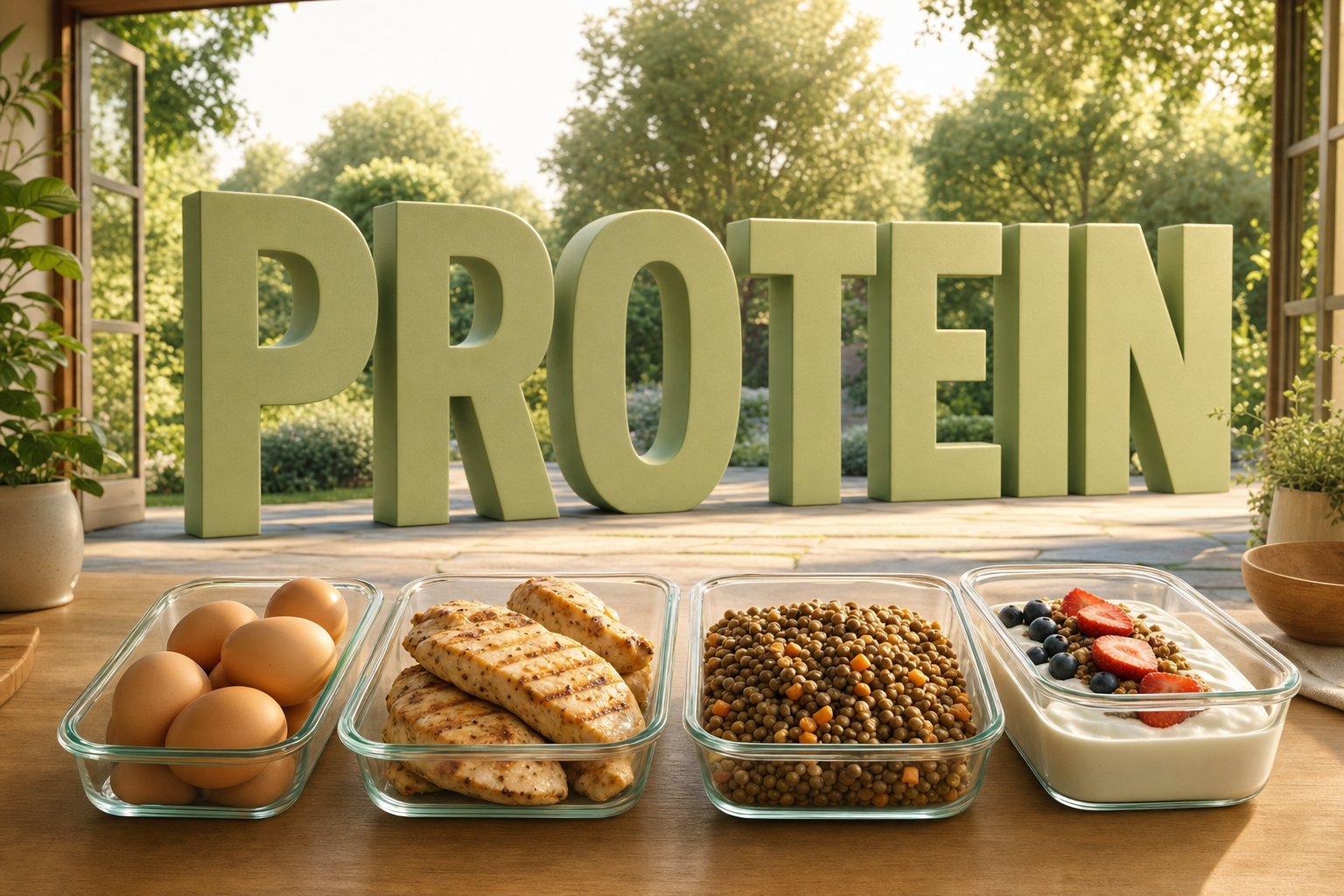
High-protein meal-prep components arranged for quick assembly
Prepare reusable components instead of seven identical finished meals. It gives you enough structure to follow the plan without locking every day into the same bowl.

A 60–90 minute prep plan

Salmon is best cooked on Days 2 and 6 rather than held for the entire week.

Minutes 0–10

  • Heat the oven.
  • Start the lentils and quinoa in separate pots.
  • Start several hard-boiled eggs.
  • Wash the produce.

Minutes 10–30

  • Season and bake the chicken.
  • Shape and bake the turkey meatballs.
  • Chop onions, peppers, carrots, cucumber, and broccoli.
  • Drain and rinse the canned beans.
Use a food thermometer: USDA lists 165°F for poultry, 160°F for ground beef, and 145°F for fish.

Minutes 30–50

  • Finish the lentils and quinoa.
  • Roast a tray of vegetables.
  • Mix one simple dressing.
  • Assemble the lentil-soup base.

Minutes 50–70

  • Portion chicken, turkey, lentils, and quinoa.
  • Refrigerate the portions for Days 1–4.
  • Divide the cooked food into shallow containers and refrigerate or freeze it promptly—within 2 hours of cooking (within 1 hour if the room or outdoor temperature is above 90°F). Hot food can go directly into the refrigerator; do not leave it on the counter to cool completely.
  • Season and freeze the uncooked Day 6 salmon portion if it will not be used promptly.

Minutes 70–90

  • Assemble one or two overnight-oat jars.
  • Prepare the Day 2 tuna-salad ingredients separately.
  • Label refrigerated and frozen containers.
  • Clean up while the final pans cool.

Leftovers schedule

USDA advises using most cooked leftovers within three to four days. Freeze later-week portions during the initial prep rather than leaving everything in the refrigerator. See the USDA leftovers and food-safety guidance.
  • Day 1: Refrigerate components for Days 1–4. Freeze the chicken, turkey, lentil, and quinoa portions intended for Days 5–7.
  • Day 2: Cook two salmon portions. Eat one and reserve the second for Day 4.
  • Day 3: Move the Day 5 components from the freezer to the refrigerator.
  • Day 4: Eat the reserved salmon. Move the Day 6 components into the refrigerator.
  • Day 5: Cook the ground beef fresh or thaw a portion frozen during prep. Move the frozen Day 6 salmon and the Day 7 components into the refrigerator to thaw.
  • Day 6: Cook the remaining salmon.
  • Day 7: Use the final thawed chicken and lentil portions.
Refrigerate cooked food promptly in shallow containers. If something has been left out too long or its storage history is uncertain, do not rely on smell or taste to decide whether it is safe.

Six 10-minute backup meals

  1. Greek-yogurt oat bowl — about 27g: 170g Greek yogurt, 40g oats, and 1 tablespoon peanut butter.
  1. Tuna chickpea wrap — about 30–36g: one tuna pouch or can, ½ cup chickpeas, greens, and a wrap.
  1. Cottage-cheese bowl — about 25g: 1 cup cottage cheese with tomatoes and pepper, or fruit and cinnamon.
  1. Egg and bean scramble — about 34g: 3 eggs, ½ cup black beans, and 1 ounce cheese.
  1. Rotisserie-chicken grain bowl — about 35–40g: 4 ounces chicken and a microwave grain pouch; verify the package label.
  1. Tempeh slaw bowl — about 25–30g: about 150g ready-to-eat tempeh with bagged slaw and dressing; verify the tempeh label.

Make the plan fit your life

Budget

  • Replace some salmon meals with canned tuna, canned salmon, eggs, lentils, or beans.
  • Use chicken thighs instead of chicken breast and calculate from the package label.
  • Buy dry lentils and beans in bulk.
  • Choose frozen vegetables and store-brand yogurt.
  • Replace quinoa with rice plus additional beans.

Dairy-free

  • Use fortified unsweetened soy milk; many almond, oat, and coconut milks contain much less protein.
  • Replace Greek yogurt and cottage cheese with higher-protein soy products, tofu, tempeh, or edamame.
  • Replace cheese with a dairy-free product only if its protein is comparable. Otherwise add beans, tofu, or seeds.

Gluten-free

  • Use certified gluten-free oats.
  • Choose quinoa, rice, potatoes, or gluten-free pasta.
  • Use corn or certified gluten-free tortillas.
  • Check broths, sauces, spice blends, and tempeh labels.

No-cook

Build meals from Greek yogurt or cottage cheese; tuna, canned salmon, or canned chicken; drained canned lentils, chickpeas, and beans; ready-to-eat tofu or tempeh; precooked grain pouches; bagged greens; chopped vegetables; fruit; seeds; and wraps.
Preserve the approximate protein amount at each meal rather than copying every ingredient.

Is this amount of protein right for everyone?

No. The 90–115g range is simply what this menu provides.
Protein and total food needs vary. People with chronic kidney disease may need an individualized amount and type of protein. The National Institute of Diabetes and Digestive and Kidney Diseases advises working with a dietitian or health professional instead of adopting a generic higher-protein plan.
Get individualized guidance before using this menu if you:
  • Have kidney or liver disease or another condition that affects nutrition.
  • Have diabetes treated with medication that requires meal timing or glucose-management planning.
  • Are pregnant or breastfeeding.
  • Are under 18.
  • Have significant food allergies.
  • Have a history of an eating disorder.
  • Have been given a therapeutic diet by a clinician or registered dietitian.
This plan does not guarantee weight loss, muscle gain, or any medical outcome.

Do you need protein powder?

No. This menu reaches its sample range with ordinary foods.
Protein powder can be convenient, but it is not required. If you use one, follow the product label and treat it as a replacement for another protein source rather than automatically adding it to every meal.

Can you repeat meals?

Yes. Repeating two breakfasts and two lunches is often easier and less wasteful than preparing 21 different recipes.
The useful structure is:
  1. Pick a protein anchor.
  1. Add vegetables or fruit.
  1. Add a grain, bean, or another carbohydrate according to appetite.
  1. Change the flavor with sauces and seasonings.
  1. Keep later-week portions frozen until needed.

Turn the plan into daily follow-through

This guide was published by the creators of BodyBuddy.
Already have a meal plan—from this page, a dietitian, another generator, or your own notes? Share it with the BodyBuddy app to create a saved plan. BodyBuddy can ask what is planned, accept meal updates by text, photo, or voice, remember workable substitutions, and help you choose a backup when the original plan breaks down.
BodyBuddy does not replace a registered dietitian or change a therapeutic diet on your behalf.

Frequently asked questions

What counts as a high-protein meal plan?

There is no single universal cutoff. This sample menu provides roughly 90–115g per day, but the right amount for an individual depends on body size, age, activity, total intake, goals, health conditions, and clinical guidance.

Is this a high-protein meal plan for weight loss?

It can be adapted to a weight-management goal, but it does not prescribe calories and cannot guarantee weight loss. Protein can contribute to a filling meal, but body-weight change depends on total intake, activity, medication, sleep, health conditions, and other individual factors.

Can vegetarians follow this plan?

Yes, by using the plant-based swaps and checking product labels. Tempeh, tofu, edamame, lentils, beans, higher-protein soy yogurt, and soy milk can replace the animal-protein anchors in different combinations.

Can I make the entire week in one prep session?

Prepare the reusable components, then cook or thaw later-week items as needed. Do not hold an entire week of cooked food in the refrigerator. Freeze later portions and follow USDA storage guidance.

Do I need to eat a different meal every day?

No. Repeating meals can reduce cost, waste, and decision-making. Keep the approximate protein anchor and adjust flavors, produce, and carbohydrate portions.

How accurate are the protein numbers?

They are rounded estimates based largely on USDA FoodData Central. Brands, portions, water content, and cooking methods change the result, so use package labels and weighed portions when precision matters.

Sources and methodology

This plan is general educational guidance for generally healthy adults. It is not individualized medical nutrition therapy.

Put this into practice

Keep going with BodyBuddy

Use the next step that matches what you came here to do.

Want daily accountability?

BodyBuddy texts you every day.

Build a healthier relationship with food and movement, one text at a time.

or download the iOS app