
← All posts
BodyBuddy TeamNutrition
How Much Protein on GLP-1? What Current Guidance Actually Says
Learn current GLP-1 protein guidance, why targets vary, which foods work with a smaller appetite, and when to ask your clinician or registered dietitian.
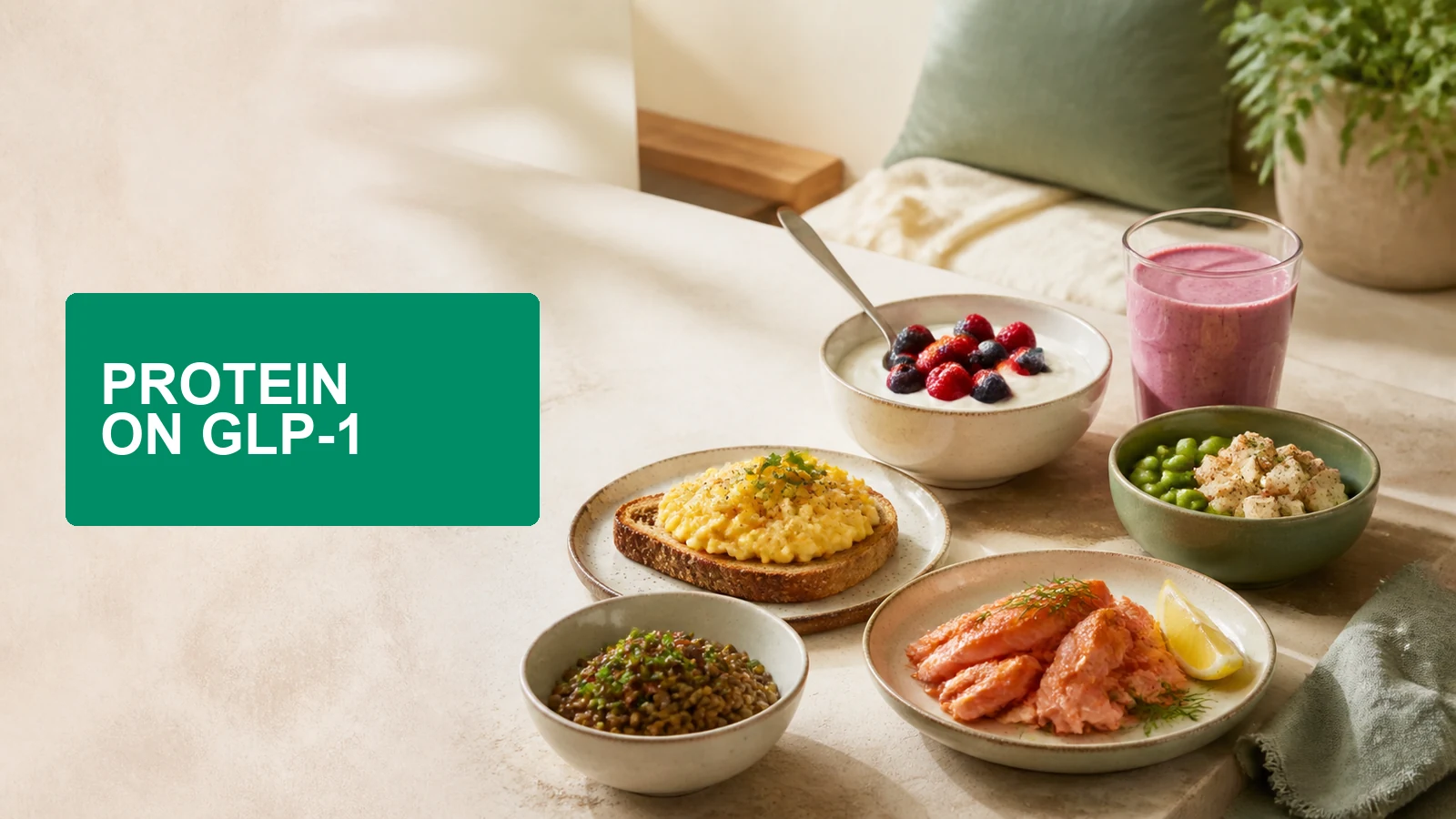
If you have searched for how much protein to eat on a GLP-1, you have probably found a suspiciously confident answer: multiply your weight by one number and hit that target every day.
The current guidance is not that tidy.
The standard protein allowance for a generally healthy adult is 0.8 grams per kilogram of body weight per day. During active weight loss, experts often discuss higher intakes—commonly 1.2 to 1.6 grams per kilogram per day—to help support lean tissue. But the leading 2025 joint advisory on nutrition and GLP-1 therapy explicitly says there is no consensus on whether that higher range should use actual body weight, adjusted or ideal body weight, or fat-free mass. Using actual weight can substantially overestimate the target for some people.
So there is no responsible universal GLP-1 protein calculator. Your useful number depends on your body composition, age, activity, rate of weight loss, kidney function, medical conditions, and the plan from your prescriber or registered dietitian.
The short answer
Treat 0.8 g/kg/day as a general-population reference, not an individualized GLP-1 prescription. Higher ranges such as 1.2–1.6 g/kg/day are discussed during active weight loss, but the correct weight basis—and whether that range fits you at all—requires judgment. If your clinician or dietitian has set a target, follow that target. Then make it easier to reach with protein-first meals and a resistance-training plan you can actually repeat.
Important: This article is general education, not medical nutrition therapy. Do not use it to override a protein target, kidney diet, diabetes plan, fluid limit, or other instructions from your care team. Do not change medication or insulin based on this guide.
Why protein becomes a practical problem on GLP-1
GLP-1-based medications can reduce appetite and make smaller meals feel satisfying. That can be useful, but eating less food also leaves less room for protein and other nutrients.
The problem is not that the medication somehow “uses up” protein. It is simpler: when total intake falls sharply, protein intake may fall with it. Active weight loss can also include some loss of lean tissue, not only fat. Protein matters here, but it is one part of the response—not a magic shield against muscle loss.
This is why the 2025 joint advisory from the American College of Lifestyle Medicine, American Society for Nutrition, Obesity Medicine Association, and The Obesity Society emphasizes both adequate protein and strength training. A 2026 corrigendum corrected the description of one cited diet study, but the authors said the correction did not change the advisory’s other content or conclusions.
What the numbers actually mean
0.8 g/kg/day: the general adult RDA
The Recommended Dietary Allowance, or RDA, for protein is 0.8 g/kg/day for the general adult population. An RDA is the average daily intake intended to meet the needs of nearly all healthy people. It is not a GLP-1-specific target, and it was not designed to optimize muscle retention during rapid weight loss.
For context only, someone who weighs 70 kg (about 154 lb) would reach 56 g/day at 0.8 g/kg. That example explains the math; it does not establish that person’s ideal target.
1.2–1.6 g/kg/day: a proposed higher range during weight loss
The joint advisory notes that 1.2–1.6 g/kg/day has been proposed during active weight reduction. A separate 2025 expert consensus on supportive care for GLP-1-based therapy recommended 1.2–1.5 g/kg/day during rapid weight loss, while labeling that recommendation as expert opinion rather than direct high-certainty evidence from trials of protein doses in GLP-1 users.
That distinction matters. “Experts discuss this range” is not the same as “everyone taking a GLP-1 should calculate and follow it on their own.”
The denominator is unsettled
If a person has a higher body weight, multiplying 1.6 by actual kilograms can produce a target that is unrealistic and potentially inappropriate. The joint advisory says fat-free mass may be a better basis, but measuring it accurately is not always practical. Adjusted weight and ideal weight are other approaches, and experts do not yet agree on one method.
The advisory also presents 80–120 grams per day as a pragmatic absolute option that may improve adherence, but it is still a broad clinical framework—not a default target for every reader. A smaller adult, a larger muscular adult, an older adult at risk of sarcopenia, and a person with chronic kidney disease should not all receive the same number from a blog post.
Who should get an individualized protein target?
Everyone can benefit from asking their prescriber or dietitian what the number should be based on. That conversation is especially important if any of the following apply.
You have kidney disease
Protein needs can change substantially with kidney disease and its treatment. Someone with chronic kidney disease who is not receiving dialysis may be advised to limit protein, while someone receiving dialysis may need more. The National Kidney Foundation recommends getting a target from a clinician or kidney dietitian rather than adopting a generic high-protein plan.
You use insulin or a sulfonylurea
If you have diabetes, eating much less or changing meal timing can interact with a glucose-management plan. FDA prescribing information for both Wegovy and Zepbound warns that the risk of low blood sugar can be higher when these medications are used with insulin or an insulin secretagogue such as a sulfonylurea. Do not use a protein-first strategy as a reason to remove carbohydrates or improvise medication changes. Ask your diabetes clinician how meals, glucose monitoring, and medication should work together.
You are an older adult or have noticed strength loss
Age, inactivity, illness, and weight loss can all raise concern about declining muscle strength or function. Protein may be part of the plan, but resistance exercise and an appropriate total energy intake also matter. Ask whether you need a dietitian, physical therapist, or exercise professional involved—particularly if you are frail, have recently fallen, or are losing function.
You are pregnant, breastfeeding, recovering from surgery, or managing another condition
These situations change nutrition needs and are outside a universal GLP-1 target. Follow the clinician responsible for that part of your care.
A protein-first strategy that works with a smaller appetite
“Protein first” means giving the protein food an early place in the meal so fullness does not repeatedly crowd it out. It does not mean eating only protein, eliminating carbohydrates, or forcing down a huge serving.
Try this sequence:
- Choose one tolerable protein anchor. Eggs, yogurt, tofu, beans, fish, or poultry all count. There is no required “GLP-1 protein food.”
- Start with a modest serving. You can return for more. A large plate can be discouraging when appetite is low.
- Keep the rest of the meal. Add a tolerated fruit or vegetable and a grain, bean, potato, or other carbohydrate that fits your clinical plan.
- Split meals when necessary. Half at lunch and half later may work better than forcing one sitting.
- Use convenience deliberately. A shake or bar can close a real gap, but it should not quietly become every meal.
If solid food feels unappealing, change the format before abandoning the meal: yogurt instead of a large entrée, soup with beans or shredded chicken, a slowly sipped smoothie, silken tofu, cottage cheese, or eggs.
Low-volume protein meal and snack matrix
Protein values vary by brand, recipe, and serving size, so the figures below are deliberately approximate. Check the label or USDA FoodData Central when exact tracking matters.
- Greek yogurt, 1 cup — about 18–23 g: Add berries or oats for breakfast. Split it into two smaller sittings when appetite is especially low.
- Cottage cheese, 1 cup — about 24–28 g: Pair it with soft fruit, tomatoes, or toast. Start with half a cup if a full cup feels like too much.
- Eggs, 2 — about 12–14 g: Scramble them with toast and cooked spinach, or make one now and one later.
- Cooked fish, 3 oz — about 20–24 g: Serve it with rice and cooked vegetables, or flake it into soup or a small rice bowl.
- Cooked chicken or turkey, 3 oz — about 22–26 g: Add it to a wrap, soup, or grain bowl. Shredding it and adding broth or sauce can make it easier to eat.
- Tofu, 3/4 cup — about 14–18 g: Scramble it or add it to rice and vegetables. Silken tofu also works in soup or a smoothie.
- Shelled edamame, 1 cup — about 17–19 g: Use it as a snack or bowl topping. Eat half now and save half if needed.
- Cooked lentils, 1 cup — about 16–18 g: Add them to soup, chili, or a grain bowl, or blend them into soup when texture is difficult.
- Milk or fortified soy milk, 1 cup — about 7–9 g: Use it in oats or a smoothie, or sip it slowly away from a large meal.
- Protein shake — varies by label: Use one when food cannot reasonably cover the gap and the product fits your clinician's plan and tolerance.
The “best” option is the one you can tolerate, afford, and repeat. Plant and animal sources can both work. What matters is the pattern across the day, not whether one snack wins a protein-per-calorie contest.
Protein alone is not a muscle-preservation plan
The joint advisory is unusually direct on this point: simply increasing protein is likely inadequate to preserve muscle without structured resistance or strength training.
That does not require bodybuilding. Depending on your health, experience, and clinician’s advice, resistance work might include machines, free weights, bands, or body-weight movements. The right plan is progressive enough to challenge muscle and safe enough to repeat.
A practical conversation with your care team includes three questions:
- What protein target should I follow, and what weight basis did you use?
- What form of resistance training is safe for me right now?
- How will we monitor strength, function, intake, and the pace of weight loss?
If you are older, frail, recovering from injury, or unsure how to begin, ask for a qualified professional rather than copying a generic workout.
What to do on a very low-appetite day
One difficult meal is not a crisis. A recurring pattern deserves attention.
On a low-appetite day:
- Use smaller meals or snacks rather than waiting for one large dinner.
- Put a tolerable protein source early in each eating opportunity.
- Choose softer or lower-volume formats when they sit better.
- Keep sipping fluids unless your clinician has given you a fluid limit.
- Write down what you managed to eat and any nausea, vomiting, diarrhea, constipation, pain, or dizziness.
Do not turn this into a game of seeing how little you can eat. The goal of GLP-1 treatment is not nutritional depletion.
When to call your clinician
Contact your prescriber or care team when reduced intake is persistent, you cannot come reasonably close to the target they set, or symptoms are keeping you from eating and drinking.
Seek prompt medical guidance for:
- repeated vomiting or diarrhea
- signs of dehydration, including very dark urine, dizziness, faintness, confusion, or difficulty keeping fluids down
- persistent or severe abdominal pain
- low-blood-sugar symptoms or unexpected glucose readings, especially if you use insulin or a sulfonylurea
- unusually rapid or unintended weight loss
- new weakness, falls, or a meaningful decline in everyday function
FDA labels warn that gastrointestinal reactions can sometimes cause dehydration and acute kidney injury. Your prescriber—not a meal-plan article—should decide whether symptoms require medication changes or medical evaluation.
Turn your clinician’s number into something you can follow
Once a clinician or registered dietitian has set your protein target, the hard part often moves from knowledge to execution. You still have to remember the plan at breakfast, notice a low-intake day before bedtime, shop for foods you tolerate, and bring useful observations to the next appointment.
BodyBuddy does not calculate the medically correct protein target or replace your prescriber or dietitian. It can help you follow the target they chose.
In the BodyBuddy app, you can import or share your clinician’s plan. BodyBuddy, your coach, can then text you about the actions inside it—such as including your agreed protein food at breakfast, checking in after a low-appetite day, or helping you keep notes for the next appointment. It keeps the professional’s instructions in view; it does not reinterpret or override them.
If you already have a nutrition plan, see how to follow a dietitian meal plan between appointments. For the bigger food picture, use this flexible seven-day GLP-1 diet plan. If you are comparing tracking approaches, read the best GLP-1 tracking apps. You can also see how daily GLP-1 coaching works.
The useful target is not the largest number you can force into a calculator. It is the medically appropriate target you can meet consistently—alongside enough total nourishment, a safe resistance-training plan, and follow-up when your appetite or symptoms make that difficult.
Frequently asked questions
Is 100 grams of protein enough on GLP-1?
It might be appropriate for one person and wrong for another. The 2025 joint advisory presents 80–120 g/day as one pragmatic alternative to weight-based calculations, not as a universal prescription. Ask your clinician or dietitian whether 100 g fits your body composition, age, activity, kidney function, rate of weight loss, and medical plan.
Should I calculate protein from my current weight or goal weight?
There is no settled universal method. The joint advisory specifically notes uncertainty over actual weight, adjusted or ideal weight, and fat-free mass. This is why a generic calculator can mislead, particularly at higher body weights.
Do I need a protein shake on GLP-1?
No. Shakes can be helpful when low appetite makes food intake difficult, but many people can use ordinary foods. A shake should complement a varied diet, not automatically replace it. Check with your clinician or dietitian if you have kidney disease, diabetes, allergies, gastrointestinal symptoms, or a prescribed nutrition plan.
Should I eat protein before vegetables or carbohydrates?
When appetite is limited, eating some protein first may make it less likely that early fullness crowds it out. That is a practical sequence, not a rule to eliminate other food groups. A balanced meal still matters.
Can protein prevent muscle loss on a GLP-1?
Protein may support lean tissue, but protein alone is not enough. Current guidance pairs adequate protein with structured resistance training and attention to total nutritional intake. Your care team may also monitor strength, function, body composition, or the pace of weight loss.
Sources
- Mozaffarian D, et al. Nutritional priorities to support GLP-1 therapy for obesity: a joint advisory. Obesity. 2025.
- Mozaffarian D, et al. 2026 corrigendum to the joint advisory. Obesity. Published April 23, 2026.
- Rubino DM, et al. Nutritional and lifestyle supportive care recommendations for GLP-1-based therapies. Obesity Pillars. 2025.
- National Institutes of Health, Office of Dietary Supplements. Nutrient Recommendations and Databases.
- National Kidney Foundation. CKD Diet: How Much Protein Is the Right Amount?.
- U.S. Food and Drug Administration. Wegovy prescribing information. Revised June 2026.
- U.S. Food and Drug Administration. Zepbound prescribing information. Revised February 2026.
Next steps
Related BodyBuddy guides
- How much protein do you need to lose weight (without the bro-science)
- 17 High-Protein Fast-Food Orders: Calories and Protein
- 17 high protein snacks for weight loss that actually taste good
- Cristiano Ronaldo's Daily Routine: Diet, Workout, Sleep & Recovery
- Lose It Alternative: BodyBuddy vs Lose It! (2026)
Everyone gives you a plan.BodyBuddy texts you until it happens.
BodyBuddy keeps you on track—from meals to doctor's appointments and everything in between.