
BodyBuddy logoBodyBuddy

HYROX training for beginners

The answer is below, sourced to HYROX's own race page and rulebooks, the federal activity guidelines, ACSM, and the HYROX and concurrent-training studies on PubMed. After that, if you want someone carrying your plan with you and logging every run and station, that's me.

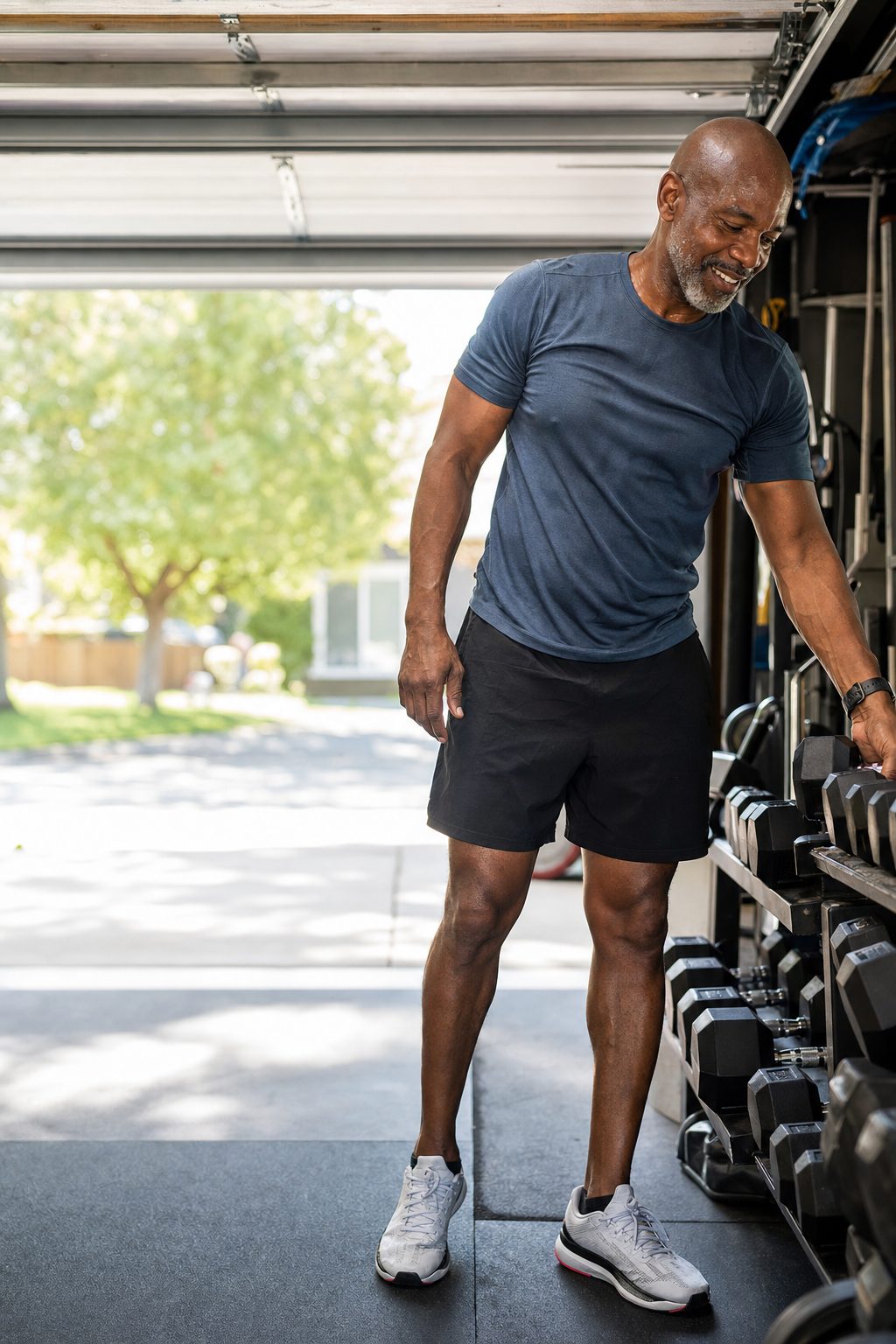
A man in his fifties setting a dumbbell back on the rack in a bright garage gym

12 weeks

push day 🏋️ last week you benched 135 for 8. same again, or add 5?

Training for a first HYROX, from the sources

The race is fixed and published, so the facts about it come from the organizer. The training side has a handful of HYROX studies, all recent and small, plus the general endurance and strength guidance they sit inside. Here is each one with its owner and date, and the sources at the bottom.

HYROX's rulebook says injured racers are responsible for getting medical clearance from a qualified health professional before racing, and it strongly recommends that pregnant racers consult a medical professional first (HYROX Singles Rulebook, season 26/27). The federal guidelines say people who develop new symptoms when increasing their levels of activity should consult a health care provider, and that for people who wish to seek a health care professional's advice, it is particularly appropriate to do so when contemplating vigorous-intensity activity (HHS, Physical Activity Guidelines for Americans, 2nd edition, 2018). The NHLBI says to talk with your doctor if you have symptoms such as chest pain or dizziness during physical activity (NHLBI, March 24, 2022). Chest pain, heaviness, or discomfort, shortness of breath, light-headedness, or sudden dizziness can be heart attack symptoms, and the NHLBI's instruction is to call 9-1-1 for emergency medical care, even if you are not sure that you're having a heart attack (NHLBI, Heart Attack Symptoms, March 24, 2022).

The race format

HYROX consists of a 1 km run followed by 1 workout station, repeated 8 times, for a total of 8 km of running and 8 stations completed in a fixed order (HYROX Singles Rulebook, season 26/27). The running distance is the same in every division, while the repetition range and/or weights differ between divisions (HYROX Rulebook, 26/27). The race is open to everyone with no qualification required, and racers must be at least 16 years old on race day (HYROX Rulebook, 26/27).

The stations, in race order (HYROX, The Fitness Race; HYROX Rulebook, 26/27):

  1. SkiErg: 1,000 m
  2. Sled push: 50 m
  3. Sled pull: 50 m
  4. Burpee broad jumps: 80 m
  5. Rowing: 1,000 m
  6. Farmers carry: 200 m
  7. Sandbag lunges: 100 m
  8. Wall balls: 100 repetitions

The organizer's two documents describe the sled lanes differently. The race page gives the sled push and pull as 2 × 25 m (HYROX, The Fitness Race), and the 26/27 rulebook lists them as 4 × 12.5 m (HYROX Rulebook, 26/27). Both add up to 50 m. Racers pass through an area called the Roxzone on the way in and out of each station, and the rulebook penalizes confusing its in and out routes (HYROX Rulebook, 26/27).

Weights by division

The singles rulebook lists four divisions, and Women Pro uses the same weights as Men Open (HYROX Singles Rulebook, season 26/27):

  • Women Open: sled push 102 kg and sled pull 78 kg, both including the sled; farmers carry 2 × 16 kg; sandbag lunges 10 kg; wall balls 4 kg
  • Men Open and Women Pro: sled push 152 kg and sled pull 103 kg, both including the sled; farmers carry 2 × 24 kg; sandbag lunges 20 kg; wall balls 6 kg
  • Men Pro: sled push 202 kg and sled pull 153 kg, both including the sled; farmers carry 2 × 32 kg; sandbag lunges 30 kg; wall balls 9 kg

The SkiErg, the row, and the burpee broad jumps are the same distance in every division (HYROX Rulebook, 26/27). The race page prints the same weights (HYROX, The Fitness Race).

Doubles and relay

In Doubles, both team members must run together for the entire 1,000 m between stations, a team member running ahead draws a 1-minute penalty, and both must enter and leave each station together (HYROX Doubles Rulebook, season 26/27). Doubles Women uses the Women Open weights, Doubles Women Pro, Men, and Mixed use the 152 kg and 103 kg sleds with the matching loads, and Doubles Men Pro uses the Men Pro weights (HYROX Doubles Rulebook, 26/27).

The Team Relay is four people in Women, Men, or Mixed divisions, and each relay member runs 2 × 1 km and completes 2 stations, with the team choosing who does which (HYROX Relay Rulebook, season 26/27). Relay weights follow the Women Open and Men Open columns (HYROX Relay Rulebook, 26/27).

What the race asks of you

The first scientific study of the format ran 11 recreational HYROX athletes through a simulated Open-division race. Median finish time was 86.5 minutes, of which the runs took 51.2 minutes and the stations 32.8 minutes, and most of the race was done at hard or very hard heart rates (Brandt, Ebel, Lebahn and Schmidt, Frontiers in Physiology, March 31, 2025). Faster finishes correlated with higher VO2max, greater endurance training volume, and lower body fat, and the authors describe HYROX as having an emphasis on endurance capacity with moderate to low requirements for maximum strength, coordination, and mobility (Brandt 2025). The highest heart rate, blood lactate, and perceived effort all came at the last station, the wall balls (Brandt 2025).

An analysis of 39,696 Pro and Elite results across seven seasons found that, in the top 100 results each season, running consistently accounted for about 50% of total race time, and that the strength-determined stations added more time among slower performers (Rappelt et al., Frontiers in Physiology, July 8, 2026). In 24 Pro men at an official race, running speed fell from run 1 to run 8 and was slowest in the Roxzone, and the mean running intensity sat at about 84% of the second ventilatory threshold (Gutiérrez-Hellín et al., International Journal of Sports Physiology and Performance, September 2026).

Those three studies are small or limited to Pro and Elite racers, and none of them tested a training program. They describe the race. For how to prepare, the evidence is the general training literature below.

The endurance and strength base

The federal minimum is 150 to 300 minutes a week of moderate-intensity aerobic activity, or 75 to 150 minutes of vigorous, plus muscle-strengthening of all major muscle groups on 2 or more days a week (HHS, 2018). ACSM puts the aerobic figure at 30 minutes or more on 5 or more days of moderate intensity, or 20 minutes or more on 3 or more days of vigorous intensity, with resistance exercise on 2 to 3 days (ACSM position stand, Garber et al., Medicine & Science in Sports & Exercise, July 2011).

For strength work, ACSM recommends 8 to 12 repetition-maximum loads and 2 to 3 days a week for novices (ACSM position stand, Progression Models in Resistance Training, March 2009). The same stand describes local muscular endurance training as light to moderate loads of 40 to 60% of one-repetition maximum for more than 15 repetitions with rest periods under 90 seconds (ACSM, 2009), which is the shape of 100 wall balls or 100 m of lunges. ACSM's 2026 update adds that bands, bodyweight exercises, and home-based routines yield marked benefits in strength and physical function (ACSM, announced March 17, 2026).

A 2025 scoping review of 39 studies on high-intensity functional training found improvements in aerobic capacity, muscular strength, anaerobic power, and fatigue tolerance, with VO2max gains of 8% to 15% and strength gains of 10% to 20% commonly reported, and larger benefits in trained people (Villarroel López and Juárez Santos-García, Journal of Functional Morphology and Kinesiology, September 2025). The authors state that these benefits are not attributed to any single competitive event (Villarroel López 2025).

Running and lifting in the same plan

A 2022 meta-analysis of 43 studies found that concurrent aerobic and strength training does not compromise muscle hypertrophy or maximal strength compared with strength training alone, but explosive strength gains may be attenuated (Schumann et al., Sports Medicine, March 2022). The attenuation was more pronounced when both were done in the same session than when sessions were separated by at least 3 hours, and the results held regardless of cycling or running, training frequency, training status, and age (Schumann 2022).

An earlier meta-analysis of 21 studies reached a partly different reading. It found that resistance training done alongside running produced significant decrements in hypertrophy and strength while cycling did not, and that interference grew with the frequency and duration of the endurance training (Wilson et al., Journal of Strength and Conditioning Research, August 2012). Concurrent training still produced a larger strength effect than endurance training alone in that pooling, at 1.44 against 0.78 (Wilson 2012). The two reviews disagree about running specifically, so each is printed with its owner, and Schumann's 3-hour separation is the one timing figure either publishes.

Injuries

A 12-week prospective study followed 89 HYROX athletes. The weekly prevalence of any health problem was 30%, injury incidence was 14.4 per 1,000 hours, 73% of injuries were overuse injuries, and the knee was the most frequently injured region at 22% of episodes (Chittenden et al., Frontiers in Sports and Active Living, September 9, 2026). Previous injury carried the largest rate ratio for severity, 2.60, though the authors note that interval was also compatible with no association (Chittenden 2026).

The federal guidance on progression is written for exactly that pattern. Pay attention to the relative size of the increase in activity each week, because it is related to injury risk: a 20-minute weekly increase is a 10% increase for someone already jogging 200 minutes a week and a 50% increase for someone doing 40 (HHS, 2018). Increase duration and frequency first, and intensity later (HHS, 2018). Youth and young adults probably can safely increase activity by small amounts every week or two, while older adults appear to require 2 to 4 weeks to adapt to a new level (HHS, 2018).

A realistic timeline

No source behind this page publishes a number of weeks to prepare for a first HYROX, so this page does not print one. Three published durations can be used to build your own, each with its owner.

  • Getting to the minimum: the federal guidelines say to increase activity gradually over a period of weeks to months to reduce injury risk (HHS, 2018)
  • Each step up: small increases every week or two for younger adults, 2 to 4 weeks per new level for older adults (HHS, 2018)
  • Making training automatic: at least four sessions a week for 6 weeks was the minimum to establish an exercise habit in new gym members (Kaushal and Rhodes, Journal of Behavioral Medicine, August 2015)

The recreational racers in the first HYROX study had a median of 18 months of HYROX experience and a median finish of 86.5 minutes (Brandt 2025). HYROX has grown fast, with 278,063 participants across 145 races and 22 host countries through the 2023/24 season (Fernández-Navarrete et al., Research Quarterly for Exercise and Sport, June 2026).

What I do with all this, and what I don't

You pick a plan from the library, send me the one your coach or gym gave you, or we build one with the workout plan tool, and I text you that day's session. You text back your runs, your station times, and your sled and wall ball numbers, and I log all of it against race day. I keep the weekly increase small and say so when it jumps, since the federal guidelines tie the size of the increase to injury risk (HHS, 2018). When a run and a strength session land on the same day, I ask whether they can sit at least 3 hours apart, which is the separation in Schumann's review (Schumann 2022).

I never write you a HYROX program, never set your loads, never diagnose a sore knee, and never clear you to race. When what you tell me matches the lines above, I say so and tell you to call.

HYROX is a trademark of its organizer, and nothing on this page is affiliated with or endorsed by them. No clinician reviewed this page. It restates HYROX's published race facts and the HHS, ACSM, and NHLBI documents and studies linked below, and those are the documents to trust over anything here.

Sources

What you can do with BodyBuddy

I carry your plan with you to race day

Pick a plan from the library, send me the one your coach or gym wrote, or build one with me, and I text you each day's session with the race date in view.

7 weeks out 🏃 today is the easy run plus sled work. want to keep them 3 hours apart like we said?

I log every run and station

Text me your splits, your sled weights, and your wall ball sets in whatever shorthand you use. I keep them together so you can see which part of the race is moving.

wall balls went 30-25-25-20 last week, today you did 35-30-20-15. the first set is getting stronger 💪

I keep the weekly jump small

The federal guidelines tie the size of each week's increase to injury risk, and most HYROX injuries in the one cohort study were overuse. When a week jumps, I point it out and we talk about it.

running went from 40 to 70 minutes this week. that's a big jump, want to hold here for a week before adding more?

Text like you're talking to a friend

Tap to start a conversation if this sounds like you.

Tell me your race date and your division

Everything above starts from one text. Tell me the date, the division, what your week looks like now, and whether you already have a plan. We either pick one or work from yours, and I carry it with you every day until race day. Your clinician clears the training and I work inside what they told you.

Common questions

What are the HYROX weights for Women Open?

Sled push 102 kg and sled pull 78 kg, both including the sled, farmers carry 2 × 16 kg, sandbag lunges 10 kg, and 4 kg wall balls (HYROX Singles Rulebook, season 26/27).

Do I need to be a runner to do HYROX?

Running is 8 km of every race (HYROX Rulebook, 26/27) and accounted for about 50% of total race time in the top 100 Pro results each season (Rappelt 2026). In recreational racers, faster finishes correlated with higher VO2max and more endurance training (Brandt 2025).

Can I train strength and running in the same week?

A 2022 meta-analysis found concurrent training did not compromise maximal strength or muscle growth, though explosive strength gains were smaller when both were done in the same session than when sessions were at least 3 hours apart (Schumann 2022).

How old do you have to be to race HYROX?

Racers must be at least 16 years old on the day of the race (HYROX Singles Rulebook, season 26/27).

Francis, founder of BodyBuddy

Hi, I'm Francis 👋

If you're like me, staying consistent is the hard part. I built BodyBuddy to give everyone the daily accountability to follow through.

Francis John, BodyBuddy FounderText me

7-day free trial, cancel anytime.

No one is reading your texts

Nobody monitors your thread. A conversation is reviewed by our own staff only in limited cases, such as a request for human help or a safety concern, and never shared outside.

Your data is yours to delete

You can request deletion of your personal data at any time, and deleting your account removes it from our systems.

Not sold or used for advertising

We do not sell consumer health data or share it for advertising. Service providers process it only to deliver the features you choose.

Everyone gives you a plan.BodyBuddy texts you until it happens.

A coach that stays with you through every plan, every setback, and all the days in between.