
BodyBuddy logoBodyBuddy

How to build a workout habit

The answer is below, sourced to the federal activity guidelines, the CDC, the NHS, ACSM, and the habit and adherence studies on PubMed. After that, if you want someone holding the time you picked and asking how the session went every day, that's me.

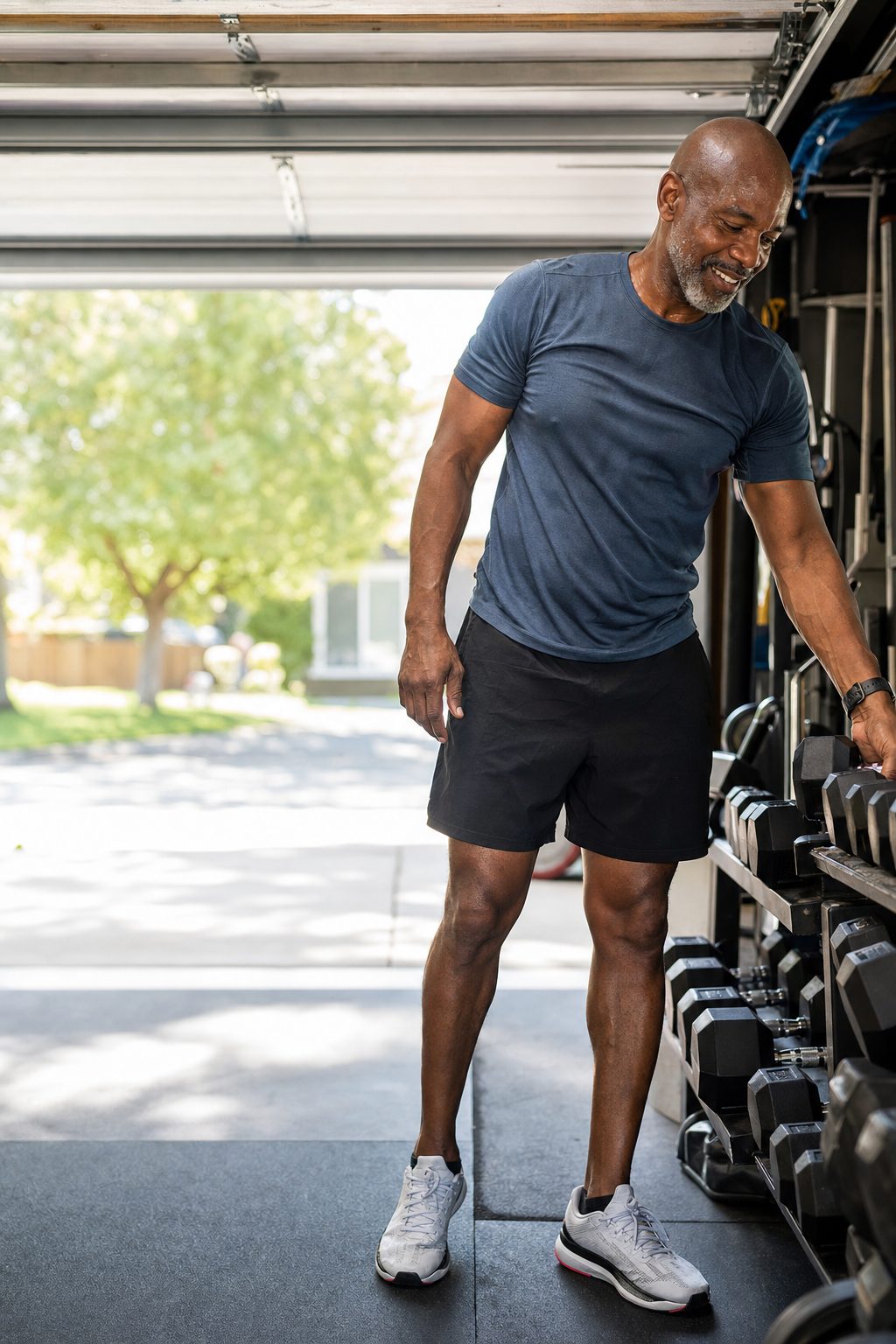
A man in his fifties setting a dumbbell back on the rack in a bright garage gym

12 weeks

push day 🏋️ last week you benched 135 for 8. same again, or add 5?

Building a workout habit, from the sources

The minimums are short, the habit studies give a range far wider than the number that gets repeated, and the published strategies come down to a set time, a small dose, a cue, and a written record. Here is each one with its owner and date, and the sources at the bottom.

People without diagnosed chronic conditions and without symptoms such as chest pain or pressure, dizziness, or joint pain most likely do not need to consult a health care provider about physical activity, and people who develop new symptoms when increasing their levels of activity should consult one (HHS, Physical Activity Guidelines for Americans, 2nd edition, 2018). The NIA says aerobic activities should not cause dizziness, chest pain or pressure, or nausea (NIA, content reviewed January 14, 2025), and the NHLBI says to talk with your doctor if you have symptoms such as chest pain or dizziness during physical activity (NHLBI, March 24, 2022). Chest pain, heaviness, or discomfort, shortness of breath, light-headedness, or sudden dizziness can be heart attack symptoms, and the NHLBI's instruction is to call 9-1-1 for emergency medical care, even if you are not sure that you're having a heart attack (NHLBI, Heart Attack Symptoms, March 24, 2022).

The minimums

For substantial health benefits, adults should do at least 150 to 300 minutes a week of moderate-intensity aerobic activity, or 75 to 150 minutes a week of vigorous-intensity aerobic activity, or an equivalent combination, preferably spread throughout the week (HHS, Physical Activity Guidelines for Americans, 2nd edition, 2018). Adults should also do muscle-strengthening activities of moderate or greater intensity that involve all major muscle groups on 2 or more days a week (HHS, 2018).

The NHS prints the same two numbers for adults aged 19 to 64: at least 150 minutes of moderate intensity activity a week or 75 minutes of vigorous intensity activity a week, and strengthening activities that work all the major muscle groups on at least 2 days a week (NHS, Physical activity guidelines for adults, last reviewed 22 May 2024). ACSM breaks the aerobic figure into days, at 30 minutes or more on 5 or more days a week of moderate intensity, or 20 minutes or more on 3 or more days a week of vigorous intensity, plus resistance exercise for each major muscle group on 2 to 3 days a week (ACSM position stand, Garber et al., Medicine & Science in Sports & Exercise, July 2011).

The federal document also drops a rule people still quote. The 2018 edition eliminated the requirement for adult activity to occur in bouts of at least 10 minutes (HHS, 2018).

How long a habit takes

The study behind the popular figure asked 96 volunteers to carry out an eating, drinking, or activity behaviour daily in the same context, for example after breakfast, for 12 weeks (Lally, van Jaarsveld, Potts and Wardle, European Journal of Social Psychology, published online July 2009). 82 provided enough data for analysis. The time it took participants to reach 95% of their asymptote of automaticity ranged from 18 to 254 days, which the authors read as considerable variation and as evidence that it can take a very long time (Lally 2009).

The 66 comes from the same group's later summary of that study, which describes automaticity rising and slowing to a plateau after an average of 66 days, and tells patients to expect habit formation based on daily repetition to take around 10 weeks (Gardner, Lally and Wardle, British Journal of General Practice, December 2012). So 66 days is the average in one study of 82 people doing a daily behaviour, and the individual range around it was 18 to 254 days.

A 2024 systematic review pooled 20 studies with 2,601 participants and found median times of 59 to 66 days, mean times of 106 to 154 days, and individual times from 4 to 335 days (Singh, Murphy, Maher and Smith, Healthcare, December 2024). Eight of the 20 studies were about physical activity.

Exercise has its own estimate. In 111 new gym members followed for 12 weeks, exercising for at least four bouts per week for 6 weeks was the minimum requirement to establish an exercise habit (Kaushal and Rhodes, Journal of Behavioral Medicine, August 2015). The three figures have three owners: 66 days on average for a daily behaviour (Gardner 2012), 59 to 66 days as a pooled median (Singh 2024), and 6 weeks at four sessions a week for exercise specifically (Kaushal 2015).

When people quit

The attrition figures are the reason the first months matter most. In the records of 5,240 members of a fitness center in Rio de Janeiro, 63% of new members abandoned activities before the third month, and fewer than 4% remained for more than 12 months of continuous activity (Sperandei, Vieira and Reis, Journal of Science and Medicine in Sport, November 2016). Even members with the best combination of age, prior activity, and motivations still carried a high risk of leaving before 12 months (Sperandei 2016).

A 14-week exercise course with 88 participants lost 40.91% of them, and the authors write that dropout rates of approximately 50% after a couple of months are not uncommon (Antoniewicz and Brand, Frontiers in Psychology, June 2016). They split the dropouts by timing: 16 early dropouts who stopped during the first half of the 14-week course and 20 late dropouts who stopped during the second half (Antoniewicz and Brand 2016).

The two studies measure different things, one gym membership records and one course attendance, so their percentages stay with their owners. The gym records put the largest loss before the third month (Sperandei 2016).

Starting

The federal instruction for starting is to "start low and go slow," with lower intensity activities and gradual increases in how often and how long activities are done (HHS, 2018). Its worked example for an inactive person is 5 minutes of walking several times a day, 5 to 6 days a week, building to 10 minutes per session, 3 times a day (HHS, 2018). Muscle-strengthening can start at just 1 day a week at a light or moderate level of effort, building to 2 days and possibly more (HHS, 2018). Healthy adults who plan gradual increases do not need to consult a health care provider before becoming physically active (HHS, 2018).

The CDC's getting-started list is short. Set aside specific times in your routine to be physically active. Start with activities, locations, and times you enjoy. Try activities with others for motivation and mutual encouragement. Start slowly and work your way up to more time or more challenging activities (CDC, Steps for Getting Started With Physical Activity, last reviewed December 4, 2025). A second CDC page adds that to make sure you'll stick with it, you should pick physical activities that you enjoy and that match your abilities (CDC, Adding Physical Activity as an Adult, last reviewed December 4, 2025).

The NHS puts the planning before the first session: think about where and on which days you're going to exercise, and when in the day you can fit it in (NHS Better Health, How to be more active). It also says to start small by finding easy ways to fit more activity into your daily life and build up from there (NHS Better Health).

Scheduling

The CDC's answer to a lack of time is to monitor your daily activities for 1 week and identify at least five 30-minute time slots you could use for physical activity (CDC, Overcoming Barriers to Physical Activity, last reviewed February 5, 2025). Its answer to a lack of motivation is to make physical activity a regular part of your daily or weekly schedule and write it on your calendar, and its answer to a lack of energy is to schedule activity for times when you feel energetic (CDC, February 5, 2025).

Planning has a meta-analysis behind it. A review of 41 randomized trials with 5,439 participants pooled 35 of them and found physical activity was better promoted in planning intervention groups than in controls, with a standardized mean difference of 0.35 (95% confidence interval 0.25 to 0.44), and action planning was among the conditions where the effect was larger (Peng, Othman, Yuan and Liang, International Journal of Environmental Research and Public Health, June 2022).

Cues and consistency

Habit research ties the behaviour to a context. The practical advice from the Lally group is to repeat a chosen behaviour in the same context until it becomes automatic, choosing a time and place that you encounter every day of the week (Gardner, Lally and Wardle, 2012). In the new-gym-member study, consistency, low behavioural complexity, environment, and affective judgments all predicted habit formation over time, and the authors' own advice is to keep exercises fun and simple and to focus on consistency (Kaushal and Rhodes, 2015).

A randomized trial then tested it. 94 new gym members below the activity guidelines were split into a control group and a habit group that got a workshop on cues and practice consistency plus one booster phone call at week 4. At 8 weeks the habit group did more moderate-to-vigorous activity by accelerometer (d = 0.39) and by self-report (d = 0.53), and used more cues (Kaushal, Rhodes, Spence and Meldrum, Annals of Behavioral Medicine, August 2017).

The 2024 review adds two details. Morning practices and self-selected habits generally showed greater habit strength (Singh et al., 2024).

A missed day matters less than people fear. Missing one opportunity to perform the behaviour did not materially affect the habit formation process (Lally 2009), and automaticity gains soon resumed after one missed performance (Gardner 2012).

The minimum dose

Some physical activity is better than none, and adults who sit less and do any amount of moderate-to-vigorous physical activity gain some health benefits (HHS, 2018). The biggest gain in benefits in the guideline's own figure occurs when going from no physical activity to being active for just 60 minutes a week (HHS, 2018). ACSM says the same thing about people below target: adults who are unable or unwilling to meet the exercise targets still can benefit from engaging in amounts of exercise less than recommended (ACSM, 2011).

For strength, ACSM's 2026 position stand says the most meaningful gains come from moving from no resistance training to any form of resistance training, and that the primary goal for most adults should be regular participation (ACSM, announced March 17, 2026). NHS Better Health puts it plainly: every bit of extra activity you do matters, no matter how big or small (NHS Better Health).

Read together, a short session on a bad day keeps both the benefit and the repetition, and the repetition is what the habit studies measure.

Tracking

Self-monitoring has the largest evidence base of the four strategies here. A meta-analysis of 138 randomized studies with 19,951 participants found that interventions to monitor goal progress increased monitoring (d = 1.98) and promoted goal attainment (d = 0.40, 95% confidence interval 0.32 to 0.48) (Harkin et al., Psychological Bulletin, February 2016). The effects were larger when the outcomes were reported or made public and when the information was physically recorded (Harkin 2016).

The CDC points readers to a physical activity diary to track progress (CDC, Adding Physical Activity as an Adult, December 4, 2025). ACSM lists behaviourally based interventions, behaviour change strategies, supervision by an experienced fitness instructor, and exercise that is pleasant and enjoyable as things that can improve adoption and adherence (ACSM, 2011).

What I do with all this, and what I don't

I hold the time and place you pick, because a set time and a written calendar slot are what the CDC asks for and what the habit studies call a cue. I text you at that time on the days you chose, and you text back what you did. When the day falls apart we swap in the smallest session you agreed on ahead of time, since any amount counts toward the guideline (HHS, 2018) and a missed day did not undo habit formation in the studies (Lally 2009). I keep the record of every session in writing, which is the condition under which monitoring worked best (Harkin 2016), and I read the week back to you on Sunday with the first two to three months flagged as the stretch where most people quit.

I never write you a program beyond the plan you picked, never clear you for exercise, and never set a number of days you're owed a habit by, because the published range runs from 4 to 335 days. When what you tell me matches the symptoms in the line above, I say so and tell you to call.

No clinician reviewed this page. It restates the HHS, CDC, NHS, NIA, NHLBI, and ACSM documents and the studies linked below, and those are the documents to trust over anything here.

Sources

What you can do with BodyBuddy

I hold the time you picked

You choose the days, the time, and the place, and I text you at it. The CDC says to write it on your calendar, and the habit studies call a fixed time and place the cue that does the work.

6:15, gym bag packed like we said? text me when you're in the car 🚗

We keep a small session for the bad days

We agree ahead of time on the smallest session that still counts. When the day falls apart, we swap it in so the week keeps its shape, because one missed day did not undo habit formation in the studies.

long day, I know. 15 minute walk still counts, and it keeps the streak honest. want to do that?

I read your weeks back to you

Every session you text me goes into a written record. On Sunday I read the week back, and through the first three months, the stretch where most people quit, I tell you what the record shows.

week 7 and you've hit 4 sessions every week. this is about where the new-gym-member study says it gets automatic 💪

Text like you're talking to a friend

Tap to start a conversation if this sounds like you.

Pick the days and the time, and I hold them with you

Everything above starts from one text. Tell me which days are realistic, what time, and where, and what the smallest session you'd still do on a bad day looks like. We either pick a plan or work from the one you already have, and I carry it with you every day. Your clinician clears the exercise and I work inside what they told you.

Common questions

Does it really take 66 days to build a habit?

66 days is the average plateau in one study of daily behaviours (Gardner, Lally and Wardle, 2012), and the individual range in that study ran from 18 to 254 days (Lally 2009). A 2024 review put the median at 59 to 66 days with individual times from 4 to 335 days (Singh et al., 2024).

How many times a week should I work out to make it a habit?

In new gym members, at least four sessions a week for 6 weeks was the minimum to establish an exercise habit (Kaushal and Rhodes, 2015). The federal minimum for health is 150 minutes of moderate activity plus 2 days of muscle-strengthening a week (HHS, 2018).

What if I miss a day?

Missing one opportunity did not materially affect habit formation in the Lally study (Lally 2009), and automaticity gains soon resumed after one missed performance (Gardner 2012). The NHS and the federal guidelines both say any amount of activity counts.

When do most people give up?

In one gym's records, 63% of new members quit before the third month and fewer than 4% lasted 12 months (Sperandei et al., 2016). Another team writes that dropout of about 50% after a couple of months is not uncommon (Antoniewicz and Brand, 2016).

Francis, founder of BodyBuddy

Hi, I'm Francis 👋

If you're like me, staying consistent is the hard part. I built BodyBuddy to give everyone the daily accountability to follow through.

Francis John, BodyBuddy FounderText me

7-day free trial, cancel anytime.

No one is reading your texts

Nobody monitors your thread. A conversation is reviewed by our own staff only in limited cases, such as a request for human help or a safety concern, and never shared outside.

Your data is yours to delete

You can request deletion of your personal data at any time, and deleting your account removes it from our systems.

Not sold or used for advertising

We do not sell consumer health data or share it for advertising. Service providers process it only to deliver the features you choose.

Everyone gives you a plan.BodyBuddy texts you until it happens.

A coach that stays with you through every plan, every setback, and all the days in between.