

BodyBuddy logoBodyBuddy

What to eat on a GLP-1

The answer is below, sourced to the FDA labels, the 2025 advisory from four obesity and nutrition societies, the Dietary Guidelines, NIDDK, MedlinePlus, and the NHS. After that, if you want someone counting the meals with you and keeping protein and fluids in view every day, that's me.

A man at his kitchen window at dawn with an injection pen and a glass of water

Morning dose

✓✓✓✓✓✓✓✓✓✓

9 of 10 days

shot day today, right? how's the nausea been this week?

Eating on a GLP-1, from the sources

The labels say very little about food. A 2025 joint advisory from four societies says a lot, the Dietary Guidelines agree with it in places and disagree in others, and the manufacturers publish their own tips for the queasy days. Here is each one with its owner attached.

Stop using Zepbound or Wegovy and call your healthcare provider right away if you have severe pain in your stomach area that will not go away, with or without vomiting, sometimes felt from your abdomen through to your back, which the Medication Guides name as possible pancreatitis (Zepbound Medication Guide, January 2026; Wegovy Medication Guide, February 2026). Call right away as well for pain in your upper stomach, fever, yellowing of skin or eyes, or clay-colored stools, which the same guides list as gallbladder symptoms. Tell your provider about stomach problems that are severe or will not go away, and on Wegovy, tell them right away about nausea, vomiting, or diarrhea that does not go away, since the fluid loss may cause kidney problems (Wegovy Medication Guide, February 2026). If you also use insulin or a sulfonylurea, the guides list dizziness, sweating, confusion or drowsiness, shakiness, weakness, hunger and a fast heartbeat as signs of low blood sugar (Zepbound Medication Guide, January 2026). Get medical help right away for swelling of the face, lips, tongue or throat, or trouble breathing or swallowing (Zepbound Medication Guide, January 2026).

What the labels say about food

All four labels pair the drug with a diet and leave the diet undefined. Zepbound is indicated in combination with a reduced-calorie diet and increased physical activity (Zepbound Prescribing Information, revised January 2026), and Wegovy carries the same words (Wegovy Prescribing Information, revised February 2026). None of the four prints a calorie number, a list of foods, or a meal pattern for you.

The closest thing to a number is how the trials were run. In the Zepbound weight trials, everyone received instruction on a reduced-calorie diet of approximately a 500 kcal/day deficit and physical activity counseling with a recommended minimum of 150 minutes a week (Zepbound Prescribing Information, January 2026). The Wegovy trials used the same deficit and the same 150 minutes (Wegovy Prescribing Information, February 2026). Those figures describe the studies, and your own number comes from your prescriber or dietitian.

The labels do answer two practical questions. Ozempic, Mounjaro, Zepbound, and the Wegovy injection can each be taken with or without food (each Medication Guide, 2025 to 2026). Semaglutide and tirzepatide both delay gastric emptying, and the Zepbound label says the delay is largest after the first dose and diminishes over time (Zepbound Prescribing Information, January 2026; Wegovy Prescribing Information, February 2026).

NIDDK puts the relationship plainly: medications don't replace physical activity or healthy eating habits as a way to lose weight (NIDDK, Prescription Medications to Treat Overweight and Obesity, last reviewed June 2024). The NHS says you'll need to eat a healthy, balanced diet while using semaglutide or tirzepatide (NHS Medicines, last reviewed 15 May 2026).
The food pattern

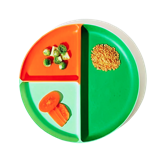
The most detailed guidance comes from a joint advisory written by the American College of Lifestyle Medicine, the American Society for Nutrition, the Obesity Medicine Association, and The Obesity Society (Mozaffarian et al., Obesity Pillars, June 2025). It asks clinicians to emphasize fruits, vegetables, whole grains, legumes, lean proteins, nuts, and seeds, and minimally processed, nutrient-dense foods. It asks them to counsel people to avoid refined carbohydrates (refined grains, flour, starches, sugars), sugar-sweetened beverages, red and processed meats, and most fast foods (ACLM/ASN/OMA/TOS, June 2025).

The federal Dietary Guidelines for 2025 to 2030 overlap on most of that and part ways on meat and fat. They say to prioritize protein foods at every meal, including eggs, poultry, seafood, and red meat as well as beans, peas, lentils, nuts, seeds, and soy (Dietary Guidelines for Americans 2025 to 2030, USDA and HHS, January 2026). They list butter or beef tallow among cooking fats and say saturated fat generally should not exceed 10% of total daily calories (DGA, January 2026). The advisory tells people to avoid red meat and the Guidelines list it as a protein food, so each position is printed here with its owner.

The Guidelines' serving goals, written for a 2,000-calorie pattern and adjusted to your needs, are 3 servings of vegetables and 2 of fruit a day, 2 to 4 servings of whole grains, and 3 of dairy (DGA, January 2026). They say to avoid sugar-sweetened beverages, and that one meal should contain no more than 10 grams of added sugars (DGA, January 2026).

Protein

The advisory's protein targets during major weight reduction run 1.2 to 2.0 g per kg of adjusted body weight per day, or an absolute target of 80 to 120 g a day, which it says may enhance adherence (ACLM/ASN/OMA/TOS, June 2025). The Dietary Guidelines set 1.2 to 1.6 g per kg of body weight per day for adults (DGA, January 2026). The advisory adds that some people meet their target with high-protein shakes, bars, and fortified products (ACLM/ASN/OMA/TOS, June 2025).

Every figure, the floor, the ceiling, and the part strength training plays are on the protein page linked below.

Meals on the nausea days

The labels give no eating advice for nausea. The tips come from the advisory and from the two manufacturers, and they overlap without matching.

ACLM, ASN, OMA and TOS advisory, June 2025. Smaller, more frequent meals, and avoiding fatty or high-fiber foods during the first few days, help with nausea. Ginger or peppermint tea and acupressure bands can be beneficial.

Eli Lilly, Zepbound side effects page, May 2026. Eat smaller meals, splitting 3 daily meals into 4 or more smaller ones. Stop eating when you feel full. Avoid fatty foods like butter or cheese. Try bland foods like toast, crackers, or rice.

Novo Nordisk, Wegovy side effects page, May 2026. Try bland, low-fat foods like crackers, toast, and rice, and foods that contain water, like soups and gelatin. Eat more slowly on purpose. Avoid lying down after eating and avoid greasy foods. Get fresh air, and talk often with your healthcare professional.

Three items appear on more than one list: smaller meals (advisory, Lilly), bland starches like toast, crackers and rice (Lilly, Novo Nordisk), and less fat or grease (advisory, Lilly, Novo Nordisk). The advisory also notes that foods high in protein, fat, or fiber can further slow gastric emptying (ACLM/ASN/OMA/TOS, June 2025).

Fiber and constipation

Constipation was reported by 11 to 17 in 100 people on Zepbound against 5 on placebo (Zepbound Prescribing Information, January 2026), and by 24 in 100 on Wegovy against 11 (Wegovy Prescribing Information, February 2026). The advisory says adequate fluids and fiber from foods should be encouraged, and notes that extended constipation can lead to reactive diarrhea (ACLM/ASN/OMA/TOS, June 2025).

NIDDK gives the range: depending on your age and sex, adults should get 22 to 34 grams of fiber a day, added a little at a time so your body gets used to the change, with water and other liquids to help the fiber work (NIDDK, Eating, Diet and Nutrition for Constipation, last reviewed May 2018). Its high-fiber list is whole grains such as oatmeal and whole wheat bread, legumes such as lentils, black beans and chickpeas, fruits such as berries, apples with the skin, and pears, vegetables such as carrots, broccoli and green peas, and nuts such as almonds, peanuts and pecans (NIDDK, May 2018).

Fluids

Drinking fluids is the one piece of self-care every label spells out. Diarrhea, nausea, and vomiting may cause a loss of fluids, which may cause kidney problems, and it is important to drink fluids to help reduce your chance of dehydration (Ozempic Medication Guide, January 2025; Mounjaro Medication Guide, January 2026; Wegovy Medication Guide, February 2026; Zepbound Medication Guide, January 2026). The advisory repeats it for clinicians: dehydration from severe nausea, vomiting, or diarrhea can cause acute kidney injury, and efforts should be made to prevent it (ACLM/ASN/OMA/TOS, June 2025).

Only one source here prints an amount, and it prints it for diarrhea: drink at least 8 to 10 glasses of clear fluids daily, with water generally preferred, and limit dairy products (Eli Lilly, Zepbound side effects page, May 2026). MedlinePlus lists being nauseated as one reason people don't drink enough, and names thirst, a dry or sticky mouth, not urinating much, darker yellow urine, headache, and muscle cramps as signs of mild to moderate dehydration (MedlinePlus, Dehydration, reviewed July 1, 2025).

Vitamins and minerals

Eating much less can leave gaps. The advisory says significant reductions in caloric intake can produce insufficient intake of essential vitamins and minerals, especially at energy intakes under 1,200 kcal a day for women and under 1,800 kcal a day for men (ACLM/ASN/OMA/TOS, June 2025). It says dietary supplements can be proactively considered for at-risk nutrients such as vitamin D, calcium, and B12, and lists fatigue beyond expected levels, excessive hair loss, skin flakiness or itching, muscle weakness, poor wound healing, and unusual bruising as signs of frank deficiency (ACLM/ASN/OMA/TOS, June 2025).

A narrative review in the journal Obesity puts the same work before treatment starts, with clinicians counseling on recommended intakes of protein, dietary fiber, micronutrients, and fluids, and monitoring for inadequate nutrient or fluid intake during treatment (Almandoz et al., Obesity, September 2024). Whether you need a supplement, and how much, is a question for your clinician or dietitian.

Alcohol

The NHS says it's best not to drink alcohol on semaglutide or tirzepatide, because it can increase side effects like feeling or being sick (NHS Medicines, last reviewed 15 May 2026). The advisory says alcohol may worsen nausea and gastroesophageal reflux with GLP-1 therapy and should be minimized (ACLM/ASN/OMA/TOS, June 2025). The Dietary Guidelines say to consume less alcohol for better overall health, and name people taking medications that can interact with alcohol among those who should completely avoid it (DGA, January 2026).
What I do with all this, and what I don't

I count what you eat from what you text or photograph, and I keep protein, fiber, and fluids in view across the day so the low-appetite days still add up. On the queasy days I work from the lists above, smaller meals and bland food, with the owner's name still on each tip. When your prescriber or dietitian gives you a calorie number, a protein target, or a supplement, I work from theirs.

I never set your calories, never recommend a supplement or an amount of one, and never change or skip a dose of your medication. When what you describe matches the call-your-provider list at the top of this page, I say so and tell you to call.

No clinician reviewed this page. It restates the FDA labels, the ACLM, ASN, OMA and TOS advisory, the Dietary Guidelines, NIDDK, MedlinePlus, the NHS, and the manufacturers' pages linked below, and those are the documents to trust over anything here.

What you can do with BodyBuddy

I count the meals you text me

Text what you ate or send a photo, even when it's three bites. I keep the running protein, fiber, and calorie count, so a day of small meals still shows what it added up to.

that's 4 small meals today and about 70g protein. nice, that counts

I plan around the queasy days with you

Tell me when the nausea hits and we pick something from the lists above: smaller meals, bland food, less grease. Your prescriber's and dietitian's instructions come first.

rough morning? toast or crackers now, and let's try the chicken and rice at 1

I keep fluids in the day

Every label says to drink fluids when your stomach is off. On the rough days I ask how much you've had, and I tell you when what you describe is on the call-your-provider list.

how many glasses so far today? let's get one more in before dinner

Text like you're talking to a friend

Tap to start a conversation if this sounds like you.

Text me what you ate and I work from there

Everything above runs on what you tell me. Send the meals as they happen, tell me how your stomach is, and bring any number your prescriber or dietitian gave you. They own the plan, and I keep the count with you every day.

Common questions

Is there an official GLP-1 diet?

No label prints one. The labels say to use the drug with a reduced-calorie diet and increased physical activity, and the most detailed guidance is the June 2025 advisory from ACLM, ASN, OMA and The Obesity Society.

What should I eat when I feel nauseous on a GLP-1?

The 2025 advisory suggests smaller, more frequent meals and less fatty or high-fiber food in the first few days. Lilly and Novo Nordisk add bland foods like toast, crackers and rice, and eating slowly.

Read the full answer
How much protein should I eat on a GLP-1?

The Dietary Guidelines say 1.2 to 1.6 g per kg of body weight a day. The 2025 advisory gives 80 to 120 g a day as an absolute target. Every figure is on the protein page.

Read the full answer
Should I avoid alcohol on Ozempic or Mounjaro?

The NHS says it's best not to drink on semaglutide or tirzepatide because alcohol can make nausea and vomiting worse. The 2025 advisory says to minimize it.

Read the full answer
Francis, founder of BodyBuddy

Hi, I'm Francis 👋

If you're like me, staying consistent is the hard part. I built BodyBuddy to give everyone the daily accountability to follow through.

Francis John, BodyBuddy FounderText me

7-day free trial, cancel anytime.

No one is reading your texts

Nobody monitors your thread. A conversation is reviewed by our own staff only in limited cases, such as a request for human help or a safety concern, and never shared outside.

Your data is yours to delete

You can request deletion of your personal data at any time, and deleting your account removes it from our systems.

Not sold or used for advertising

We do not sell consumer health data or share it for advertising. Service providers process it only to deliver the features you choose.

Everyone gives you a plan.BodyBuddy texts you until it happens.

A coach that stays with you through every plan, every setback, and all the days in between.