
BodyBuddy LogoBodyBuddy

Weight loss after menopause

The answer is below, sourced to the NIA, the Office on Women's Health, the Menopause Society, and the SWAN study. After that, if you want someone asking how the day went while you do all of this on broken sleep, that's me.

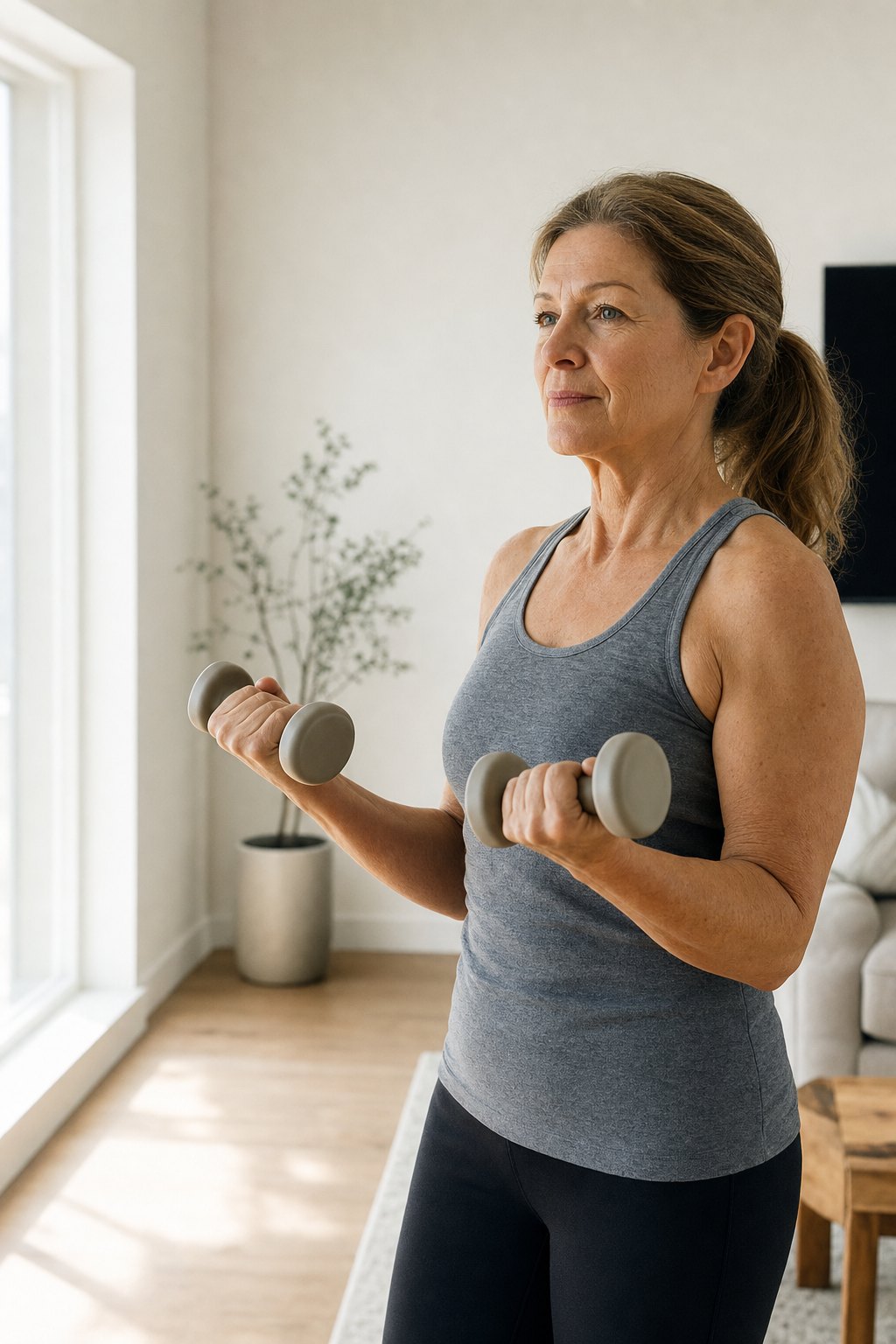
A woman in her fifties holding light dumbbells in a bright living room

Strength days

7 of 8 days

strength day 💪 two sets of everything, and text me the weights

Weight after menopause, from the sources

Most of what gets repeated about this window is half right, and the halves come from different documents. Here is what each one actually says, with its name attached, and the sources at the bottom.

The NIA says to see your doctor if your periods happen very close together, if you have heavy bleeding, if you have bleeding or spotting after sex or between periods, if your periods last more than a week, or if you start bleeding or spotting again after not having a period for more than a year (NIA, content reviewed October 16, 2024). The Office on Women's Health says weight gain can raise your risk for high blood pressure, high cholesterol, diabetes, heart attack, and stroke (womenshealth.gov, updated March 12, 2025), so chest pain, sudden shortness of breath, or one-sided weakness is a 911 call and never a text to me.

The timing

Most women begin the menopausal transition between ages 45 and 55, and the average age of menopause in the United States is 52 (NIA, content reviewed October 16, 2024). You only know you have reached it after a full year with no period and no spotting, so the label arrives in hindsight. Symptoms related to menopause can last between two and eight years, and the NIA says the timing and the symptoms vary a great deal from woman to woman.

Where you sit in that window matters for the numbers below, because the body-composition research is measured against the date of the final menstrual period rather than against a birthday.
What changes in the body

The NIA says that during the menopausal transition the body begins to use energy differently, the distribution of fat in the body changes, and women may gain weight more easily, alongside changes in bone density, heart health, body shape and composition, or physical function (NIA, October 16, 2024). In its plainer list of what you might notice, it says your waist could get larger and you could lose muscle and gain fat.

The North American Menopause Society, now The Menopause Society, describes the same thing at the hormone level and says the loss of ovarian hormones after menopause leads to altered body composition, with a reduction in lean body mass and an increase in visceral fat mass (NAMS, October 12, 2022). It also separates the two causes rather than blaming one, and says aging-related metabolic changes promote weight gain in both sexes, and that the body's metabolic rate drops with age because of a loss of muscle mass and reduced activity in brown adipose tissue. Some of this is menopause and some of it is being older, and none of these documents pretends to split that cleanly.

The numbers from the SWAN cohort

SWAN scanned 1,246 women through the transition and fit the changes against the date of the final menstrual period (Greendale et al., JCI Insight, March 7, 2019). Fat mass climbed at 1.0% a year before the transition and at 1.7% a year during it, roughly doubling, and the acceleration began about two years before the final period and slowed about 1.5 years after it. Lean mass moved the other way, gaining 0.2% a year before the transition and declining 0.2% a year during it.

Body weight itself did something different, and this is the part that explains the frustration. Weight climbed in a straight line through premenopause with no acceleration at the transition, then the trajectory flattened afterward (Greendale 2019). Fat went up while lean mass came down, so the scale can sit still while the composition underneath it moves. This is one observational cohort of 1,246 women, so it describes a group and predicts nothing about you.

Average weight change

The Office on Women's Health gives the plainest figure and says many women gain an average of 5 pounds after menopause, and that lower estrogen levels may play a role (womenshealth.gov, updated March 12, 2025). It names the other contributors in the same breath, and they are a metabolism that slows with age, less healthy eating, less activity, and loss of muscle mass, which matters because muscle burns more calories at rest than other types of tissue.

The same society puts the population figure next to that and says more than two thirds of midlife US women are over the ideal weight threshold (NAMS, October 12, 2022). That document is a conference presentation announcement rather than a clinical guideline, so it belongs here as a description of the landscape, and instructions have to come from somewhere else.

Strength training and activity

The CDC's number for adults is 150 minutes of moderate-intensity physical activity a week, or 75 minutes of vigorous-intensity, or an equivalent combination, plus at least 2 days of muscle-strengthening activity that works all major muscle groups, meaning legs, hips, back, abdomen, chest, shoulders, and arms (CDC, last updated December 20, 2023). The Office on Women's Health gives the same shape for women at this stage and asks for at least 2 hours and 30 minutes a week of moderate aerobic physical activity plus exercises that build muscle strength, including weight-bearing exercises, on two days each week (womenshealth.gov, updated March 12, 2025).

The strength half earns its place here because of what SWAN measured. Lean mass is the thing that declines through the transition, and those two days a week are the only published instruction on this page that acts on it directly. On what exercise does for the weight itself, The Menopause Society is careful and says physical activity is less effective than dietary interventions for weight loss initially, and that it plays a crucial role in weight maintenance after the initial diet-induced weight loss (NAMS, October 12, 2022). Your doctor is the one who clears you for any of it.

Protein and calories

MedlinePlus puts protein for healthy adults at 10% to 35% of your total calorie needs, and it gives the arithmetic, that one gram supplies 4 calories, so 100 grams of protein in a 2,000-calorie day is 20% of the total (MedlinePlus, review date 04/01/2025). That is a range rather than a prescription, and yours gets set inside it by you and whoever knows your history.

On calories, The Menopause Society says the most important intervention for weight loss and maintenance remains calorie restriction (NAMS, October 12, 2022). No source on this page publishes a calorie floor for women after menopause, so I will not invent one. Your number comes from your own baseline week or from the dietitian or doctor who set it, and I hold you to that number rather than to one I made up.

Sleep

The NIA lists trouble sleeping among the common changes at midlife and says night sweats or a need to urinate might wake you, and that getting back to sleep can be hard once you are up (NIA, October 16, 2024). The Menopause Society connects that to the weight directly and says sleep disturbances and mood disorders, possibly related to the menopause transition, can interfere with the adoption of healthy lifestyles and further promote weight gain (NAMS, October 12, 2022).

Neither document hands you a number of hours that you control, so I do not hand you one either. I keep the sleep debt from what you tell me or from your device, and after a bad night the day's targets come down and I say so before you have to ask.

Bone

Having less estrogen after menopause causes you to lose bone mass much more quickly than you did before, and the Office on Women's Health puts calcium at 1,200 milligrams a day for women 51 and older and vitamin D at 600 international units a day for ages 51 to 70 (womenshealth.gov, updated March 12, 2025). The NIA says the same thing in one line and asks you to keep eating a healthy diet, stay active, and get enough calcium and vitamin D for optimal bone health (NIA, October 16, 2024).

This sits on a weight page because of what a hungry, hurried diet tends to push out of the day. Losing weight is no reason to stop counting the calcium, and I keep both in the same log.

What I do with all this, and what I don't

I never diagnose, never clear you for exercise, and never advise you on hormone therapy or any other prescription, because those belong to your doctor. I do not set you a calorie target below what your dietitian or doctor gave you, and where the sources publish no floor I will not make one up.

The daily part is what I am for. You text me the food and I log it with the calories and protein. We put the two strength days on the calendar and I ask about them on the day, and walking counts for the rest of the week. I keep the sleep debt from what you tell me, and after a rough night the targets bend. Once a week I send a recap with the trend, and because SWAN says the scale can sit still while the composition moves, I read weeks rather than mornings and I say when a target is wrong for your life.

No clinician reviewed this page. It restates the NIA, the Office on Women's Health, The Menopause Society, the CDC, MedlinePlus, and the SWAN analysis linked below, and those are the documents to trust over anything here.

What you can do with BodyBuddy

I keep the two strength days on the calendar

You pick the days and I ask on the day, then log what you did. If you want a program we build one together, and if you already have one I work from that.

it's thursday, that's a lift day. 30 minutes at home or the gym?

I log the food you text me and count the protein

A photo or a sentence, and the numbers come back the same minute with protein first. Nothing about your food changes in week one, because we're finding out where you actually are.

logged it. 520 cal, 38g protein. that's 71g today, so dinner needs about 30 more

I send the weekly trend

Weigh in whenever you weigh in and text me the number. Once a week I send the chart with the trend on it, and I tell you what I saw in the log next to it.

here's 10 weeks 📉 the flat stretch is the fortnight you were sleeping badly. that tracks.

Text like you're talking to a friend

Tap to start a conversation if this sounds like you.

Bring the plan you already have

Everything above starts from one text, and the baseline week starts the day you send me the first meal. If a dietitian, a trainer, or your doctor has already given you a plan, send it and the days come from there. Your doctor clears the exercise and sets any number that has to be medical, and I work inside what they told you.

Francis, founder of BodyBuddy

Hi, I'm Francis 👋

If you're like me, staying consistent is the hard part. I built BodyBuddy to give everyone the daily accountability to follow through.

Francis John, BodyBuddy FounderText me

7-day free trial, cancel anytime.

No one is reading your texts

Nobody monitors your thread. A conversation is reviewed by our own staff only in limited cases, such as a request for human help or a safety concern, and never shared outside.

Your data is yours to delete

You can request deletion of your personal data at any time, and deleting your account removes it from our systems.

Not sold or used for advertising

We do not sell consumer health data or share it for advertising. Service providers process it only to deliver the features you choose.

Everyone gives you a plan.BodyBuddy texts you until it happens.

A coach that stays with you through every plan, every setback, and all the days in between.