
BodyBuddy LogoBodyBuddy

Your A1c came back high.Here's what moves it.

The answer is below, sourced to the CDC, NIDDK, and the ADA. After that, if you want someone asking about the walk after dinner every day until the retest, that's me.

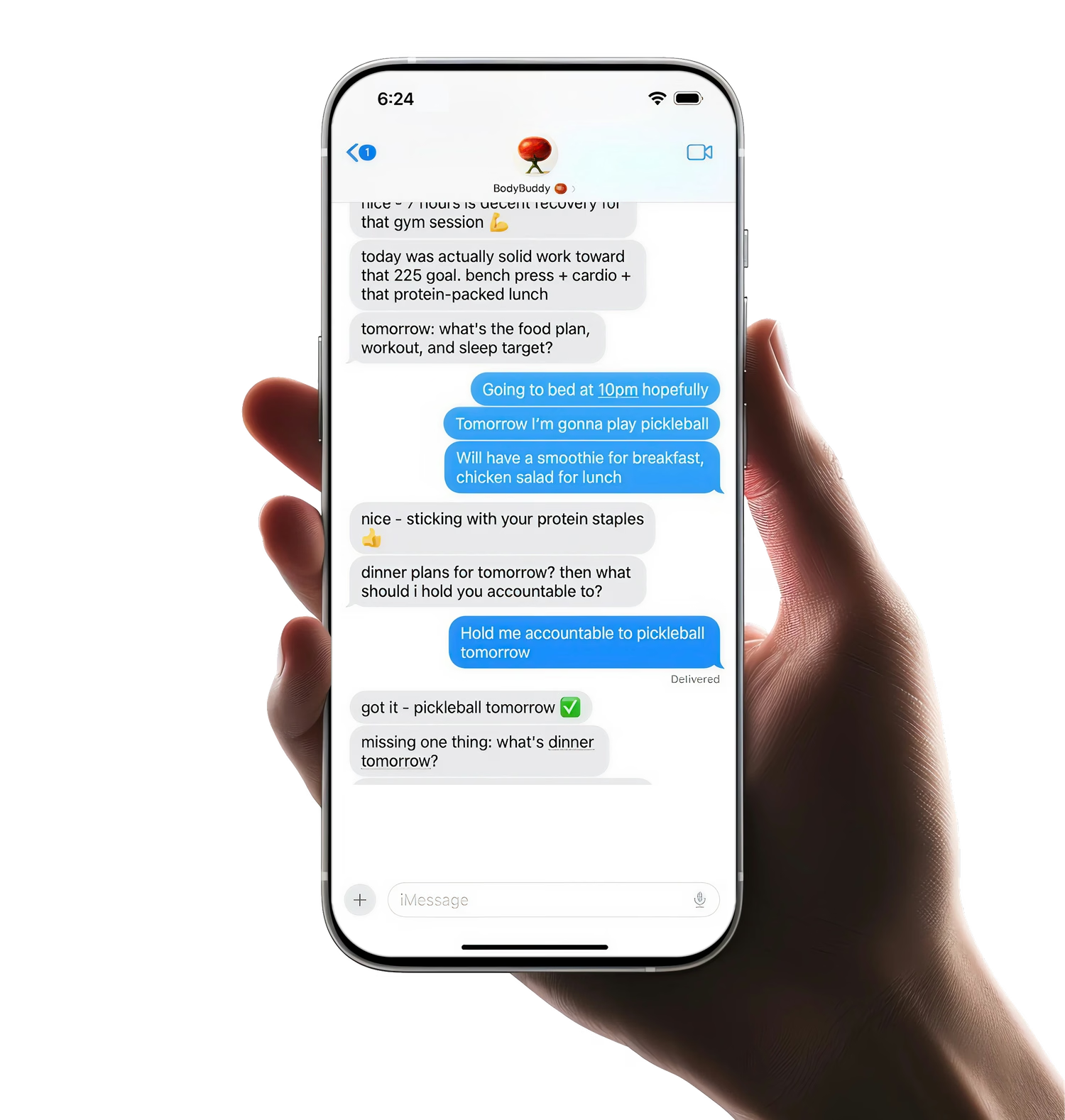
A hand holding an iPhone with a BodyBuddy conversation
9:41
Tuesday 5:48 PM
BodyBuddy

Lowering your A1c, from the sources

A1c is a three-month average, so it moves on a three-month clock. These are the numbers that define it and the things the CDC, NIDDK, and ADA say move it, with the sources at the bottom.

Call 911 or go to the emergency room if your blood sugar stays at 300 mg/dL or higher, your breath smells fruity, you are vomiting and cannot keep food or drink down, or you have trouble breathing. Those are the CDC's signs of diabetic ketoacidosis. A reading below 70 mg/dL is low: the CDC's rule is 15 grams of carbs, wait 15 minutes, recheck. If you feel weak, confused, or cannot walk or see clearly, get someone to help you.

What the number is

A1c is the percentage of your red blood cells that have sugar attached to their hemoglobin. Red blood cells live about three months, so the number reflects your average blood sugar over the past two to three months.

The cutoffs the CDC, NIDDK, and MedlinePlus all use:

  • Below 5.7%: normal
  • 5.7% to 6.4%: prediabetes
  • 6.5% or above: diabetes

For most people with diabetes, the ADA's target is 7% or less and NIDDK's is below 7%. It is individual: NIDDK says people with other health conditions may be given a less strict target, 7% to 8% or higher. Under the A1c sit the day-to-day numbers NIDDK lists, 80 to 130 mg/dL before a meal and under 180 about two hours after one starts, and those can differ by age and health too. Your target is the one your doctor gave you.


How fast it can move

With diabetes, A1c is tested at least twice a year, and the ADA says more often if your treatment plan has changed or isn't working as expected. With prediabetes, the CDC says every one to two years.

Because the test averages roughly three months, a change you make today shows up in a number measured over the following months. None of the sources give a faster clock than that, so this page doesn't either.

Weight

In the Look AHEAD trial, adults with type 2 diabetes in an intensive lifestyle program lost an average of 8.6% of their body weight in a year, and their average A1c went from 7.3% to 6.6%. The comparison group went from 7.3% to 7.2%.

For prediabetes, NIDDK says losing 5 to 7 percent of your starting weight may prevent or delay type 2 diabetes. Separately, the CDC reports that people with prediabetes who joined a structured lifestyle change program cut their risk of developing type 2 diabetes by 58%, and by 71% for people over 60.

Movement

The CDC and NIDDK guideline is at least 150 minutes a week of moderate activity, such as brisk walking, plus muscle-strengthening on two days. NIDDK also phrases it as 30 minutes on five days.

The walk after dinner has its own evidence. In one small study of older adults at risk for high blood sugar, 15-minute walks starting 30 minutes after each meal lowered blood sugar after dinner more than a single 45-minute walk did. That study measured after-meal blood sugar over two days. It says nothing about A1c over months, so take it as a reason the timing matters and nothing more.

Food

  • Fiber. Your body doesn't absorb it, so it doesn't spike blood sugar the way other carbohydrates can. The CDC cites the Dietary Guidelines' 22 to 34 grams a day, depending on age and sex, from foods like oats, beans, lentils, brown rice, apples, pears, broccoli, nuts, and seeds.
  • Sugary drinks. A 12-ounce regular soda has about 42 grams of added sugar, around 150 calories, and the CDC lists type 2 diabetes among the problems adults who often drink them are more likely to have. Sports drinks, energy drinks, fruit drinks, and sweetened waters count.
  • The pattern. The NHS advice is fruit, vegetables, wholegrain foods like wholemeal bread and oats, and pulses, and less of the processed food with lots of salt and sugar. Its other line is worth keeping: a small change every week makes it easier.

Sleep

The CDC's diabetes guidance explains the mechanism: when you regularly don't get enough sleep, you may have less insulin to balance your blood sugar and more cortisol, which makes it harder for insulin to do its job. Short sleep also raises the hunger hormone and lowers the fullness ones, which is why a bad night tends to become a bad day of eating.

The medication

NIDDK's instruction is to take your medicines as prescribed even if you feel good or have reached your goal. For metformin, MedlinePlus says it controls diabetes but doesn't cure it, so keep taking it even when you feel well, never more or less than prescribed, and don't stop without talking to your doctor. If cost is why doses get skipped, NIDDK says to raise it with the care team rather than ration.

What not to do on your own

  • Don't stop or change a diabetes medicine unless your prescriber tells you to.
  • Don't switch to a very strict, low-calorie diet without talking to a health professional first. The NHS warns it can interact with insulin and other diabetes medicines.
  • If you're vomiting, have diarrhea, or a high fever while on diabetes medicine, get urgent medical advice before adjusting anything yourself.

What I do with all this, and what I don't

I never adjust a medication, never diagnose, and never set your target. What I do is ask every day about the things your doctor named, the walk, the soda, the pill, keep the fasting readings you text me with their dates, and read them back before the retest so the visit starts with the record.

No clinician reviewed this page. It restates the CDC, NIDDK, ADA, NHS, and MedlinePlus pages and the two studies linked below, and those are the documents to trust over anything here.

What you can do with BodyBuddy

The habit your doctor named, asked about

The walk after dinner, the soda, the earlier bedtime. I check in on it every day, and your steps come from your phone so I know whether the walk happened.

you're at 2,900 steps and it's 7:30. still doing the loop tonight?

The fasting readings, kept

Text me the morning number when you take it. I keep them with the dates, so before the retest you can ask what the months looked like and walk in with the record.

since the 3rd: 14 fasting readings, all with dates. want them written out for the visit?

The retest, on the calendar

Tell me when the next A1c is. I count down to it, remind you about the labs the week before, and the visit starts with what actually happened.

retest is april 14 and the labs go the week before. want a reminder to book them?

It starts with whatever you'd text a friend

A number you just got, a doctor who said the word, a plan you've been given before. Tell me the way you'd tell someone who'd remember it in March.

Tap one to send it as your first text, or write your own.

Bring the visit, and the plan comes from your doctor

Everything above works from what you tell me. Record the next appointment with everyone's okay, or photo the after-visit summary, and the targets, the medication, and the labs before the retest come from your care team instead of a web page. I never change a dose. If you've given me the plan and a reading falls outside what it says to watch for, I say so and tell you to call the office.

Encrypted in transit and at rest

Your documents and recordings are encrypted while they are sent and while they are stored.

Your plan stays yours

If you continue with coaching, the plan lives in your account. You can request deletion under the terms in our Privacy Policy.

Not sold or used for advertising

We do not sell consumer health data or share it for advertising. Service providers process it only to deliver the features you choose.

Francis, founder of BodyBuddy

Hi, I'm Francis 👋

An A1c is three months of ordinary days averaged into one number. I built this so those days have someone in them, and so the retest isn't a surprise.

Francis John, BodyBuddy FounderText me

7-day free trial, cancel anytime.

Everyone gives you a plan.BodyBuddy texts you until it happens.

A coach that stays with you through every plan, every setback, and all the days in between.