
BodyBuddy LogoBodyBuddy

Strength training for women

The answer is below, sourced to the ACSM position stand, the federal activity guidelines, NIAMS, the NIA, and four peer-reviewed papers. After that, if you want someone texting you the session and asking how it went, that's me.

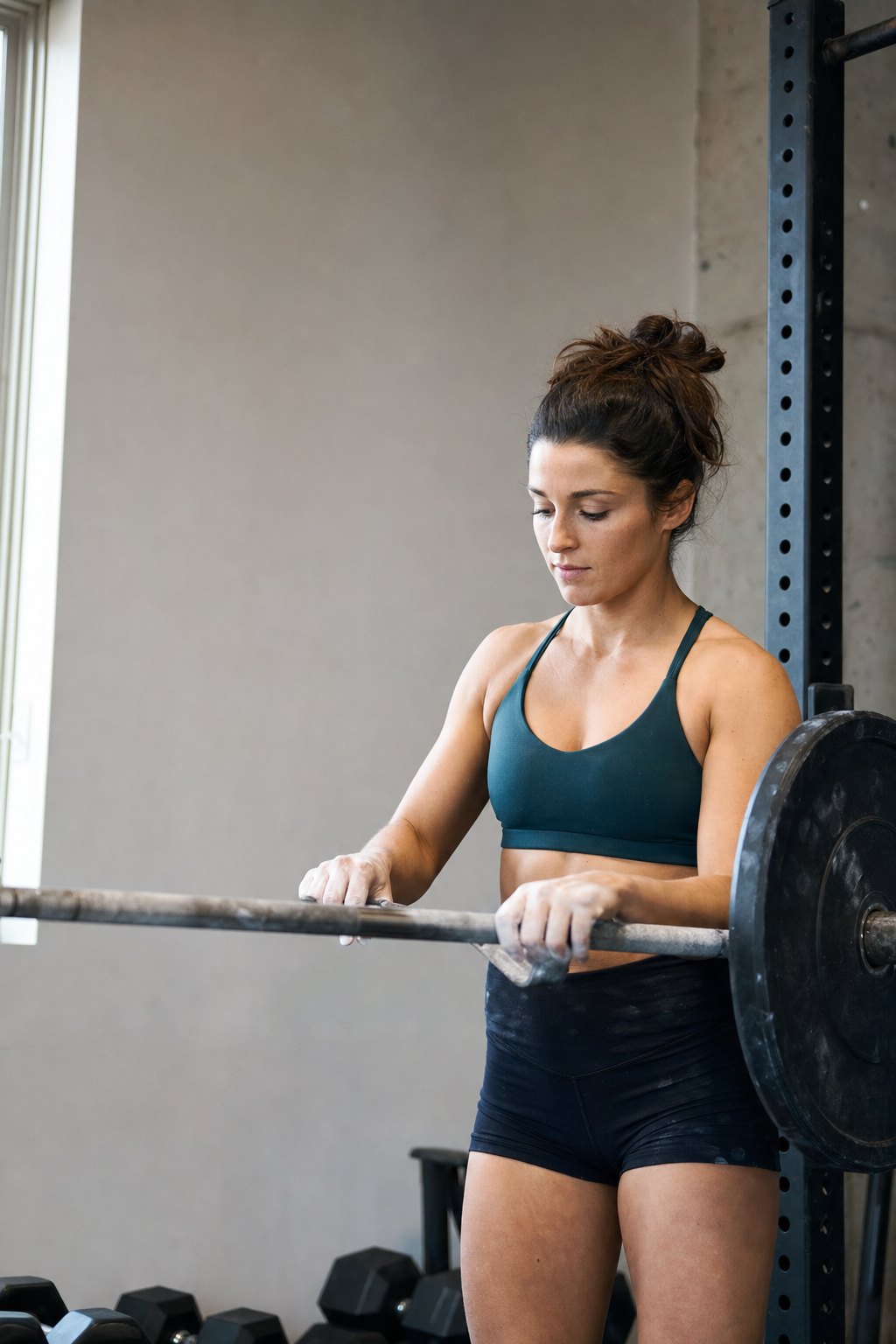
A woman chalking her hands on a loaded barbell in a gym before a set

12 weeks

session 2 today 🏋️ same weights as tuesday, or add five?

Strength training for women, from the sources

Most of what gets repeated about women and weights comes from documents that are shorter and plainer than the advice built on top of them. Here is what each one says, with its name and its date attached, and the sources at the bottom.

Three documents name the situations to settle with a clinician before you start. The Physical Activity Guidelines for Americans say adults with chronic conditions or symptoms should be under the care of a health care provider and can consult a health care professional or physical activity specialist about the types and amounts of activity appropriate for them, and that people who develop new symptoms when increasing their levels of activity should consult a health care provider (Physical Activity Guidelines for Americans, 2nd edition, HHS, 2018). NIAMS says that if you have low bone density, osteoporosis, or other physical limitations, talk to a health care provider before starting an exercise program (NIAMS, Exercise for Your Bone Health, last reviewed May 2023). ACOG says a thorough clinical evaluation should be conducted before recommending an exercise program to ensure that a patient does not have a medical reason to avoid exercise, and that women who are pregnant can consult their health care provider about whether or how to adjust their physical activity during pregnancy and after the baby is born (HHS Physical Activity Guidelines, 2018), which ACOG Committee Opinion 804 (April 2020) repeats.

How much the guidelines ask for

The federal number is two days. The Physical Activity Guidelines for Americans say adults should do muscle-strengthening activities of moderate or greater intensity and that involve all major muscle groups on 2 or more days a week, as these activities provide additional health benefits (Physical Activity Guidelines for Americans, 2nd edition, HHS, 2018). The same document asks for at least 150 to 300 minutes a week of moderate-intensity aerobic activity, or 75 to 150 minutes of vigorous-intensity activity, or an equivalent combination, and it repeats the two-day strength figure for adults with chronic conditions or disabilities who are able (HHS, 2018).

ACSM landed on the same frequency in 2026 and put the emphasis on showing up. Stuart Phillips, an author on the position stand, said that training all major muscle groups at least twice a week matters far more than chasing the idea of a perfect or complex training plan, and that whether it is barbells, bands, or bodyweight, consistency and effort drive results (ACSM, Resistance Training Prescription for Muscle Function, Hypertrophy, and Physical Performance in Healthy Adults: An Overview of Reviews, Medicine & Science in Sports & Exercise, announced March 17, 2026). The stand then tailors load and volume to the goal. For strength it gives heavier loads at 80% of one-repetition maximum for 2 to 3 sets per exercise. For muscle growth it gives a higher weekly volume of about 10 sets per muscle group. For power it gives moderate loads of 30 to 70% of 1RM moved as quickly as possible during the lifting phase (ACSM, 2026).

The equipment question is settled in the same document. ACSM reports that nontraditional training is highly effective, and that elastic bands, bodyweight exercises, and home-based routines yield marked benefits in strength, hypertrophy, and physical function (ACSM, 2026). NIAMS counts weight machines, free weights, resistance bands, and your own body weight as resistance training (NIAMS, last reviewed May 2023).
What the trials found in women

Women have been underrepresented in this literature, which is the stated reason the first pooled analysis of its kind exists. A 2026 systematic review and meta-analysis gathered 126 studies covering 4,019 healthy women aged 18 and over, with a mean age of 50.9 years and 66.2% of them postmenopausal (Isenmann et al., Journal of Science and Medicine in Sport, September 2026). Resistance training improved muscular strength in premenopausal women with a standardized mean difference of 1.50 (95% confidence interval 1.28 to 1.73) and in postmenopausal women with a standardized mean difference of 1.46 (95% confidence interval 1.26 to 1.67), and the two subgroups did not differ (p = 0.520).

Body composition moved across the review as well. Functional mass increased with a standardized mean difference of 0.27 (95% confidence interval 0.18 to 0.35) and fat mass decreased with a standardized mean difference of 0.30 (95% confidence interval 0.25 to 0.35), with no significant subgroup differences (Isenmann 2026). The meta-regressions found no association between the outcomes and age, training duration, frequency, or total sessions, all at p greater than 0.05, and the menopausal subgroups did not differ.

The authors' own conclusion is the line worth carrying off this page. General training guidelines could be applicable to women, with individualization remaining important over strict sex-based or age-based distinctions (Isenmann 2026). The paper's title says it more plainly, which is that it is never too late.

Bones

NIAMS recommends a combination of weight-bearing exercise, resistance training, and balance training as best for building and maintaining healthy bones and preventing falls and fractures (NIAMS, Exercise for Your Bone Health, last reviewed May 2023). It says exercise strengthens both muscles and bones in children and adults, prevents bone loss in adults, and makes bone denser and replaces old bone with new bone.

The reason this belongs on a page about women is the prevalence gap. The CDC reports osteoporosis of the femur neck or lumbar spine in 18.8% of women aged 50 and over, compared with 4.2% of men, drawing on 2017 to 2018 national data (CDC FastStats, Osteoporosis, last reviewed January 23, 2026).

One trial ran heavy lifting in postmenopausal women with low bone mass, the group that figure points at. In LIFTMOR, 101 postmenopausal women with low bone mass, average age 65, were randomized to either 8 months of twice-weekly, 30-minute supervised high-intensity resistance and impact training at 5 sets of 5 repetitions above 85% of one-repetition maximum, or to a home-based low-intensity program. Lumbar spine bone mineral density rose 2.9% in the training group against a 1.2% fall in the control group (p less than 0.001), femoral neck density rose 0.3% against a 1.9% fall (p = 0.004), and every functional performance measure improved (Watson et al., Journal of Bone and Mineral Research, February 2018). One adverse event was reported across the trial, a minor lower back spasm.

Read that as a result about a supervised program. The women were screened for conditions and medications that influence bone and physical function, the sessions were supervised, and the authors describe those loads as ones not traditionally recommended for individuals with osteoporosis because of a perceived high risk of fracture (Watson 2018). Strength training is also no substitute for osteoporosis screening or treatment.

Getting bulky

The measured version of this question has an answer, and it is about rates rather than sizes. A 2025 Bayesian meta-analysis of 29 studies, in which women and men completed the same resistance training intervention, found that absolute increases in muscle size slightly favored males (standardized mean difference 0.19, 95% highest density interval 0.11 to 0.28) while relative increases were similar between the sexes (0.69% difference, 95% highest density interval -1.50% to 2.88%). Absolute upper-body hypertrophy favored males and lower-body hypertrophy did not, and the authors conclude that females have a similar potential to induce muscle hypertrophy as males (Refalo et al., PeerJ, February 25, 2025).

Strength moved the same way in an earlier pooling. A 2020 meta-analysis found no significant difference between males and females for hypertrophy across 12 outcomes from 10 studies (effect size 0.07, p = 0.31), no significant difference for lower-body strength across 23 outcomes from 23 studies (p = 0.20), and a significant effect favoring females for relative upper-body strength across 19 outcomes from 17 studies (effect size -0.60, p = 0.002) (Roberts, Nuckols, and Krieger, Journal of Strength and Conditioning Research, May 2020).

So lifting builds muscle in women at close to the same relative rate it builds muscle in men, which is what these studies set out to measure. None of them publishes a figure for how much is too much, because that was never an outcome anyone recorded. The part you can act on is that the size of the change tracks the training, and the training is something you can change.

A first week

Two full-body sessions a week is the smallest thing that meets the federal muscle-strengthening guideline, alongside its 150 minutes of aerobic activity, and it is where our own beginner guide starts. Pick one movement from each of five rows and run both sessions from the same list. Knee-dominant is a leg press or goblet squat in a gym, or a chair squat at home. Hip-dominant is a dumbbell Romanian deadlift or cable pull-through, or a hip hinge or glute bridge at home. Push is a machine or dumbbell chest press, or a wall or incline push-up. Pull is a seated cable row or lat pulldown, or a resistance-band row. Carry or trunk is a farmer carry or dead bug, or a suitcase carry at home (BodyBuddy, Strength training for women, published August 12, 2026).

On sets and repetitions the NIA is the plainest source. It says one set of eight to 12 repetitions of each exercise is effective, that two or three sets may be more effective, that the exercises should involve at least a moderate level of intensity or effort, and that a beginner can try exercises without weights or resistance bands until the movements feel comfortable (NIA, Three Types of Exercise Can Improve Your Health and Physical Ability, content reviewed January 14, 2025). The NIA also says to work the major muscle groups but to avoid working the same muscle group on any two days in a row, which is why the two sessions belong on days that are not next to each other.

Our beginner guide adds the parts that make the week repeatable. Use one set of each movement in the first orientation sessions and build toward at least two sets per exercise as you tolerate it, rest until you can perform the next set with control at around one to two minutes, finish most sets feeling as though you could perform another two to three clean repetitions, which is a gentler stopping point than the NIA line above, and write down the exercise, the machine setting, the weight, and the repetitions (BodyBuddy, published August 12, 2026). That last line is the one that makes week three possible, because it gives you something to compare against.

Adding weight

The two sources here disagree about effort, so both are printed with their names on them. The NIA says the exercises should be performed to the point at which it would be difficult to do another repetition (NIA, reviewed January 14, 2025). ACSM's 2026 position stand reports that training to fatigue or momentary muscle failure, the choice between machines and free weights, and complex periodization did not consistently impact outcomes for the average healthy adult (ACSM, 2026). A set that is genuinely hard and still under your control sits inside both.

On when to add, the NIA names the mechanism plainly, saying that gradual increases in the amount of weight, the number of sets or repetitions, or the number of days a week of exercise will result in stronger muscles (NIA, reviewed January 14, 2025). Change one of those at a time and the flat weeks stop reading as failure, because you can see which variable moved.

What I do with all this, and what I don't

I never diagnose, never clear you for exercise, and never write you a program beyond the plan you picked. The daily part is what I'm for. You choose a plan from the library or send me the one your trainer or physical therapist wrote, and I text you today's session out of it. You text back what you lifted in whatever shorthand you already use, and I log every set. When the plan says to add weight, I say so on the day it says it, and I keep the number you actually lifted rather than the number you meant to lift. Rest days stay on the calendar, and after a bad night or a sore week we move a session instead of dropping it. On Sundays I send a recap of your sessions, your rest, and the lifts that moved, and when the same day keeps getting missed I say the week is wrong for the plan.

I also hold what you tell me against the situations in the line above, and when something turns up on it I say so and tell you to call.

No clinician reviewed this page. It restates the ACSM, HHS, NIAMS, NIA, CDC, and ACOG documents and the four studies linked below, and those are the documents to trust over anything here.

What you can do with BodyBuddy

I text you today's session

Pick a plan from the library or send me the program your trainer wrote, and I pull the day out of it and put it in the thread before you leave the house.

session 2 today 🏋️ goblet squat, chest press, band row, farmer carry. same weights as tuesday?

I add the weight when your plan says to

Text me your sets the way you'd write them in Notes and I log every one. When the plan calls for more, I say so on the day, and I keep the number you actually lifted.

you had 3 clean reps left on both sets last week, and the plan says go up. 22.5s today.

I send a weekly recap

You tell me how the week felt and I tell you what I saw across your sessions, your rest days, and the lifts that moved. You leave with one thing to work on.

both sessions, six weeks running 📈 the row has moved the most. want to keep pushing that one?

Text like you're talking to a friend

Tap to start a conversation if this sounds like you.

Start with two days and one list of movements

Everything above starts from one text. Tell me what equipment you have and which two days are realistic, and we either pick a plan or work from the one you already follow. Your clinician clears the exercise and I work inside what they told you.

Francis, founder of BodyBuddy

Hi, I'm Francis 👋

If you're like me, staying consistent is the hard part. I built BodyBuddy to give everyone the daily accountability to follow through.

Francis John, BodyBuddy FounderText me

7-day free trial, cancel anytime.

No one is reading your texts

Nobody monitors your thread. A conversation is reviewed by our own staff only in limited cases, such as a request for human help or a safety concern, and never shared outside.

Your data is yours to delete

You can request deletion of your personal data at any time, and deleting your account removes it from our systems.

Not sold or used for advertising

We do not sell consumer health data or share it for advertising. Service providers process it only to deliver the features you choose.

Everyone gives you a plan.BodyBuddy texts you until it happens.

A coach that stays with you through every plan, every setback, and all the days in between.