All guides
Portion control tips that actually work (no tiny plates required)
A practical BodyBuddy guide to portion control tips that actually work (no tiny plates required), with useful considerations and next steps.
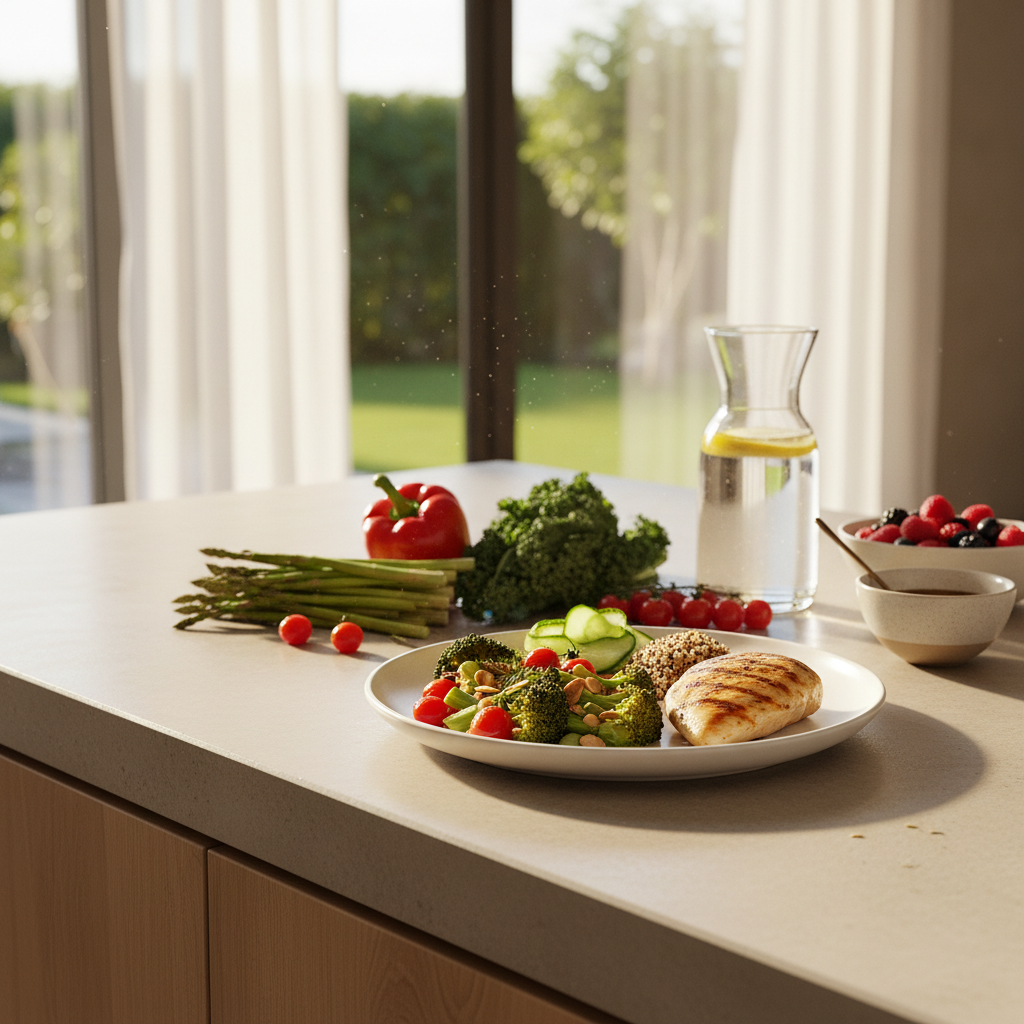
You've probably heard the advice before: just eat less. As if the entire problem is that nobody thought of that yet. The reality is that most people who struggle with overeating aren't doing it because they love food too much. They're doing it because they have no framework for knowing what "enough" looks like. That's where portion control comes in, and no, I'm not talking about buying a set of color-coded containers or weighing your chicken breast on a digital scale.
Portion control tips for weight loss get a bad rap because most of the advice out there is either painfully obvious ("use a smaller plate!") or completely impractical for real life. This guide is different. We're going to cover what actually works, why your brain fights you on portions, and how to build habits that stick without turning every meal into a math problem.
Why your brain is terrible at estimating portions
Here's something most portion control articles won't tell you: your brain was never designed for this. Humans evolved in environments where food was scarce and unpredictable. Your hypothalamus, the part of the brain that regulates hunger, operates on a simple principle: eat when food is available because you don't know when you'll eat again.
A 2023 study from Cornell's Food and Brand Lab found that people consistently underestimate their food intake by 20-40%. Not because they're lying, but because visual estimation is genuinely hard. Pour yourself a "normal" bowl of cereal and then measure it. Most people serve themselves 30-60% more than the label's serving size.
This isn't a willpower problem. It's a perception problem. And the fix isn't to try harder at guessing. It's to build simple systems that do the guessing for you.
- Your stomach takes about 20 minutes to signal fullness to your brain
- Plate size has increased 36% since the 1960s, quietly inflating "normal" servings
- Eating directly from packages (chips, crackers, ice cream) removes all visual cues about how much you've had
The hand method: your built-in portion guide
Forget food scales and measuring cups for everyday meals. Your hands are proportional to your body, which makes them a surprisingly accurate tool for portioning food. This method comes from Precision Nutrition and it's been used with over 100,000 coaching clients.
Here's how it breaks down:
- Protein (palm-sized): one palm of protein-dense food per meal. That's about 4 oz of chicken, fish, or tofu, roughly 25-30g of protein.
- Vegetables (fist-sized): one fist of non-starchy vegetables. Think broccoli, spinach, peppers, green beans. This is the one category where more is almost always fine.
- Carbs (cupped hand): one cupped handful of starchy carbs like rice, pasta, potatoes, or fruit.
- Fats (thumb-sized): one thumb of healthy fats. Olive oil, nuts, avocado, cheese. Fats are calorie-dense, so this one matters most for accuracy.
For most women, one of each per meal works well. For most men, double the protein and carbs. These aren't rules carved in stone. They're starting points you adjust based on how your body responds over two to three weeks.

Practical portion control tips that survive real life
I'm going to skip the advice you've already heard a hundred times. Yes, drinking water before meals helps. Yes, eating slowly is better. You know this. Here's what people don't talk about enough:
Pre-plate everything, especially snacks
The single biggest portion control win is never eating from the original container. Pour the chips into a bowl. Scoop the ice cream into a dish. Put the crackers on a plate. This sounds trivially simple, and it is. But research from the Journal of Consumer Research shows that people eat 50% more when they snack from the bag versus from a portioned bowl.
The reason this works is that it forces a decision point. When the bowl is empty, you have to consciously decide to get more. That pause is everything.
Cook the right amount (not extra "for leftovers")
We tell ourselves we're making extra for tomorrow's lunch. But honestly? Most of us go back for seconds when there's food sitting on the stove. A better approach: cook what you plan to eat, plate it, then immediately pack away any true leftovers before sitting down. Out of sight genuinely does mean out of mind when it comes to food.
Build your plate in a specific order
Start with vegetables. Fill half the plate. Then add protein to a quarter. Then carbs to the remaining quarter. This isn't a magic formula, it's just a way to make sure you don't accidentally load up on the calorie-dense stuff first. When you start with pasta and add veggies as an afterthought, the proportions always skew wrong.
The restaurant problem
Restaurant portions are 2-3x what you'd serve at home. This is well documented. The solution most experts suggest, asking for a to-go box immediately and packing half away, actually works if you do it. I know it feels awkward. Do it anyway. Or share an entree. Or order an appetizer as your main. The point is having a plan before the food arrives, because once a loaded plate is in front of you, your brain's already decided you're eating all of it.
What to do when you're eating the right portions but still hungry
This is the part that trips most people up. You follow the portions, you eat "correctly," and you're still starving an hour later. A few things might be going on:
- Not enough protein. Protein is by far the most satiating macronutrient. If your meals are carb-heavy with minimal protein, you'll be hungry again fast. Aim for 25-35g per meal.
- Not enough fiber. Vegetables and whole grains add bulk without many calories. A cup of broccoli has 55 calories and takes up a lot of stomach space. A cup of pasta has 220 calories and digests quickly.
- Eating too fast. This one's boring but true. It takes time for satiety hormones (GLP-1, CCK, leptin) to kick in. If you finish a meal in 5 minutes, you haven't given your body a chance to register that you ate.
- Sleep deprivation. Poor sleep increases ghrelin (hunger hormone) and decreases leptin (fullness hormone). If you're sleeping 5-6 hours, your hunger signals are genuinely amplified. No portion strategy will override chronic sleep debt.
If you've checked all these boxes and you're still consistently hungry, your portions might actually be too small. This happens a lot with people who go too aggressive too fast. A 200-300 calorie deficit is sustainable. A 700 calorie deficit feels like punishment, and your body will fight back.
How BodyBuddy helps with portion control
One of the hardest things about portion control is that there's no feedback loop. You eat what looks right, you have no idea if it actually was right, and you repeat tomorrow. That's where having a coach changes things.
BodyBuddy is an AI coaching app that works through iMessage, so there's iMessage coaching with a companion iOS app for tracking and your Future You avatar. You text your coach what you ate, snap a photo of your plate, or just describe your meal. Your coach gives you real feedback: "That looks like a solid portion of protein, but you might want to add more vegetables" or "That's a big bowl of pasta. Could you swap half of it for a side salad next time?"
It's the kind of gentle, specific nudging that actually changes habits over time. Not a calorie tracker yelling at you for going 47 calories over some arbitrary limit. If you want to try it, check out BodyBuddy here.
Frequently asked questions
Is portion control better than counting calories?
For most people, yes. Calorie counting is accurate but exhausting, and compliance drops off fast. Portion control using hands or visual cues gets you 80-90% of the accuracy with 20% of the effort. The best approach is the one you'll actually stick with for months, not just weeks.
How long does it take to get used to smaller portions?
About two to three weeks. Your stomach is a muscular organ that physically adapts to the volume of food you eat. If you consistently eat less, your stomach capacity decreases and you'll feel full sooner. The first week is the hardest. It gets genuinely easier after that.
Do I need to control portions of healthy food too?
Depends on the food. Non-starchy vegetables? Not really. Eat as much broccoli and spinach as you want. But nuts, avocado, olive oil, and even whole grains are calorie-dense regardless of how healthy they are. A quarter cup of almonds has 170 calories. You can eat 500+ calories of "healthy" nuts without thinking twice.
Can I still eat out and practice portion control?
Absolutely. The key strategies: split entrees, box half immediately, choose appetizer portions, or eat a small snack before you go so you're not starving when you order. Eating out doesn't have to derail anything if you go in with a loose plan.
The bottom line
Portion control doesn't have to mean deprivation. It's really about building awareness of how much you're eating, because most of us genuinely don't know. Start with the hand method for a week. Pre-plate your snacks. Load up on vegetables first. These small structural changes compound into real results without requiring you to overhaul your entire life.
And if you want personalized guidance from someone who'll actually hold you accountable, BodyBuddy is built for exactly that. No apps to log into. Just text your coach and get better at this one meal at a time.
Related BodyBuddy guides
- How to stop sugar cravings when you're trying to lose weight (8 strategies that actually work)
- How to Stay Consistent with Your Diet: 7 Science-Backed Strategies That Actually Work
- How to stop snacking at night: 7 strategies that actually work
- How to stop stress eating: practical techniques that actually work in the moment
- Meal prep for weight loss: a beginner's guide that actually sticks
Everyone gives you a plan.BodyBuddy texts you until it happens.
BodyBuddy keeps you on track—from meals to doctor's appointments and everything in between.