All guides
How to stop snacking at night (without white-knuckling it)
A practical BodyBuddy guide to how to stop snacking at night (without white-knuckling it), with useful considerations and next steps.
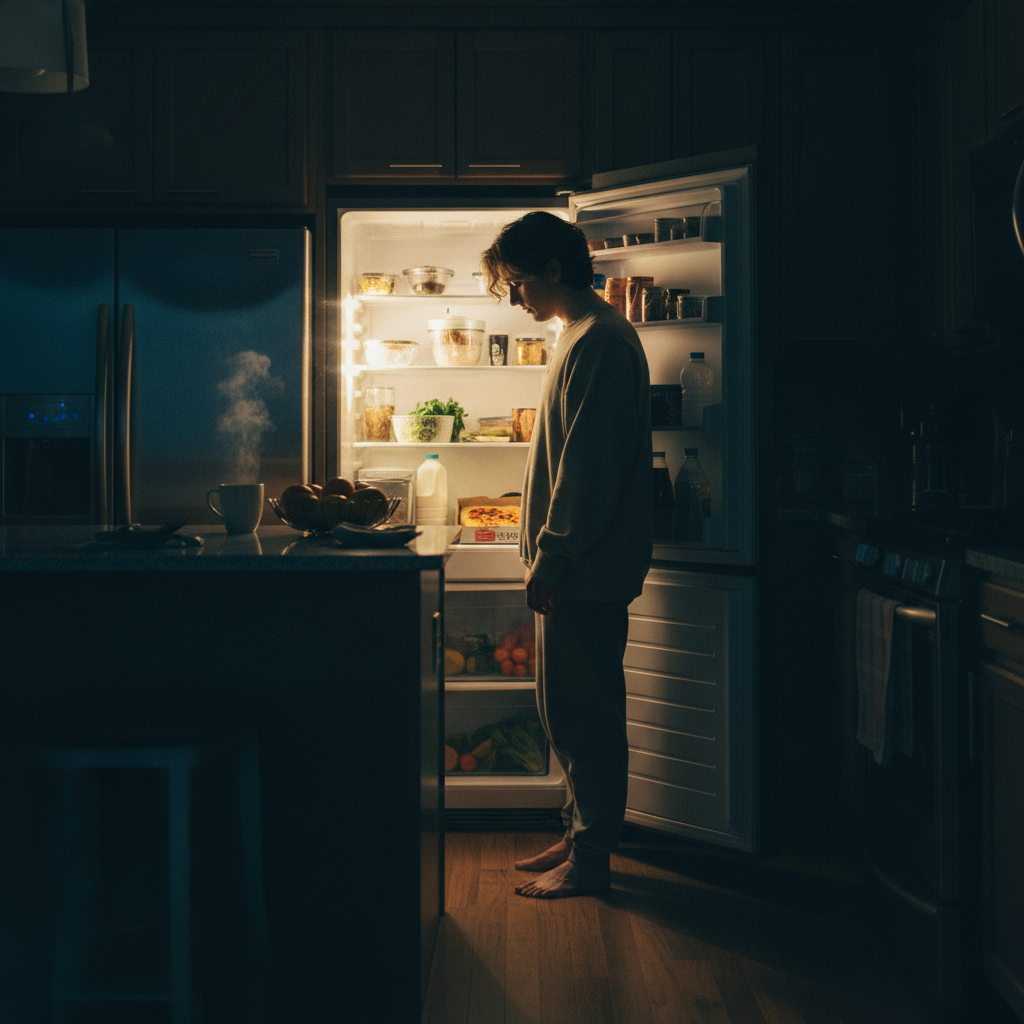
You finished dinner two hours ago. You're not hungry. But somehow you're standing in front of the pantry, reaching for chips or cookies, almost on autopilot. If this sounds familiar, you're dealing with nighttime snacking — and it's one of the most common reasons people struggle to lose weight or maintain their progress.
The good news: you don't need superhuman willpower to stop snacking at night. You need to understand why it happens and build a few specific habits that short-circuit the pattern. That's what this guide covers.
Why you snack at night in the first place
Most nighttime snacking has nothing to do with hunger. Research from the journal Obesity found that the body's internal clock drives cravings for sweet, salty, and starchy foods in the evening, even when you've eaten enough during the day. Your cortisol drops, your guard comes down, and suddenly a bowl of cereal sounds like exactly what you need.
But biology is only part of the story. Boredom plays a massive role. So does stress. After a long day, snacking becomes a reward — a way to decompress. The couch, the TV, the snacks: they form a routine that feels automatic after a while.
There's also a practical angle that people overlook. If you under-eat during the day — skipping breakfast, having a sad desk lunch, trying to "save" calories — your body will course-correct at night. You'll be genuinely ravenous by 9 PM, and no amount of willpower fixes an actual calorie deficit.
Understanding your specific trigger matters more than any generic advice. Pay attention over the next few days: are you actually hungry when you snack? Or are you bored, stressed, or just following a habit loop?
Close the kitchen (and actually mean it)
This is the single most effective strategy I've seen work for people, and it's dead simple: pick a time after dinner when the kitchen closes. Not metaphorically. Actually close it.
Clean up after dinner. Put the dishes away. Wipe down the counters. Turn off the kitchen light. This creates a physical and psychological boundary. The kitchen is done for the night.
Some people set a specific time — 7:30 PM, 8:00 PM, whatever fits their schedule. Others tie it to finishing the dinner cleanup. The specific mechanism matters less than the consistency. After a week or two, it stops feeling like restriction and starts feeling like routine.
If you live with other people, tell them what you're doing. Not because you need permission, but because it makes the boundary real. "I'm closing the kitchen at 8" is a commitment that's harder to break when someone else knows about it.

Eat enough during the day
This one isn't glamorous, but it might be the most important point in this article. If you're chronically under-eating during the day, nighttime snacking is your body doing its job. It's not a willpower failure — it's a biological response to insufficient fuel.
A few things to check:
- Are you eating breakfast? Even something small like yogurt and fruit makes a difference.
- Does your lunch have protein and fat, or is it just a salad with fat-free dressing?
- Are you going more than 4-5 hours between meals without a snack?
- Are you eating fewer than 1,400-1,500 calories before dinner?
If you answered yes to any of these, your nighttime snacking might be less about habits and more about hunger. Front-loading your calories — eating a bigger breakfast and lunch — often eliminates the nighttime problem entirely.
This is where tracking can help, at least for a few days. Not obsessive calorie counting, but a rough awareness of whether you're actually eating enough before 6 PM. BodyBuddy can help you spot these patterns through daily check-ins without turning it into a math project.
Replace the habit, don't just remove it
Here's what doesn't work: telling yourself "I just won't snack tonight" while sitting on the couch watching Netflix. You've removed the behavior but kept every single trigger in place. The couch. The TV. The time of night. The boredom. Your brain will fill that gap with a craving within about 15 minutes.
What works better is replacing the snacking with something that scratches a similar itch. You need something mildly pleasurable that uses your hands or your attention:
- Herbal tea (the warmth and ritual of making it does a lot of the work)
- A short walk around the block
- A puzzle, crossword, or Sudoku
- Knitting, drawing, or any hands-on hobby
- Brushing your teeth right after dinner (surprisingly effective — nothing tastes good after toothpaste)
The replacement doesn't need to be "productive." It just needs to break the automatic loop of boredom to kitchen to snack to couch. Over time, the new habit becomes the default.
When nighttime snacking is actually fine
Not all nighttime snacking is a problem. If you worked out in the evening and genuinely need fuel, eat. If you're actually hungry because dinner was light, have a snack. A Greek yogurt, some apple slices with peanut butter, or a handful of nuts is not going to derail anything.
The snacking that causes problems is the mindless, repetitive kind — the half-bag of chips you didn't plan to eat, the ice cream straight from the container, the three rounds of crackers and cheese. That's the pattern worth interrupting.
A useful rule of thumb: if you'd eat an apple, you're probably hungry. If only chips or cookies will do, it's probably a craving. Both are valid experiences, but they call for different responses.
How BodyBuddy helps you break the cycle
One of the hardest parts of changing a nighttime snacking habit is that it happens when you're alone, tired, and nobody's watching. That's exactly when accountability matters most.
BodyBuddy works as a daily accountability partner through text messages. It checks in with you about your meals, your habits, and how you're feeling — including those tricky evening hours. When you know someone is going to ask how your night went, it creates just enough pause to make a different choice.
It's not about perfection. It's about building awareness and having support in the moments when old habits pull hardest.
Frequently asked questions
Why do I crave food at night even when I'm not hungry?
Your circadian rhythm naturally increases cravings for calorie-dense foods in the evening. Add in fatigue, stress, and boredom, and your brain starts associating nighttime with eating — even without physical hunger. The craving is real, but it's driven by habit and hormones, not by your body needing food.
Is eating after 8 PM bad for weight loss?
The time you eat matters far less than what and how much you eat overall. A 200-calorie snack at 9 PM doesn't magically become more fattening than the same snack at 3 PM. The problem with nighttime eating is that it tends to be mindless, untracked, and on top of a full day of food — that's what adds up.
What are the best nighttime snacks if I'm actually hungry?
Go for something with protein or fiber that won't trigger more cravings. Greek yogurt, cottage cheese, a small handful of almonds, apple slices with peanut butter, or a hard-boiled egg all work well. Avoid hyper-palatable processed snacks — once you start, they're designed to make you keep going.
How long does it take to break a nighttime snacking habit?
Research on habit formation suggests anywhere from 18 to 254 days, with 66 days being the average. But you'll notice it getting easier within the first two weeks if you're consistent. The key is not trying to be perfect — just making the better choice more often than not.
Can stress cause nighttime snacking?
Absolutely. Cortisol (the stress hormone) drops in the evening, and your body looks for ways to self-soothe. Eating — especially sugary or salty food — triggers a dopamine hit that temporarily makes you feel better. If stress is a major trigger for you, addressing the stress directly (through exercise, journaling, or winding down earlier) will do more than trying to fight the snacking itself.
The bottom line
Nighttime snacking sticks around because it's comfortable and automatic. Breaking the pattern means understanding your triggers, eating enough during the day, creating clear boundaries around the kitchen, and replacing the habit with something else.
You don't need to be perfect. You don't need to never eat after dinner again. You just need enough awareness and structure to stop the mindless, on-autopilot snacking that keeps adding up.
If you want daily support building these habits, BodyBuddy can help. It's like having a coach who checks in when it matters most — no app to open, no food to log, just a text conversation that keeps you honest.
Related BodyBuddy guides
- How to stop snacking when you work from home (without white-knuckling it)
- How to stop snacking at night: 7 strategies that actually work
- How to stop emotional eating (without white-knuckling it)
- Portion control for weight loss: how to eat less without counting a single calorie
- How to stop sugar cravings when you're trying to lose weight
Everyone gives you a plan.BodyBuddy texts you until it happens.
BodyBuddy keeps you on track—from meals to doctor's appointments and everything in between.