
All guides
How to eat healthy on a budget (without surviving on rice and sadness)
A practical BodyBuddy guide to how to eat healthy on a budget (without surviving on rice and sadness), with useful considerations and next steps.
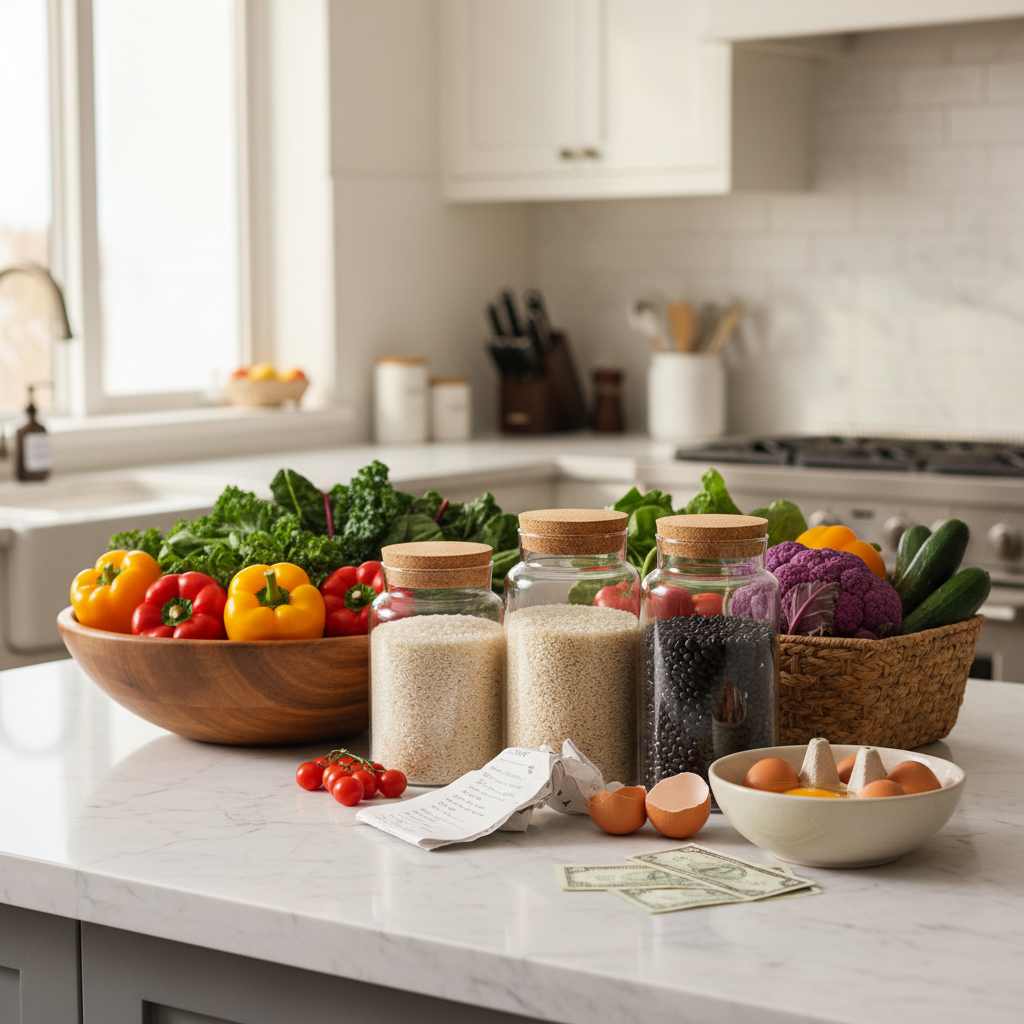
You already know vegetables are good for you. That's not the problem. The problem is that a single bag of organic spinach costs $6, and the drive-through combo is $8.99. When money is tight, eating well feels like a luxury you can't afford.
But here's what I've learned after years of watching people try to eat better: the biggest obstacle isn't money. It's strategy. Most people don't have a grocery budget problem — they have a grocery planning problem. And once you fix that, eating healthy on a budget becomes surprisingly doable.
The real cost of "cheap" food
Let's get something out of the way first. Fast food isn't actually cheap. A family of four eating at McDonald's spends $35-40 per meal. That's $210-240 per week if you did it for dinner alone. Meanwhile, a pot of chili made with canned beans, ground turkey, tomatoes, and spices feeds four people for about $8 total. That's $2 per person.
The USDA's "Thrifty Food Plan" estimates a single adult can eat a nutritious diet for roughly $50-60 per week. That's $215-260 per month. Not pocket change, but probably less than what most people spend when they're grabbing food without a plan.
The catch? It requires some upfront thinking. You need to buy ingredients, not meals. You need to cook at least some of the time. And you need to stop shopping hungry at 6pm on a Tuesday with no list. (We've all been there.)
Here's the thing that trips people up: they compare the cost of a single fast food meal to the cost of a full grocery trip. One feels like $8. The other feels like $120. But that $120 produces 15-20 meals. The math isn't even close.
Stock your kitchen with the unglamorous basics
Nobody wants to hear this, but the foundation of eating healthy on a budget is boring food. Boring, reliable, dirt-cheap food that you build actual meals around.
Here's what I mean:
- Dried beans and lentils: $1-2 per pound, each pound makes 6-8 servings. Black beans, chickpeas, and red lentils are the workhorses.
- Rice (brown or white): $2-3 for a bag that lasts weeks. White rice is fine. Brown rice has slightly more fiber. Neither will make or break your health.
- Oats: A giant canister costs $4 and provides breakfast for a month.
- Frozen vegetables: Often $1-2 per bag, and nutritionally identical to fresh. Sometimes better, since they're frozen at peak ripeness.
- Eggs: Still one of the best protein-per-dollar foods on the planet. Six grams of protein for about 25 cents.
- Canned tomatoes: The base of a hundred different meals. Diced, crushed, whole — stock up when they're on sale.
- Bananas: The cheapest fruit in almost every grocery store, every single week.
- Chicken thighs: Bone-in, skin-on thighs are $2-3 per pound — half the price of chicken breast and honestly tastier.
This isn't a glamorous grocery list. You won't see it on Instagram. But these ingredients form the backbone of cuisines around the entire world, and there's a reason for that. They're nutritious, filling, versatile, and cheap.
The trick is to buy these staples consistently and then add variety through whatever produce, protein, or seasonings are on sale that week. Broccoli is $2.99 this week? Great, that's your vegetable. Pork loin is marked down? That's dinner for three nights.

Meal planning doesn't have to be a Pinterest project
I know "meal planning" sounds like it requires a color-coded spreadsheet and four hours on Sunday. It doesn't. Here's the bare minimum version that actually works:
Pick three dinners for the week. Write down what you need. Go to the store once. That's it.
Three dinners is manageable. You'll eat leftovers the other nights, or scramble some eggs, or make a sandwich. The goal isn't perfection. The goal is reducing the number of times you stand in your kitchen at 7pm with nothing planned, which is when the delivery app comes out.
Some people do well with batch cooking — making a big pot of something on Sunday and eating it throughout the week. If that works for you, go for it. Rice and beans with different toppings each day. A sheet pan of roasted vegetables you can throw into anything. Shredded chicken that goes into tacos, salads, or grain bowls.
But if batch cooking sounds miserable, don't force it. Just having a rough plan and actual groceries in the house eliminates 80% of the budget damage.
One specific tip that saves more money than almost anything else: eat before you grocery shop, and bring a list. Studies from the University of Minnesota found that hungry shoppers spend an average of 64% more on food. Your lizard brain wants everything when your stomach is empty. A list keeps you honest.
Where most people waste money (and don't realize it)
Let's talk about the leaks in your food budget. These are the spots where money disappears without you feeling like you "spent" anything.
Specialty health foods are the biggest offender. That $7 bag of cauliflower rice is just cauliflower. Buy a head for $2 and chop it yourself. Protein bars are convenient, but at $2-3 each, they're one of the most expensive ways to get protein. Two eggs and a piece of toast give you the same macros for about 50 cents.
Pre-cut, pre-washed, pre-anything costs more. A bag of pre-cut stir-fry vegetables is $4. The same amount of whole vegetables is $2 and takes five minutes with a knife. You're paying a premium for someone else to do work that barely qualifies as work.
Drinks add up fast. A daily $5 coffee habit is $150 per month — enough to cover most of your grocery budget. I'm not saying give up coffee entirely (I wouldn't), but brewing at home costs roughly 25 cents per cup. That's a $140 monthly difference.
Food waste is the sneakiest budget killer. The average American household throws away about 30% of the food they buy. That's like tossing $50 bills in the trash every month. Freezing leftovers, using wilting vegetables in soups, and actually eating what you buy makes a real difference.
One more thing: store brands are almost always identical to name brands. Kirkland, Great Value, store-brand canned goods — they often come from the same factories. The label is different. The food inside isn't.
How BodyBuddy helps
Knowing what to eat is one thing. Actually doing it, week after week, when life gets busy and the drive-through is right there — that's the hard part.
BodyBuddy works as your daily accountability partner through iMessage. iMessage coaching with a companion iOS app for tracking and your Future You avatar, no interface to learn. You text with your coach like you'd text a friend, and they help you stay on track with the eating habits you're trying to build.
That means when you're staring at a menu trying to decide between the salad and the burger, you've got someone in your corner. When you meal prepped on Sunday but it's Wednesday and you're ready to quit, there's a check-in waiting for you. It's not about perfection or rigid meal plans — it's about building the kind of consistency that actually changes how you eat over time.
Budget-friendly eating is a habit, not a one-time decision. And habits stick better when someone's paying attention. That's what BodyBuddy does — it keeps you honest without making you feel like you're on a diet.
Frequently asked questions
Is it really possible to eat healthy for $50 a week?
Yes, for a single person. It requires cooking most of your meals, buying staples in bulk, leaning on beans, eggs, rice, frozen vegetables, and whatever produce is on sale. It's not luxurious, but it's nutritionally solid. The USDA Thrifty Food Plan is designed around roughly this budget.
What's the cheapest healthy protein source?
Eggs and dried beans, hands down. Eggs cost about 25 cents each and pack 6 grams of protein. A pound of dried beans costs $1-2 and yields about 50 grams of protein after cooking. Canned tuna, chicken thighs, and cottage cheese are also strong options when they're on sale.
Should I buy organic to eat healthy?
Not necessarily. The nutritional difference between organic and conventional produce is minimal according to most research. If budget is a concern, buy conventional and eat more fruits and vegetables overall. That matters far more than the organic label. If you want to prioritize, the "Dirty Dozen" list from EWG highlights which produce has the most pesticide residue.
How do I eat healthy when my family wants junk food?
Start with additions, not subtractions. Add a side of vegetables to whatever they're already eating. Swap one meal a week for something healthier. Cook one version of dinner, not two — if you make tacos, just load yours with more vegetables and less cheese. Gradual shifts work better than overnight overhauls, especially with kids.
Is frozen food as nutritious as fresh?
In many cases, yes. Frozen fruits and vegetables are typically frozen within hours of harvesting, which locks in nutrients. Fresh produce, on the other hand, may have spent days or weeks in transit and on shelves, losing nutritional value along the way. Frozen is also cheaper and doesn't go bad, which means less waste.
Start with one change this week
You don't need to overhaul your entire kitchen. Pick one thing: buy a bag of dried beans and make a pot this weekend. Swap your afternoon protein bar for two hard-boiled eggs. Write a grocery list before your next trip instead of winging it.
Small changes in how you shop and cook compound over time. A month from now, you'll spend less and eat better — not because you found some life hack, but because you built a system.
If you want help building that system and sticking with it, BodyBuddy is a good place to start. Real accountability, delivered to the app you already use every day.
Related BodyBuddy guides
- 17 High-Protein Fast-Food Orders: Calories and Protein
- What to Eat Before a Workout: Timing & Easy Food Ideas
- How to calculate your calorie deficit (without overthinking it)
- How much protein do you need to lose weight (without the bro-science)
- How much protein do you need to lose weight without losing muscle
Everyone gives you a plan.BodyBuddy texts you until it happens.
BodyBuddy keeps you on track—from meals to doctor's appointments and everything in between.