
Roundups|February 25, 2026|Francis
9 best AI weight loss apps that actually work (2026)
9 best AI weight loss apps that actually work (2026)
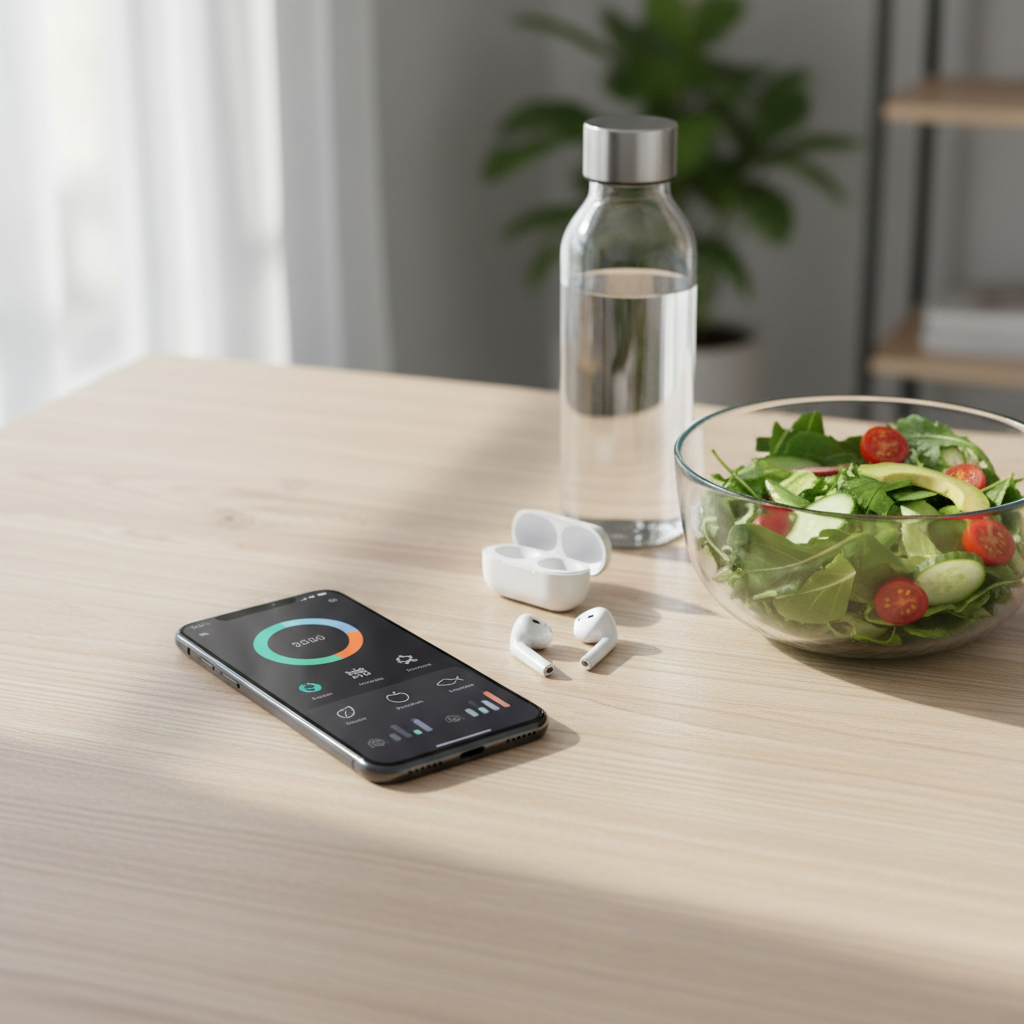
AI has worked its way into just about every corner of health and fitness. Your phone can scan a plate of food and tell you the macros, adjust your calorie targets based on how your weight is trending, and coach you through days when you'd rather eat an entire pizza than think about protein.
But which apps actually use AI in ways that matter? I spent weeks testing the major players. Some sprinkle AI on top of the same old calorie counter. Others are built around it from the ground up. Here are nine that stood out.
What makes a weight loss app "AI" anyway?
Most apps slapping "AI-powered" on their App Store listing fall into a few buckets: photo-based food recognition, adaptive calorie and macro targets that adjust as your body changes, chatbot coaching, and algorithm-driven meal planning. Some do one of these well. A few do several. I ranked these based on whether the AI actually changes your day-to-day experience or just sits quietly in the background doing nothing useful.
1. BodyBuddy: best AI-first weight loss coach
BodyBuddy is the only app on this list where AI isn't a feature. It's the entire product. You can't even log a meal directly in the app. You have to talk to your AI coach. Tell it what you ate, send a photo, ask it a question about your progress. The coach logs everything for you while actually coaching you through it.
That's a fundamentally different experience from every other app here. With MacroFactor or MyFitnessPal, you open the app, search for "chicken breast 6oz," tap some buttons, and close it. With BodyBuddy, you text "had grilled chicken and rice for lunch, probably too much rice honestly" and your coach responds with the calories, the macros, and a note like "rice portions are tricky, here's a visual trick for next time." It's tracking and coaching happening in the same conversation.
The whole thing runs through iMessage. Daily check-ins show up in your texts like messages from a friend. If you skip a day, it notices. If you keep ordering takeout every Thursday, it brings that up. There's also a companion iOS app where you can see your full nutrition history, progress trends, and a "Future You" avatar that changes as you get closer to your goal.
Price: $29.99/month or $239.99/year. 7-day free trial available.
Pros: AI-first (not bolted on), coaching happens while you track, zero app fatigue since it lives in your texts, photo-based meal logging, daily check-ins that feel personal, remembers your patterns over time.
Cons: iPhone only for now, no barcode scanning, pricier than basic trackers, less granular data than dedicated macro apps like MacroFactor.
The bottom line: if you've tried calorie counters and keep falling off, BodyBuddy is built for you. It's not a tracker with AI sprinkled on top. It's an AI coach that tracks for you. Try it at bodybuddy.app.
2. MacroFactor: best for adaptive macro tracking
MacroFactor is the app for people who want their nutrition tracking to be smart, not just a fancy spreadsheet. Its headline feature is an expenditure algorithm that watches your weight trend and food intake, then recalculates your actual total daily energy expenditure (TDEE) every week. No more guessing whether that online calculator was right. The app watches the data and adjusts.
Built by the team behind Stronger By Science, so the nutrition science is legit. The food logging is fast and learns your habits quickly.
Price: $11.99/month, $47.99/6 months, or $71.99/year (~$6/month).
Pros: Genuinely adaptive calorie targets, excellent food database, no ads, strong science foundation.
Cons: No free tier, the interface has a learning curve, no coaching or community features.
If you want smart tracking without hand-holding, this is the one.
3. Noom: best for psychology-based coaching
You've seen the ads. Noom's been around long enough that it's practically a meme at this point. The AI component lives in their daily lessons and coaching system, which mixes automated responses with human coaches. Over time, the app builds a psychological profile and tailors content to your behavior patterns.
The color-coded food system (green, yellow, red) is polarizing. Some people love the simplicity. Others find it weirdly restrictive about things like avocados and nuts. The bigger issue is price. Noom is expensive.
Price: $70/month on a rolling plan, or ~$17/month if you commit to a full year ($209/year). They also have Noom Med programs starting at $99/month that include GLP-1 prescriptions, which is a whole different thing.
Pros: Genuine behavior-change focus, structured daily curriculum, large community.
Cons: Expensive, coaching can feel canned, calorie targets sometimes drop to 1,200 which is too low for most adults.
Noom works best if you want a structured program. If you just want a tool, look elsewhere.
4. Ate it!: best for text-based calorie tracking
Ate it! takes a similar approach to BodyBuddy in that you log meals by chatting with an AI coach rather than navigating menus and search bars. Snap a photo or describe what you ate in plain language, and the AI breaks down the calories and macros. It'll also send you meal reminders and check-ins throughout the day.
The vibe is casual. More like texting a friend who happens to know nutrition than using a clinical tracking tool. It's lighter-weight than BodyBuddy though. Where BodyBuddy leans hard into accountability coaching, behavior patterns, and daily check-ins, Ate it! focuses more narrowly on making calorie tracking feel effortless. Think of it as "calorie tracking via text" without the full coaching layer.
Price: Free tier available. Premium runs $9.99/month, $19.99/3 months, or $59.99/year.
Pros: Chat-based logging feels natural, photo recognition, affordable, low friction to get started.
Cons: No deep accountability or coaching, newer app with a smaller user base, limited integrations.
5. MyFitnessPal: best for food logging
MFP recently overhauled its AI features: voice logging lets you say "I had two eggs and toast with peanut butter" and it logs everything. Their barcode scanner is still best-in-class. And the food database (over 20 million items) remains the biggest in the industry by a wide margin.
MFP isn't really a coaching app though. It tracks what you eat. That's what it does, and it does it well.
Price: Free tier for basic tracking. Premium is $19.99/month ($79.99/year) for macro goals and ad removal. Premium+ is $24.99/month ($99.99/year) and adds meal plans and deeper analytics.
Pros: Massive food database, voice logging, barcode scanner, integrates with 35+ fitness apps.
Cons: Premium is pricey for a tracker, no coaching, the free tier has aggressive ads.
6. Alma: best for AI nutrition guidance
Alma positions itself as an AI nutrition companion, developed with input from Harvard nutrition researchers. You can log meals through natural language, photos, voice, or barcode scanning, and the AI gives you personalized insights about what you're eating and where your nutritional gaps are.
It's more nutrition-focused than weight-loss-focused. If you care about micronutrients, meal quality, and building a better relationship with food (not just hitting a calorie number), Alma does that well. The meal planning feature generates suggestions based on your actual eating patterns and preferences rather than generic templates.
Price: $19/month or $199/year.
Pros: Science-backed nutrition guidance, multiple input methods (text, photo, voice, barcode), personalized meal planning, clean design.
Cons: Newer app, less focused on weight loss specifically, smaller food database than MFP, no accountability coaching.
7. Lose It!: best free food recognition
Lose It! has a camera feature called Snap It that identifies food and estimates portions. It's not perfect (it once thought my burrito was a wrap, which is technically debatable) but it gets you close fast. The app also gives you weekly pattern reports.
The free tier is surprisingly usable. Calorie tracking, goal setting, and basic Snap It all work without paying.
Price: Free tier covers the basics. Premium is $39.99/year (~$3.33/month), which is genuinely cheap. There's also a $299.99 lifetime option that goes on sale regularly.
Pros: Generous free tier, photo food logging, clean interface, very affordable premium.
Cons: Smaller food database than MFP, no adaptive targets, no coaching.
8. Eat This Much: best for AI meal planning
Eat This Much flips the script. Instead of tracking what you ate, it tells you what to eat. Plug in your calorie target, dietary preferences (vegan, keto, paleo, whatever), budget, and time constraints, and it generates a full meal plan with recipes and a grocery list.
If your problem is decision fatigue (standing in front of the fridge at 6pm with no plan), this solves it. The Instacart and AmazonFresh integrations mean you can go from meal plan to grocery delivery in a few taps.
Price: Limited free version (one meal per day). Premium is $14.99/month or $59/year (~$5/month).
Pros: Automatic meal plans, grocery list generation, supports tons of diets, cuts food waste.
Cons: Free version is very limited, recipes can get repetitive, no tracking or coaching.
9. Yazio: best all-around tracker
Yazio is a German-made app that's quietly built a loyal following. It combines calorie tracking with AI-generated meal plans, fasting timers, and progress analytics. The meal suggestions adapt based on what you've been eating and where your nutritional gaps are.
Clean interface, modern design. The free version handles basic tracking. Pro unlocks meal plans, sugar and fiber tracking, and more detailed nutrient breakdowns.
Price: Free tier for basic tracking. Pro is ~$47.90/year (~$4/month), often on sale for as low as $24/year.
Pros: Good balance of tracking and meal planning, intermittent fasting tools, affordable, looks good.
Cons: Food database skews European (some US brands are missing), no coaching, AI features are subtle.
Quick comparison table
App | Best for | AI type | Price (monthly) | Free tier |
BodyBuddy | AI-first coaching | Conversational AI coach | $29.99 | 7-day trial |
MacroFactor | Adaptive macros | TDEE algorithm | $11.99 | No |
Noom | Psychology-based | Behavior profiling | $17-70 | No |
Ate it! | Text-based tracking | Chat-based logging | $9.99 | Yes |
MyFitnessPal | Food logging | Voice + photo recognition | $19.99 | Yes |
Alma | Nutrition guidance | Personalized insights | $19 | No |
Lose It! | Free food recognition | Photo recognition | $3.33 | Yes |
Eat This Much | Meal planning | Plan generation | $14.99 | Limited |
Yazio | All-around tracking | Adaptive meal plans | ~$4 | Yes |
How to pick the right one
Depends on your actual problem.
If your issue is that you keep downloading calorie counters and abandoning them after a week, you don't need a better tracker. You need something that reaches out to you. BodyBuddy is the only app here that works that way. The AI coach texts you. You don't have to remember to open anything.
If you want to geek out on macros and have targets that auto-adjust, MacroFactor is hard to beat. If you want a structured program that teaches you about your eating psychology, Noom does that (at a price). If you need a solid food tracker, MyFitnessPal and Lose It! both work. MFP has the bigger database, Lose It! is cheaper.
If you like the idea of logging via text but don't need full coaching, Ate it! is a lighter option. If you're more interested in nutrition quality than calorie counting, Alma takes that angle.
My advice: try two or three from this list. Most have free tiers or trials. Use each one for a week and see which you actually keep opening. The best weight loss app is whichever one you'll use.
FAQ
Can AI actually help you lose weight?
Yes, but it's not magic. AI helps in two practical ways: it makes tracking easier (photo recognition, voice logging, auto-adjusting targets) and it keeps you accountable (daily check-ins, pattern recognition, personalized nudges). A 2024 study published on ResearchGate found that participants using an AI-driven personalized lifestyle intervention lost an average of 8.9 kg over the study period, compared to 4.2 kg for a standard counseling control group. Accountability and reduced friction are the mechanisms, not the AI itself.
Are free AI weight loss apps worth it?
The free tiers of Lose It! and MyFitnessPal give you functional calorie tracking. You can lose weight with them. Paid features like adaptive macros, coaching, and meal planning make things more convenient, but they're not required. Start free, upgrade if you hit a wall.
AI coach vs. human coach: what's the difference?
An AI coach is available 24/7, responds instantly, and costs $10-30/month instead of the $150-400/month a human coach typically charges. The trade-off is emotional nuance. A human picks up on things an AI still misses. For most people who need consistent daily accountability and solid nutrition guidance, AI coaching covers it. If you're dealing with disordered eating or complex medical conditions, talk to a human.
Do I need to count calories?
No. Some apps on this list (BodyBuddy, Eat This Much) lean more on habits, coaching, and planning than strict calorie math. That said, having a rough sense of your intake helps. Photo-based tracking is a good middle ground: you log meals visually without weighing every gram on a kitchen scale.
What's the difference between AI tracking and AI coaching?
AI tracking means the app uses machine learning to identify food, calculate portions, or adjust your targets. Most apps on this list do some version of this. AI coaching is when the AI actually talks to you, checks in on your progress, notices your patterns, and gives you personalized advice. BodyBuddy is the clearest example: you literally can't use the app without talking to the AI. Other apps like Noom blend AI with human coaches.
Bottom line
AI weight loss apps have moved past gimmick status. The best ones save you time tracking, adapt to how your body actually responds, and keep you honest when motivation fades. Whether you want a data engine like MacroFactor, a structured psychology program like Noom, or an AI coach that lives in your texts like BodyBuddy, there's something here that fits.
Pick one. Give it three weeks. If it changes your daily behavior, keep going. If not, try the next one. That's it.
Want to try AI coaching through your texts? BodyBuddy offers a 7-day free trial. No app download required to start. Just text and go.
Want daily accountability?
BodyBuddy texts you every day.
Build a healthier relationship with food and movement — one text at a time.
Join 500+ usersstaying healthy