All guides
How to stop sugar cravings: 9 tricks that actually work (no willpower required)
A practical BodyBuddy guide to how to stop sugar cravings: 9 tricks that actually work (no willpower required), with useful considerations and next steps.
You know the feeling. It's 3pm, you just ate lunch two hours ago, and your brain is screaming for something sweet. A cookie. A handful of gummy bears. That leftover cake in the break room. Anything.
And here's the frustrating part: you know you don't need it. You're not hungry. Your body has plenty of fuel. But the craving doesn't care about logic. It just wants sugar, and it wants it now.
If you've ever tried to white-knuckle your way through sugar cravings, you already know that approach has about a 4-day shelf life. Willpower is a terrible long-term strategy. It's like trying to hold your breath underwater -- eventually, biology wins.
The good news? You don't actually need willpower. What you need are structural changes that make cravings less frequent and less intense. Here are nine that actually hold up.
Why your brain craves sugar in the first place
Before we get into solutions, it helps to understand what's happening under the hood.
Sugar triggers a dopamine release in your brain's reward center. Same pathway as social media notifications, gambling, and yes, certain drugs. Your brain learns that sugar equals pleasure, and it starts nudging you toward that reward whenever it detects an opportunity -- stress, boredom, tiredness, or just walking past a bakery.
This isn't a character flaw. It's neuroscience. Your ancestors needed calorie-dense foods to survive, and your brain still runs that ancient software. The trick is working with your biology instead of against it.
1. Eat enough protein at every meal
This is the single most effective craving-killer, and it's boring. Sorry. But research consistently shows that meals with 25-30g of protein reduce subsequent sugar cravings significantly compared to low-protein meals.
Protein slows gastric emptying (meaning food stays in your stomach longer), stabilizes blood sugar, and triggers satiety hormones like peptide YY and GLP-1. When your blood sugar isn't crashing two hours after a meal, the desperate 3pm candy run becomes a lot less compelling.
Practical targets:
- Breakfast: Greek yogurt with nuts, or eggs with whole grain toast (aim for 25g+)
- Lunch: A palm-sized portion of chicken, fish, tofu, or legumes
- Dinner: Same principle. Protein first, then fill in with everything else.
If you're consistently hitting 25-30g per meal, you'll notice cravings drop within a week. Not disappear -- drop. That distinction matters.
2. Stop skipping meals
I see this pattern constantly. Someone decides to "be good" and skips breakfast, eats a tiny lunch, and by 4pm they're elbow-deep in a bag of M&Ms wondering what went wrong.
What went wrong is math. Your body needs fuel. When you restrict too aggressively during the day, your blood sugar drops, your brain panics, and it sends the loudest, most urgent craving signals it can. And it specifically craves sugar because sugar is the fastest source of glucose.
Eating regular meals -- actual meals, with protein and fat and fiber -- is not a lack of discipline. It's the foundation that makes discipline possible.
3. Get more sleep (seriously)
Sleep deprivation increases ghrelin (your hunger hormone) and decreases leptin (your fullness hormone). A single night of poor sleep can increase sugar cravings by up to 30%, according to research from UC Berkeley.
But it gets worse. When you're tired, your prefrontal cortex -- the part of your brain responsible for impulse control -- doesn't work as well. So you're hit with stronger cravings and weaker defenses at the same time. It's a terrible combination.
Seven hours is the minimum for most adults. Eight is better. If you're sleeping six hours and wondering why you can't stop eating candy, the candy isn't your problem.
4. Replace, don't remove
Telling yourself "I can't have sugar" is a recipe for obsessing about sugar. Instead, find replacements that satisfy the craving without the blood sugar roller coaster.
Some swaps that actually work:
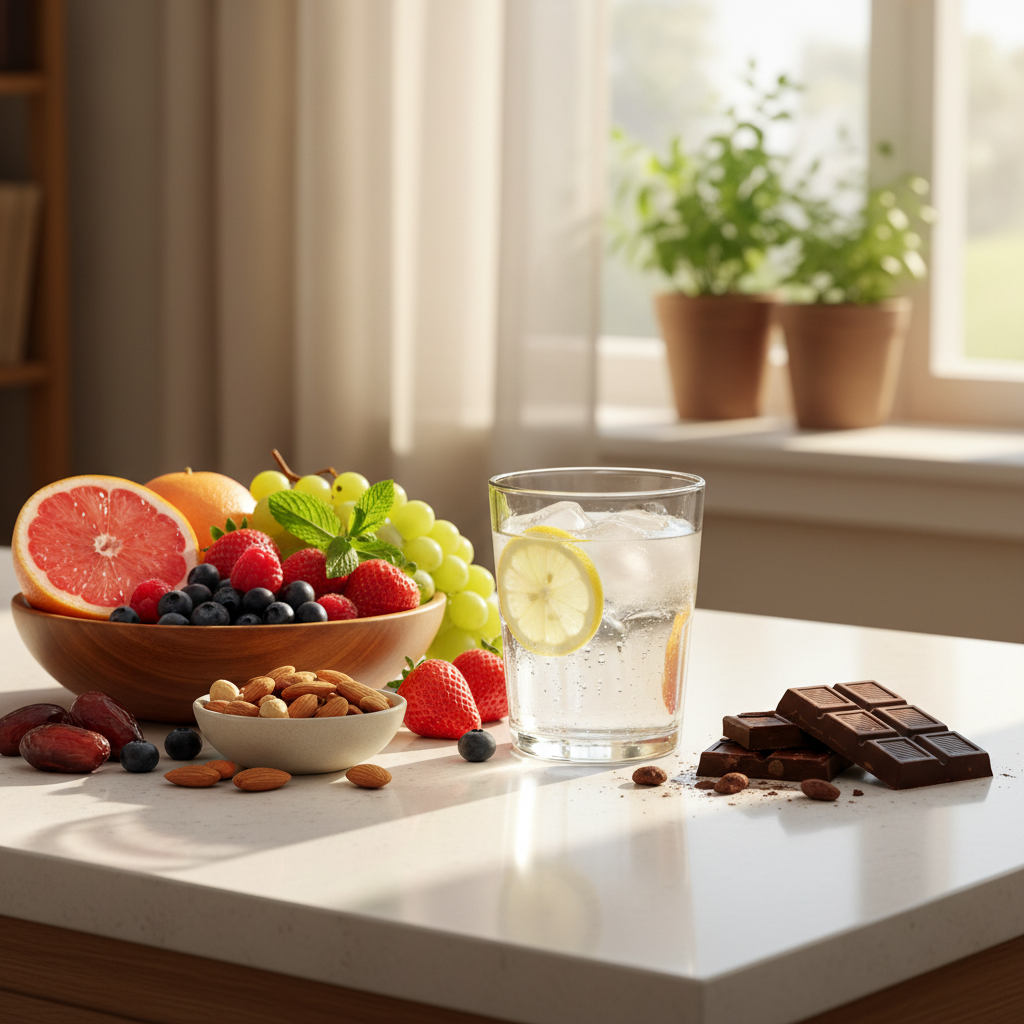
- Frozen grapes or berries (the cold makes them feel like a treat)
- Dark chocolate (70%+ cacao -- two squares, not the whole bar)
- Apple slices with almond butter
- Dates with a little sea salt
- A small handful of trail mix with dark chocolate chips

The goal isn't to never eat anything sweet. That's unrealistic and also joyless. The goal is to have options that don't send your blood sugar into orbit and then crash it back down, triggering the next craving.
5. Manage your stress (or at least recognize it)
Cortisol, your primary stress hormone, directly increases sugar cravings. It's an evolutionary thing -- stress meant danger, danger meant you might need to run, running requires quick energy, quick energy means sugar. Your body is trying to help. It's just not great at distinguishing between "being chased by a predator" and "annoying email from your boss."
You don't need to become a meditation guru. But you do need to recognize when a craving is actually stress wearing a sugar costume. Sometimes acknowledging "I'm not hungry, I'm stressed" is enough to break the automatic reach for the candy drawer.
Simple stress interventions that actually help:
- A 10-minute walk outside
- Five slow breaths (inhale for 4 counts, exhale for 6)
- Calling a friend
- Moving your body in any way for 5 minutes
6. Drink water before you eat sugar
Dehydration mimics hunger signals. Your body isn't great at distinguishing between "I need water" and "I need food," and most people are mildly dehydrated most of the time.
Next time a craving hits, drink a full glass of water and wait 10 minutes. About half the time, the craving fades or at least becomes manageable. It's not magic -- sometimes you're just thirsty.
This works especially well in the afternoon, when most people haven't had enough water and are hitting their natural energy dip.
7. Watch out for artificial sweeteners
This one is controversial, and the research isn't fully settled. But there's growing evidence that artificial sweeteners can maintain or even increase your preference for sweet tastes. Diet soda, sugar-free candy, and zero-calorie sweeteners in your coffee may not contain calories, but they keep your palate calibrated to expect intense sweetness.
Some people do fine with artificial sweeteners. Others find that cutting them back helps their overall cravings drop after a few weeks. Worth experimenting with if you're consuming a lot of them.
I'm not saying throw out your stevia. I'm saying pay attention to whether your diet soda habit is making your fruit taste boring by comparison.
8. Build a craving delay habit
Cravings peak and then pass. Most last about 15-20 minutes. If you can create a gap between "I want sugar" and "I'm eating sugar," you give the craving time to subside.
The trick is having a specific action you do when a craving hits. Not "I'll just wait" -- that's willpower again. Something concrete:
- Walk to the water cooler and drink a full glass
- Step outside for fresh air
- Text a friend
- Do a quick stretch or walk around the block
This works because cravings thrive on autopilot. When you insert a deliberate action between the urge and the behavior, you break the automatic loop. Over time, the loop weakens.
This is exactly the kind of thing an accountability partner or coaching app can help with. Having someone (or something) to check in with during that 15-minute window makes the delay strategy far more effective than going it alone.
9. Fix your environment
If there's a jar of candy on your desk, you'll eat candy. If there's a bowl of fruit, you'll eat fruit. Willpower matters far less than proximity.
This isn't about making sugar forbidden -- it's about making the default choice a better one. Keep sweets out of arm's reach and put healthier options front and center. Stock your kitchen with the protein-rich snacks and fruit swaps from tip 4.
Research from Cornell's Food and Brand Lab found that people who kept fruit on their counter weighed an average of 13 pounds less than those who kept cookies or cereal visible. Same people, same willpower, different environment.
When cravings might signal something deeper
Persistent, intense sugar cravings can sometimes point to underlying issues worth checking:
- Chronic sleep debt
- High stress or anxiety
- Nutrient deficiencies (especially magnesium, chromium, or B vitamins)
- Blood sugar dysregulation or insulin resistance
- Emotional eating patterns tied to specific triggers
If you've implemented the strategies above and cravings are still dominating your day, it might be worth talking to a healthcare provider. There's no shame in that -- some cravings have physiological roots that lifestyle changes alone can't fully address.
Making it stick without making it miserable
The real secret to beating sugar cravings isn't any single trick. It's stacking several small changes until the overall pattern shifts. Eat enough protein. Sleep enough. Drink water. Have better options available. Build a delay habit. Fix your environment.
None of these are dramatic. None require superhuman discipline. And that's the point -- the strategies that actually work long-term are the ones you barely notice doing.
If you're looking for daily support to build these habits, BodyBuddy texts you throughout the day with personalized check-ins and coaching. It's like having an accountability partner in your pocket who actually remembers what you're working on. Sometimes that 3pm text asking how your afternoon is going is exactly the nudge that keeps you from autopiloting to the vending machine.
Related BodyBuddy guides
- How to stop sugar cravings when you're trying to lose weight (8 strategies that actually work)
- How to stop eating when bored: 9 strategies that actually work
- 7 Best Noom Alternatives in 2026 (Free & Cheaper Options)
- How to stop sugar cravings when you're trying to lose weight
- How to Stay Consistent with Your Diet: 7 Science-Backed Strategies That Actually Work
Everyone gives you a plan.BodyBuddy texts you until it happens.
BodyBuddy keeps you on track—from meals to doctor's appointments and everything in between.