Nutrition|February 13, 2026|Francis
Best foods for weight loss that actually fill you up
A practical BodyBuddy guide to best foods for weight loss that actually fill you up, with useful considerations and next steps.
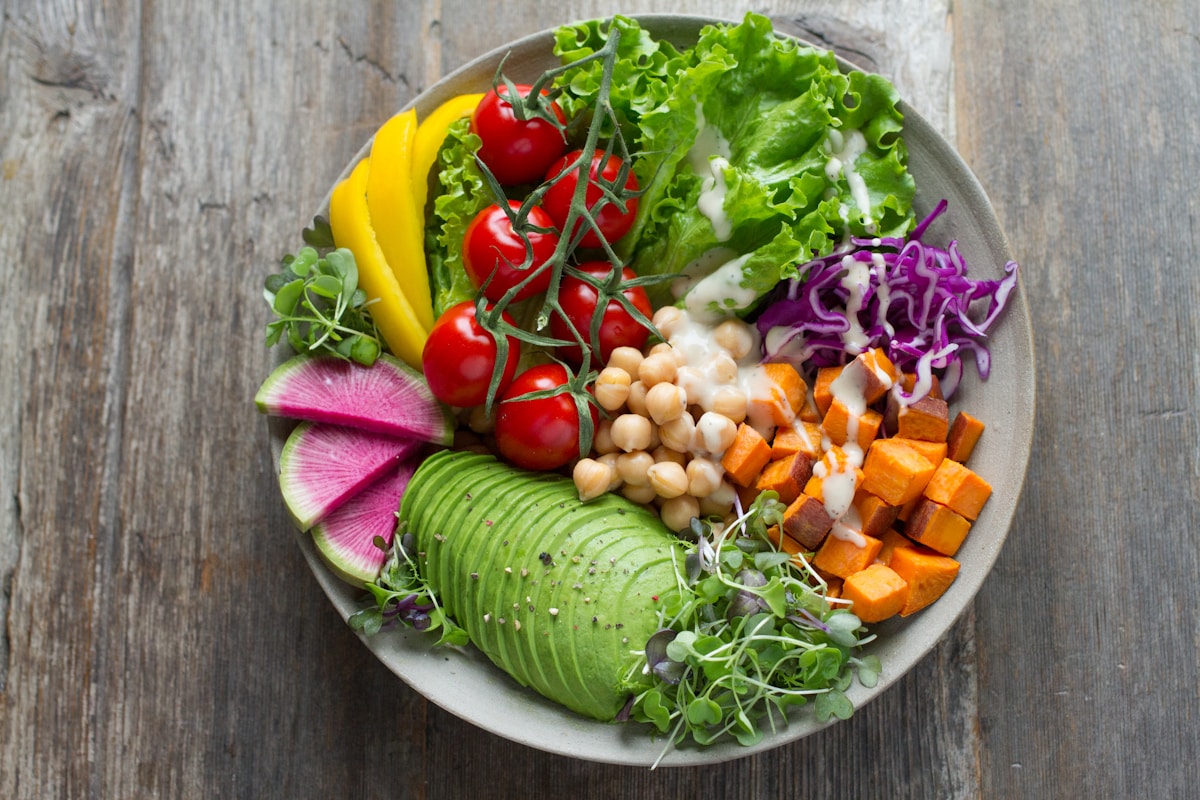
The worst part about most weight loss advice is that it focuses on what you cannot eat. Cut carbs. Avoid sugar. Stop snacking. After a while, your entire relationship with food becomes a list of restrictions, and every meal feels like a test you are about to fail.
I think the smarter approach is to focus on what to eat more of. Specifically, foods that are low in calories relative to how full they make you feel. Researchers call this "satiety per calorie," and once you understand which foods score well on that metric, losing weight gets a lot less painful.
What actually makes food filling
In 1995, researcher Susanna Holt at the University of Sydney published a satiety index that ranked 38 common foods by how full they made people feel per 240-calorie serving. The results were interesting. Boiled potatoes scored highest at 323% (more than three times as filling as white bread, the reference food). Croissants scored lowest at 47%. The study has been cited over 600 times and its core findings still hold up.
Three factors consistently predict how filling a food will be: protein content, fiber content, and water content. Foods that combine two or all of these tend to be the most satisfying per calorie. Foods that are high in fat and low in fiber, like pastries and fried snacks, tend to be the least filling relative to their calorie load.
Volume matters too. Your stomach has stretch receptors that signal fullness based partly on how much physical space the food takes up. This is why a 300-calorie salad with chicken feels more satisfying than a 300-calorie granola bar, even though the granola bar might have more protein.
Proteins that keep you full for hours
Protein is the most satiating macronutrient. A 2005 study in the American Journal of Clinical Nutrition found that increasing protein from 15% to 30% of total calories led participants to eat 441 fewer calories per day spontaneously, without consciously trying to eat less. That is a significant reduction from one dietary change.
The best protein sources for weight loss combine high protein with relatively low calories:
- Chicken breast: 165 calories and 31g protein per 4oz serving. It is boring but effective.
- Greek yogurt (plain, nonfat): 100 calories and 17g protein per 170g container. Add berries for flavor instead of buying the sugar-loaded varieties.
- Eggs: 70 calories and 6g protein each. Hard-boil a batch on Sunday and you have grab-and-go protein all week.
- Cottage cheese: 110 calories and 14g protein per half cup. I know it looks unappetizing. Mix it with fruit or use it in recipes.
- Shrimp: 84 calories and 20g protein per 3oz. One of the highest protein-to-calorie ratios of any whole food.
Vegetables worth building meals around
Saying "eat more vegetables" is standard diet advice that most people ignore because it is vague. Here are the specific vegetables that give you the most satiety for the fewest calories, and ways to make them actually taste good.
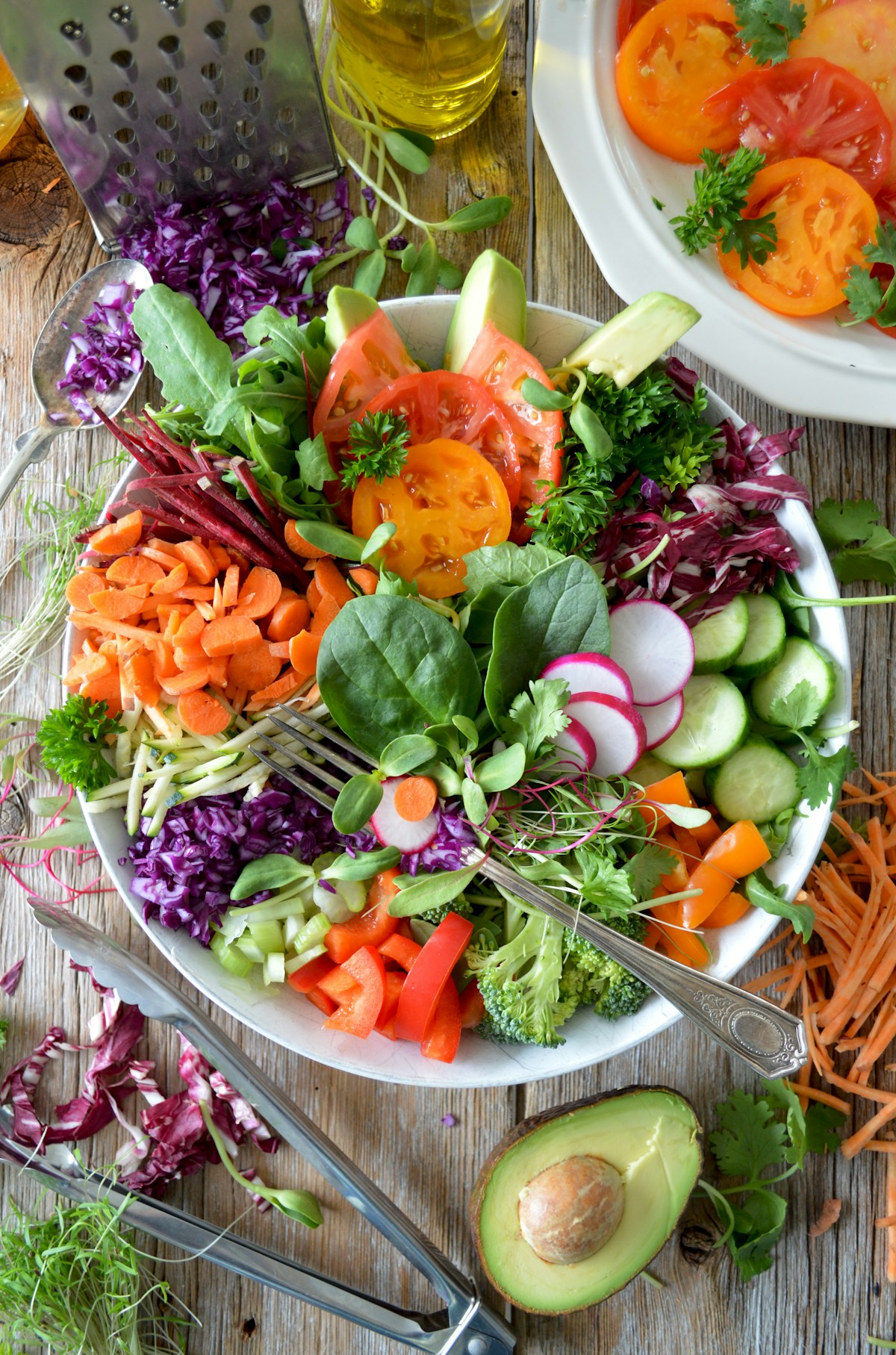
Broccoli has 55 calories per cup when cooked, with 3.7g of fiber and 3.7g of protein. Roast it at 425 degrees with garlic and a light drizzle of olive oil. Roasted broccoli tastes completely different from steamed broccoli, and I will die on that hill.
Cauliflower rice has become popular for a reason: a full cup has just 25 calories versus 200+ for regular rice. It does not taste like rice. Let us be honest about that. But as a base for stir-fries or curries, it adds volume and absorbs flavors well.
Zucchini is incredibly versatile at 33 calories per cup. Spiralize it as a pasta substitute, slice it into stir-fries, or cube it into soups. It takes on whatever flavor you cook it with.
Spinach might be the ultimate volume food. You can eat an entire 5oz bag for about 33 calories. As a salad base, in smoothies, or wilted into eggs, it adds bulk with almost no caloric cost.
Carbs that do not spike and crash
Carbs get a bad reputation in weight loss circles, but the problem is not carbs in general. The problem is refined carbs that digest quickly, spike blood sugar, and leave you hungry an hour later. The right carbs actually help with satiety.
Potatoes are the most filling food ever tested, according to Holt's satiety index. A medium baked potato has about 160 calories and will keep most people satisfied for hours. The key is not drowning it in butter and sour cream. Try it with Greek yogurt and chives instead.
Oats are another winner. Steel-cut oats have a lower glycemic index than instant oats, meaning they release energy more slowly. A bowl of steel-cut oats with protein powder mixed in gives you a breakfast that easily holds you until lunch.
Beans and lentils are the underrated champions. A cup of cooked lentils has 230 calories, 18g of protein, and 15g of fiber. That fiber and protein combination is extremely effective at controlling hunger. Black beans, chickpeas, and kidney beans are all similar.
How to build a filling meal
Here is a simple framework that works for any meal: start with a protein, add a large portion of non-starchy vegetables, include a moderate serving of complex carbs, and use a small amount of healthy fat for flavor.
A practical example: 4oz grilled chicken (165 cal), two cups of roasted broccoli and peppers (80 cal), a medium baked potato (160 cal), and a tablespoon of olive oil for roasting (120 cal). That is a big, satisfying plate of food for about 525 calories. Compare that to a fast food burger and fries, which runs 800-1,200 calories and leaves many people hungry again within two hours.
The difference is not willpower. It is food composition. When you eat foods that work with your body's satiety signals rather than against them, you do not need as much discipline to eat less.
How BodyBuddy helps you eat smarter
When you log your meals with BodyBuddy, it does not just track calories. It looks at protein, fiber, and overall meal composition. If you are consistently eating meals that are low in protein or fiber, it will suggest specific swaps to improve satiety. Not generic advice like "eat more vegetables" but specific suggestions based on what you actually eat.
The coaching happens over text, which means you can ask questions in the moment. Standing in a grocery store wondering whether to buy regular yogurt or Greek yogurt? Text your coach. Trying to pick a lunch that will keep you full until dinner? Ask. That kind of real-time guidance helps you internalize better food choices over time. Try it at bodybuddy.app.
Frequently asked questions
Are low-calorie foods always the best choice for weight loss?
Not necessarily. A food's satiety value matters more than its raw calorie count. A 200-calorie serving of almonds will keep you full much longer than 200 calories of rice cakes. Focus on calories relative to fullness, not just calories alone.
Can I eat fruit while trying to lose weight?
Yes. Despite what some low-carb advocates claim, whole fruit is associated with weight loss in observational studies. The fiber and water content of whole fruit make it quite filling. Berries, apples, and oranges are particularly good choices. Just stick to whole fruit rather than juice, which removes the fiber.
What if I do not like cooking?
Many filling, weight-loss-friendly foods require minimal preparation. Rotisserie chicken, pre-washed salad kits, canned beans, frozen steam-in-bag vegetables, and hard-boiled eggs are all available at any grocery store. You do not need culinary skills to eat well.
The bottom line
Weight loss does not have to mean being hungry all the time. By choosing foods that are high in protein, fiber, and water, you can eat large, satisfying meals while still maintaining a calorie deficit. The specific winners are lean proteins like chicken and Greek yogurt, non-starchy vegetables, potatoes, oats, and legumes. Build your meals around these foods and you will spend a lot less energy fighting hunger.
Related BodyBuddy guides
- Meal prep for weight loss: a beginner's guide that actually sticks
- Meal prep for weight loss: a beginner's guide that actually saves time
- 17 high protein snacks for weight loss that actually taste good
- How to read nutrition labels for weight loss (a beginner's guide that actually helps)
- Fiber and weight loss: the boring nutrient that actually works
Want daily accountability?
BodyBuddy texts you every day.
Build a healthier relationship with food and movement, one text at a time.