June 20, 2026

Learn How to Get More Fiber in Diet: A Simple 2026 Guide

Learn How to Get More Fiber in Diet: A Simple 2026 Guide

Learn How to Get More Fiber in Diet: A Simple 2026 Guide
You eat a breakfast that looks healthy enough. Maybe it's toast, a banana, and coffee. Lunch is a quick wrap or salad from the office cafe. Dinner isn't terrible either. Then by late afternoon you're hunting for crackers, something sweet, or anything crunchy, and by night you're still not satisfied.
That pattern usually gets blamed on discipline. I don't buy that. In busy adults, it's often a food structure problem, not a motivation problem. If you want to learn how to get more fiber in diet changes that stick, stop treating fiber like a nutrition side note. It changes how full your meals feel, how regular your digestion is, and how easy it is to stay on track when life gets messy.
Many don't need a perfect meal plan. They need better defaults.

The Real Reason You Still Feel Hungry

A lot of people I talk to are trying. They pick the turkey sandwich over fast food. They grab yogurt instead of chips. They order a salad and still end up staring into the pantry an hour later. That's frustrating, especially when you feel like you're making responsible choices.
One missing piece is the fiber gap. According to NHANES data summarized by the USDA, the average U.S. adult eats 16.2 grams of fiber per day, well below the recommended 25 to 38 grams, and fewer than 1 in 10 adults meet daily needs. That gap is linked to higher risks of chronic disease, but it also shows up in a way people notice immediately. Meals don't hold them for long.

Why a meal can look healthy and still feel unsatisfying

A low-fiber meal often digests fast and leaves you chasing fullness. That's why someone can eat white toast with peanut butter and fruit juice, then feel hungry again long before lunch. The food isn't necessarily "bad." It's just not built to keep hunger steady.
That matters even more if you're already trying to understand your appetite signals. Hormones like hunger and fullness cues don't operate in a vacuum, and meal composition changes how manageable those signals feel. If you want a simple primer on that side of the equation, this guide to ghrelin and leptin is useful context.

What the fiber gap feels like in real life

It usually looks like this:
  • Breakfast crashes: You eat something quick, then need a snack before the morning is over.
  • Lunch that doesn't last: A wrap, soup, or smoothie seems fine at first, then cravings hit hard in the afternoon.
  • Dinner overeating: You arrive at dinner overly hungry and eat fast because the earlier meals didn't anchor the day.
  • Digestive inconsistency: Some days you're bloated, other days constipated, and it feels random.
People often respond by trying to "eat less junk." That's not wrong, but it's incomplete. A better move is to build meals around foods that are naturally more filling and easier on appetite over time. Fiber is one of the most practical ways to do that.

Understanding Your Fiber Goals

Before changing what you buy, it helps to know what fiber is doing. The phrase "eat more fiber" often leads to thinking only about digestion. That's part of the story, but not the whole thing.
Fiber is the part of plant foods your body doesn't fully digest. Broadly, it falls into two useful buckets: soluble fiber and insoluble fiber. You don't need to memorize a textbook definition. You just need to know what each one tends to help with.
notion image

The two types that matter most

Soluble fiber mixes with water and forms more of a gel-like texture. In plain English, this is part of why foods like oats, beans, apples, and some seeds tend to feel steadying and satisfying.
Insoluble fiber doesn't dissolve in water. It adds bulk and helps move things along in the digestive tract. You find it in foods like whole grains, vegetables, nuts, and many peels and skins.
It's generally not necessary to obsess over getting a perfect ratio. If you eat a variety of plant foods, you're usually getting both.

What your target actually looks like

The target doesn't need to feel rigid, but it should be clear. The American Institute for Cancer Research recommends 30 grams of fiber daily to help lower cancer risk, while U.S. Dietary Guidelines recommend 22 to 34 grams for most adults. Average intake is still only about 20 grams, which highlights the necessity of a deliberate plan, not wishful thinking.
A simple way to consider it:
  • If you're far below target: focus on adding fiber to one meal first.
  • If you're doing okay at meals but snack poorly: fix snacks next.
  • If your diet is highly processed: start with replacement, not addition.
That last part matters. Telling yourself to "eat more fiber" is too vague. Telling yourself to buy oats instead of sugary cereal, beans instead of extra chips, or whole grain toast instead of white bread is actionable.
For a broader look at why this matters beyond regularity, this article on gut health and weight loss connects the dots well.

The goal is better defaults, not perfect tracking

You don't need to hit the exact same number every day. You do need a pattern. The win is having meals that naturally include plants, whole grains, legumes, fruit, nuts, and seeds often enough that fiber stops being something you chase at night.
That's how people learn how to get more fiber in diet changes that last. They stop relying on willpower and start relying on routine.

Start with These Effortless Food Swaps

Individuals often fail at this because they try to add fiber on top of an already crowded day. That's too much friction. The easier move is to keep your routine and swap the lower-fiber version for a higher-fiber one.
That means you don't need a new identity or a Sunday meal prep marathon. You need a few dependable upgrades you can repeat when you're tired, rushed, or eating between meetings.

Easy Fiber-Boosting Swaps

Instead of This...
Try This...
Why It Works
White toast at breakfast
Oatmeal with berries and seeds
Feels more substantial and keeps breakfast from disappearing too quickly
Sugary cereal
A whole grain cereal with a short ingredient list
Gives you a more reliable base than a refined option
White bread sandwich
Whole grain bread sandwich
Raises the floor on fiber without changing the meal itself
White rice bowl
Brown rice or another whole grain bowl
Keeps the same format, with more texture and staying power
Plain pasta as the base
Whole wheat pasta or a legume-based pasta
Makes a familiar dinner work harder for you
Crackers for a snack
Fruit plus nuts or seeds
Adds fiber and usually feels more satisfying
Chips on the side
Raw vegetables, roasted chickpeas, or popcorn
Gives you crunch without making the whole snack low-fiber
Dessert-style yogurt
Plain Greek yogurt with fruit
Lets fruit carry more of the sweetness and fiber
Juice
Whole fruit
You get the food in a form that's usually more filling
A bare salad
Salad topped with beans, lentils, or whole grains
Turns a light lunch into an actual meal

What works better than "just eat more vegetables"

Generic advice usually dies by Wednesday. Specific swaps survive.
A few of the best low-effort plays:
  • Upgrade your starch first: Switching bread, rice, or pasta is often easier than reinventing lunch.
  • Fix breakfast early: If breakfast is low-fiber, the rest of the day often turns into catch-up eating.
  • Use convenience on purpose: Frozen vegetables, canned beans, microwave grains, and pre-washed greens are not cheating.
  • Replace snacks, don't just remove them: If you take away the easy snack and add nothing useful, you'll end up back in the vending machine.
If you want better snack options that travel well, dried fruit can help when you pair it with nuts or seeds instead of eating it mindlessly by itself. A practical resource is DBakerAid's fruit dehydrating guide, especially if you like prepping simple grab-and-go foods at home.

The swap has to fit your real life

The best fiber habit is the one that survives a workweek.
If you buy ingredients that require chopping, soaking, simmering, and uninterrupted motivation, they may sit untouched. If you buy easy staples you already know how to use, you'll eat them. That's why I usually steer busy people toward simple combinations they can repeat without thinking, similar to the approach in these filling foods for weight loss.
That question gets better answers.

How to Build a High-Fiber Day

Food swaps are the starting point. The bigger win is seeing what a normal day can look like when fiber is built in without making every meal feel like a project.
Here's a simple example. Not a rigid plan. Just a realistic pattern.
notion image

Breakfast that carries you

A high-fiber day usually starts with a breakfast that has some real structure. That could be oatmeal topped with fruit and seeds. It could be plain yogurt with berries, chia, and a handful of nuts. It could be eggs on whole grain toast with fruit on the side.
The pattern matters more than the exact menu. You want a meal that isn't just fast. You want one that buys you time before the snack drawer starts calling.

Lunch that doesn't collapse by 3 p.m.

Lunch is where many busy people accidentally build a light meal that looks virtuous and performs terribly. A salad with grilled chicken can be fine, but if it's mostly lettuce and dressing, it often won't hold you. Add beans, chickpeas, lentils, quinoa, or a sturdy whole grain, and now it behaves like a meal.
Soup can work well too, especially if it's built around lentils, beans, or vegetables rather than mostly broth and noodles. Leftovers also deserve more respect here. A grain bowl with roasted vegetables and a protein source is often easier to repeat than assembling another sad desk lunch.
A quick visual can help if you want ideas for simple meal composition and portion flow.

Dinner that finishes the job

Dinner doesn't need to be fancy. Stir-fries, sheet-pan meals, tacos, soups, and pasta bowls can all work when the base includes vegetables, beans, or whole grains.
Good examples include:
  • A stir-fry with broccoli, peppers, edamame, and brown rice
  • Tacos with black beans, shredded cabbage, salsa, and avocado
  • Pasta night with whole wheat pasta, vegetables, and lentils or chickpeas in the sauce
  • A grain bowl with roasted vegetables, greens, and a bean-based topping

Snacks that help instead of hijack

Snacks should fill a gap, not create a bigger appetite spiral. Good options are usually simple combinations:
  • Fruit plus fat or protein: apple with nut butter
  • Crunch with substance: roasted chickpeas or edamame
  • Something cold and easy: yogurt with berries
  • Portable basics: pear, nuts, whole grain crackers with hummus
The key is distribution. When fiber-rich foods show up at breakfast, lunch, dinner, and snacks, your whole day feels steadier. That's much more effective than trying to fix everything with one giant salad at night.

The Right Way to Increase Fiber and Avoid Discomfort

Going from very little fiber to a "super healthy" day loaded with beans, bran cereal, raw vegetables, and seeds can cause people to quit and wonder why their stomach is rebelling.
The problem isn't fiber. The problem is speed.
The most reliable approach is gradual. According to Harvard Health, a proven method is to increase fiber gradually over 1 to 2 weeks by adding one extra serving of a high-fiber food per day for a week, while pairing that change with about 16 ounces of water four times a day as intake rises toward the typical 25 to 38 grams per day range.
notion image

Why slow beats aggressive every time

Fiber needs fluid and a little adaptation time. If you raise fiber fast but keep drinking the same small amount of water, you're setting yourself up for bloating, constipation, or cramping.
The process is similar to increasing exercise volume. If you go from almost nothing to an intense routine overnight, your body complains. Your gut works the same way.

A simple ramp-up that people can follow

Here's a practical version that works well:
  1. Pick one addition onlyAdd a single high-fiber food to your normal day. Oatmeal at breakfast. Beans at lunch. Fruit and nuts as a snack. Just one.
  1. Hold steady and observeStay there for several days. If you feel fine, keep going. If you're uncomfortable, don't pile on more.
  1. Increase fluids on purposeDon't leave water to chance. Make it part of the habit, especially if your fiber is going up.
  1. Choose gentler forms firstCooked vegetables are often easier to tolerate than giant raw salads. Rinsed canned beans may be easier for some people than a huge serving of legumes all at once.
  1. Spread fiber across the dayA little at each meal usually feels better than cramming everything into dinner.

Troubleshooting common issues

If things feel off, use these adjustments:
  • Too much gas: reduce portion size, then build more slowly
  • Bloating from beans: start with smaller servings and rinse canned beans well
  • Constipation instead of relief: check fluid intake before blaming the fiber
  • Stomach feels overloaded: swap one very dense fiber source for a milder one and spread intake out
For people dealing with hemorrhoids or painful bowel movements, food texture and consistency matter even more. This guide to meal ideas for hemorrhoid sufferers is a useful companion resource when you need softer, practical ideas.

What doesn't work

A few things tend to fail fast:
  • Going all in on supplements first
  • Eating huge salads because they seem healthy
  • Adding fiber without changing fluids
  • Trying five new foods at once
  • Assuming discomfort means you should quit
Your gut usually responds better to patience than force.

Make It a Habit That Lasts a Lifetime

The biggest mistake people make is treating fiber like a short-term fix. They try to be perfect for a week, get busy, fall off, and decide they "just need more discipline." That's the wrong lesson.
The habit that lasts is smaller and more boring. Buy the higher-fiber bread every week. Keep fruit where you can see it. Add beans to the same lunch you already like. Repeat the same breakfast enough times that it becomes automatic. When your defaults change, your diet changes.

The habit loop that actually helps

A lasting system usually has three parts:
  • Small change: one upgrade at a time, not a total food identity overhaul
  • Consistency: repeatable meals and snacks that work on weekdays
  • Accountability: some way to notice when you're drifting before a bad week turns into a bad month
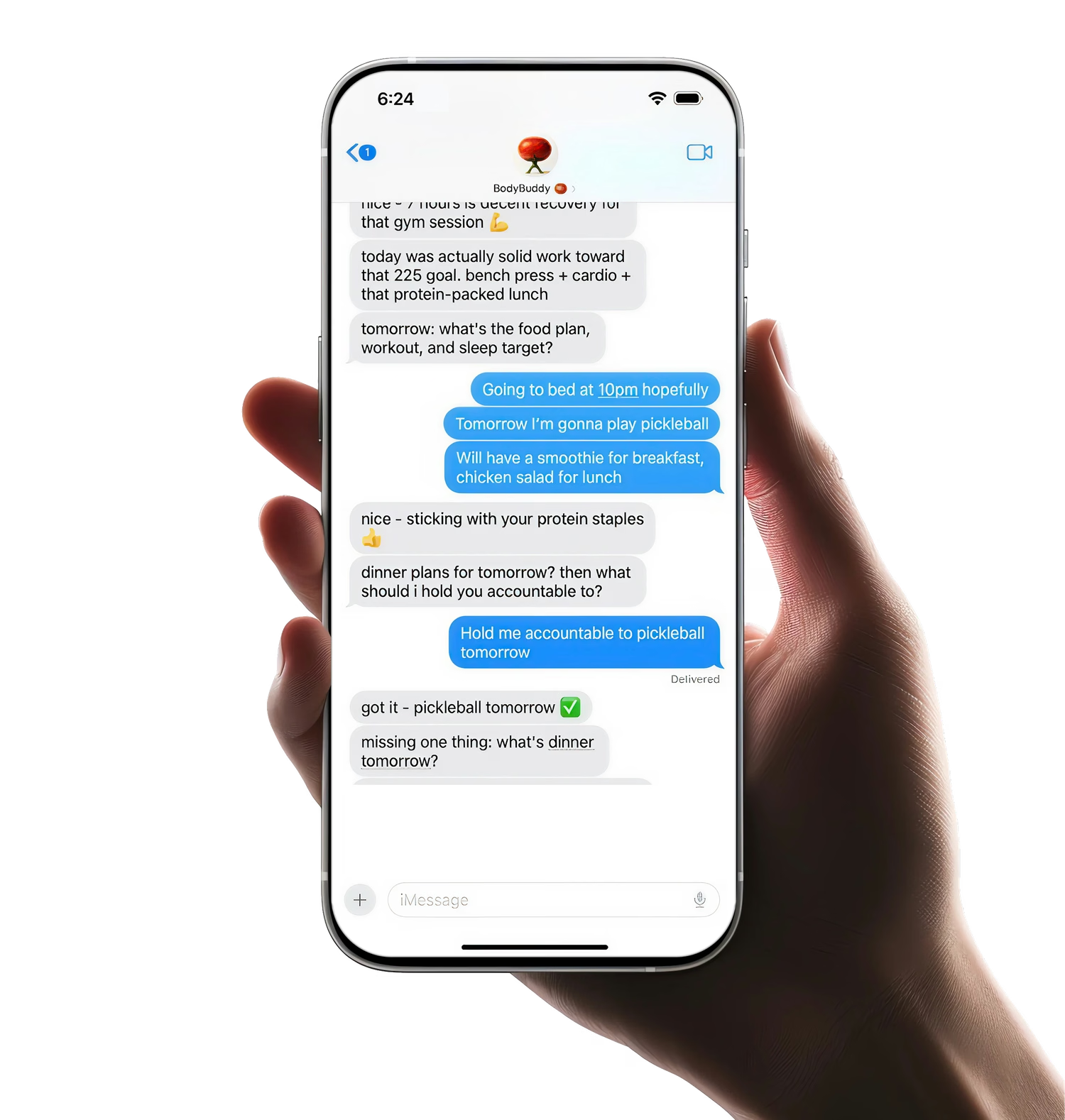
That accountability can be a paper checklist, a notes app, or a nutrition tracking tool. BodyBuddy is one option. It offers daily check-ins and nutrition tracking that can help people notice whether higher-fiber choices are showing up, instead of just living as a vague intention.
If you're learning how to get more fiber in diet changes that stick, keep it simple. Change one breakfast. Then one lunch. Then one snack. Miss a day and restart the next meal, not next Monday.
That's how real habits are built.
If you want extra structure while you build those routines, BodyBuddy gives you daily accountability around nutrition, movement, and sleep so healthy choices become repeatable instead of random.

Want daily accountability?

BodyBuddy texts you every day.

Build a healthier relationship with food and movement — one text at a time.

Join 500+ usersstaying healthy