May 11, 2026

Getting Back into Fitness: Your 2026 Action Plan

Getting Back into Fitness: Your 2026 Action Plan

Getting Back into Fitness: Your 2026 Action Plan
You know the feeling. Monday starts with real intent. You clean up your meals, save a workout plan, maybe even buy new shoes. By Thursday, work runs late, you miss one session, and your brain jumps straight to, “I've blown it again.”
That spiral is what stops most restarts.
Getting back into fitness isn't mainly a training problem. It's a recovery problem, a scheduling problem, and most of all, a systems problem. If you've been trying to restart with motivation alone, you're not weak. You're using the wrong tool for the job.

The All-or-Nothing Trap and How to Escape It

Individuals often don't fail because they picked the wrong split or the wrong calorie target. They fail because they treat one imperfect day like proof they can't be consistent.
That mindset is everywhere. You miss Tuesday's workout, so Wednesday feels pointless. Lunch goes off plan, so dinner turns into “I'll start again next week.” The problem isn't the missed workout or the takeout meal. The problem is the story attached to it.
There's a wide gap between wanting fitness and living it. While 76% of individuals want to be fit, only 48% exercise regularly, according to Create Fit's fitness trends statistics. That gap isn't just about knowledge. It is widely understood that one should move more, eat better, and sleep longer. Individuals struggle with execution when real life interrupts the plan.

Why perfection keeps breaking your momentum

Perfection gives you a short burst of excitement. Systems give you something you can repeat on a tired Wednesday.
When people restart, they often build around their most motivated version of themselves. They choose the five-day program, the strict meal rules, and the early wakeups. Then normal life returns. Travel happens. Kids get sick. Deadlines pile up. The plan collapses because it had no room for friction.
A durable fitness restart has to answer simple questions:
  • When will you train? Pick times that match your real schedule, not your ideal schedule.
  • What counts as success? A short walk, a scaled workout, or a simple meal still counts.
  • What happens after a miss? You return at the next opportunity. No punishment. No “starting over.”

What actually works instead

The people who get back into fitness and stay there usually stop chasing intensity first. They lower the bar enough to rebuild trust with themselves.
That means fewer heroic promises and more repeatable actions. A plan that says “move for 20 minutes after work” is often stronger than a plan packed with ambition but no margin. Small wins feel unimpressive in the moment. Over time, they rebuild identity.
Consistency isn't glamorous. It's just effective.

Conduct an Honest Self-Assessment Before You Begin

You open your notes app, sketch out a comeback plan, and feel ready for a fresh start. Then one honest question changes the quality of the plan. What knocked you out of rhythm last time?
notion image
Start there.
Plenty of people say they stopped because they were busy. Sometimes that is accurate. Often it hides the real problem. The plan was too draining to recover from. Sleep was poor. Progress felt too slow. Old performance standards made every workout feel like proof that they had fallen off.
If we do not identify the underlying friction, we build the next plan on the same fault line.
I see this constantly with clients restarting after months or years away. Time matters, but time is rarely the whole story. Disappointment, low confidence, and decision fatigue are usually sitting in the background. That is why a restart needs more than a lighter workout split. It needs a psychological reset and a system that catches you before one rough week turns into another long break.

Ask questions that produce useful answers

“Why did I quit?” is too broad. It usually leads to guilt, not clarity.
Use tighter prompts instead:
  1. What started slipping first? Sleep, meals, workouts, steps, recovery, or weekend structure.
  1. What made the plan hard to repeat? Session length, intensity, commute, complexity, or rigid rules.
  1. What situations threw you off most often? Stressful workdays, travel, family demands, social events, or poor sleep.
  1. What happened after one missed workout? You adjusted, skipped the rest of the week, or waited for a perfect Monday.
  1. What feels hardest right now? Getting started, being seen in the gym, soreness, loss of strength, or food decisions.
Write the answers down. Patterns are easier to fix when they are visible.

Stop measuring yourself against an old version of you

This is one of the biggest traps in a comeback.
You remember your old lifts, pace, body weight, or training volume. Then you use those numbers to judge what you should be able to do today. That usually leads to one of two mistakes. You push too hard and get hurt, or you avoid training because every session feels like a reminder of lost ground.
Old numbers are context. They are not your current prescription.
A useful restart keeps the parts that served you and drops the parts that kept breaking the routine. If lifting helped you stay engaged before, keep lifting. If max effort sessions, aggressive dieting, or random programming kept ending the cycle, stop bringing them into the reset.
Identify the actual fear as well. For many people, it is not laziness. It is the fear of trying again, then proving to themselves that they cannot stay consistent.

Turn your assessment into operating rules

A self-assessment is only useful if it changes what you do next.
Finish with a few plain statements:
  • My schedule supports short morning sessions better than long evening workouts.
  • I miss training when work is stressful, so I need a lower-effort backup option.
  • I do better with repeat meals than detailed tracking.
  • I need external check-ins because motivation changes week to week.
That last point matters more than many people expect. Insight helps at the start. Follow-through is what rebuilds trust. AI-assisted accountability can help here because it adds structure between workouts. It can prompt check-ins, track patterns, and catch the early signs of drift before you disappear from the plan again.
Honesty at this stage saves effort later. We are not trying to build an impressive comeback on paper. We are building one you can keep.

Set Goals You Can Actually Achieve This Week

The fastest way to stall a comeback is to set a goal that only works if everything goes perfectly.
A better approach is to build around process goals. Those are actions you can complete this week, regardless of what the scale says or how your body looks.
notion image
Outcome goals have value, but they're poor daily drivers. “Lose weight” doesn't tell you what to do tonight at 6:30 when you're tired and deciding between a walk and the couch. “Walk for 25 minutes after work on Monday, Wednesday, and Saturday” does.

Use minimum viable effort

If you've been out of rhythm, your first-week target should feel almost too easy.
That isn't lowering standards. It's improving compliance.
Nerd Fitness describes a restart method used by over 15,000 people, built around “respawning” with micro-habits such as a short bodyweight circuit. It starts with an “almost too easy” schedule at RPE 4 to 5 out of 10 and is designed to reduce burnout while addressing the all-or-nothing relapse that trips up 50% of returnees, according to their restart guide.
Here's what that looks like in real life:
  • Walking goal: 3 walks this week, 20 to 30 minutes each
  • Strength goal: 2 short full-body sessions at home
  • Nutrition goal: Add protein to breakfast on workdays
  • Recovery goal: In bed on time three nights this week
Those are good restart goals because you can do them even if the week gets messy.

Write goals like appointments

Don't stop at “I'll work out three times.”
Write the cue with the action:
  • Monday at 6:30 pm: 25-minute walk
  • Wednesday at 7:00 am: bodyweight session in the living room
  • Friday at lunch: 20-minute walk plus stretch
That removes decision-making. You're not hoping to fit exercise in. You're giving it a slot.
A simple bodyweight session can be enough to restart momentum:
  • Squats
  • Push-up variation
  • Glute bridges
  • Plank
  • Rest, then repeat for a few rounds
If that feels basic, good. Basic is exactly what many people need at the start.
Here's a useful demonstration of simple beginner movement patterns and how to scale them:

A good first week should leave you wanting more

That's the opposite of how many individuals restart. They want a week that proves something.
Don't try to prove fitness. Rebuild it.
Your target this week is simple: set goals so achievable that completion becomes the expectation.

Your First Four Weeks A Progressive Workout Plan

Most restart plans fail because they ask your body to perform before it has adapted. You feel motivated enough to push hard, but your joints, connective tissue, and recovery systems aren't ready.
That's why the first month should be a consistency phase.
Experts advise training at 50 to 60% perceived effort for the first 4 weeks, and HWPO Training's restart guidance notes that rushing back causes over 50% of returnees to drop out within 6 weeks and leads to a 40% higher injury incidence compared with a gradual ramp-up.
notion image

How to use RPE without overthinking it

RPE means rate of perceived exertion. In plain language, it's how hard the session feels.
For this reset phase:
  • RPE 5 means you're working, but you could do more
  • RPE 6 means focused effort, still controlled
  • Anything that feels like a grind is too much right now
That cap matters. Early sessions should build confidence and repeatability. They should not leave you limping into meetings or skipping the next two workouts because you're wrecked.

Sample 4-Week Fitness Restart Progression

Week
Frequency
Session Goal
Perceived Exertion (RPE)
Week 1
3 sessions
Reintroduce movement, focus on form and stopping early
5
Week 2
3 sessions
Repeat the routine, add a little volume only if recovery feels good
5 to 6
Week 3
4 sessions
Add one short session or longer walk, keep strength work controlled
5 to 6
Week 4
4 sessions
Solidify the habit, maintain effort, avoid testing limits
6

Weeks 1 and 2 should feel restrained

Your first two weeks are about showing up on schedule.
A solid template is 3 full-body sessions per week lasting 30 to 45 minutes. Focus on simple compound patterns such as squat, hinge, push, pull, and carry if available. If you're training at home, bodyweight or dumbbell versions are enough.
A sample session might look like this:
  1. Warm-up for a few minutes with easy mobility and walking
  1. Main block of squats, presses or push-up variations, hinges, and rows if you have equipment
  1. Core work such as planks or dead bugs
  1. Cool-down with light walking or stretching
Keep a few reps in reserve. You're not chasing failure. You're rehearsing the habit.

Weeks 3 and 4 can grow, but only if recovery is steady

By week three, some people can add a fourth session. That might be a short walk, a light mobility day, or another strength workout. It should fit your life without creating friction.
Use a quick review after each week:
  • Energy: Did training leave you more energized or more depleted?
  • Soreness: Did soreness settle in a normal way, or linger too long?
  • Schedule: Did the plan fit your work and home life?
  • Mood: Are you building momentum, or dreading the next session?
If recovery is poor, repeat the same week. Repeating is not failure. It's good programming.
A lot of people getting back into fitness want a plan that looks impressive. You need a plan that survives contact with your calendar.

Fueling Your Comeback With Simple Nutrition Rules

You finish a workout feeling motivated, then spend the rest of the day under-eating, grabbing whatever is nearby, and crashing by late afternoon. By the next session, your legs feel heavy, your patience is gone, and training starts to feel harder than it should.
That pattern gets mistaken for a motivation problem all the time. In practice, it is often a fueling problem.
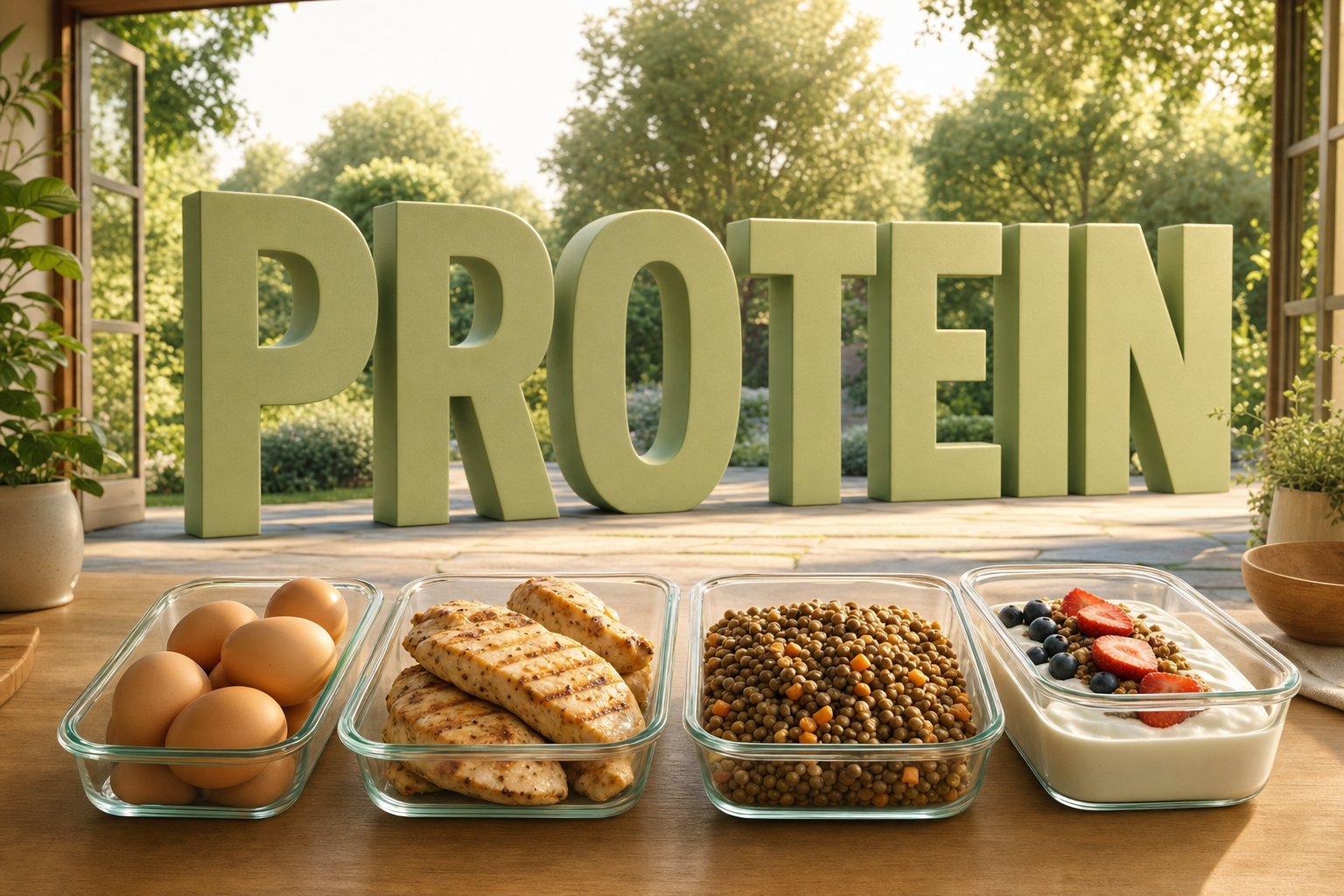
A restart goes better when food does three jobs well. It keeps energy steady, supports recovery, and reduces the odds that one stressful day turns into a string of missed workouts. Body composition matters, but in the first month, consistency matters more. If your nutrition plan makes training harder to repeat, it is the wrong plan for this phase.
notion image

Three rules that work better than a strict meal plan

Strict meal plans fail early because they ask for too many decisions, too much prep, and too much perfection. You need a food system you can run on a busy Tuesday, not just on a calm Sunday.
  • Add produce before you start cutting foods. A piece of fruit at breakfast, vegetables at lunch, and another serving at dinner improves meal quality fast without triggering the restrict and rebound cycle.
  • Drink water on purpose. One glass when you wake up, one with each meal, and one around training is a simple rule that covers a lot of ground.
These rules are plain. Plain is useful when life gets messy.

Stop using nutrition as punishment

People who feel behind often try to make up for it with food rules. They skip meals, cut carbs, or try to eat as little as possible for a few days. Then they train flat, recover poorly, and start bargaining with the plan.
I have seen this pattern more times than I can count. Hard training and hard restriction at the same time usually backfire for anyone restarting fitness.
Use a calmer standard instead:
Situation
Common reaction
Better move
Missed workouts this week
Eat less to compensate
Eat normally and restart training at the next session
Afternoon energy slump
Grab quick sugar, then crash
Build lunch around protein, carbs, and produce
Evening cravings
Assume you lack discipline
Check whether you under-ate earlier in the day
Recovery nutrition should make the next workout easier to complete.

Build meals you can repeat without thinking

The goal is not nutrition theater. The goal is fewer decisions.
Use simple templates that cover the basics:
  • Breakfast: protein plus fruit
  • Lunch: protein, carb source, vegetables
  • Dinner: the same structure, adjusted for hunger and activity
  • Snack: protein or fiber-rich foods that keep energy stable
The psychological reset matters here. Many people restarting fitness still eat like they are either "being good" or "off track." That mindset creates swings. A better standard is repeatable meals, decent portions, and quick course corrections.
If you are using AI accountability for your comeback, food logging and meal check-ins can help spot patterns early. You do not need perfect tracking. You need feedback. If every low-energy workout follows a skipped lunch, or every evening snack spiral follows a tiny breakfast, we stop guessing and start adjusting.
That is how nutrition supports habit-building. It stops being a side project and starts doing its real job, helping you show up again tomorrow.

The Accountability Framework That Makes It Stick

A decent plan isn't enough. Many individuals already have decent plans saved on their phone.
What they don't have is an execution system that catches them before a missed day turns into a missed month.
That matters even more now because the training environment has changed. The pandemic pushed fitness into the home, and 51% of US exercisers now prefer at-home workouts, while integrated wellness participation jumped by over 45%, according to PTPioneer's home fitness industry statistics. Home training is convenient. It also removes the built-in accountability that used to come from commuting to a gym, seeing coaches, or being around other people moving.

Why self-motivation keeps fading

Motivation is useful for starting. It's unreliable for repeating.
Most missed workouts don't happen because people forgot fitness matters. They happen because they were tired, distracted, stressed, or forced to make too many decisions late in the day. A good accountability system reduces those decisions.
Here's what that usually includes:
  • A daily check-in so the plan stays visible
  • A record of completed actions so progress feels real
  • A way to spot patterns like missed evenings, travel days, or inconsistent meals
  • A reset protocol for bad days, so one miss doesn't become five
That can come from a coach, a training partner, a shared calendar, a habit tracker, or structured prompts. The method matters less than the consistency of the feedback loop.

What an AI accountability layer can do

For busy professionals, AI can handle the repetitive part of coaching well. It can prompt action, track adherence, summarize behavior, and surface bottlenecks without requiring appointments.
One example is BodyBuddy, which uses daily text check-ins, tracks streaks, writes progress summaries, and flags behavior patterns that interrupt momentum. If you want a deeper look at the logic behind that approach, this article on daily accountability for fitness and why it works better than motivation alone explains the mechanism.
The important point isn't that AI replaces coaching judgment. It's that it helps close the gap between intention and action on ordinary days.

Build your own minimum framework

If you want something you can start today, use this simple structure:
  1. Schedule your workouts for the week
  1. Define the minimum version of each workout
  1. Check in daily with yourself or a tool
  1. Review each week and identify the one thing that caused friction
  1. Adjust one variable only for the next week
That last part matters. Don't rebuild your whole plan every Sunday. Change one thing, test it, and keep moving.

Your 90-Day Journey Starts Today

Getting back into fitness works when you stop treating it like a short burst of discipline and start treating it like a repeatable system.
You need an honest review of what knocked you off track before. You need goals that fit this week, not fantasy goals for some future version of you. You need a first month that rebuilds capacity instead of testing it. You need food that supports energy. And you need accountability that keeps the plan alive on ordinary days.
That's how a restart becomes a routine.
If you want a structured next step, use a system that helps you check in daily, spot patterns early, and build habits over time. This guide to mastering your 2026 90-day fitness challenge is a practical place to begin, especially if you want a clear runway into a longer habit-building phase.
Start small. Start this week. Then keep showing up long enough for the routine to feel normal again.

Want daily accountability?

BodyBuddy texts you every day.

Build a healthier relationship with food and movement — one text at a time.

Join 500+ usersstaying healthy