Nutrition|May 10, 2026|Francis
How much protein do you need to lose weight without losing muscle
How much protein do you need to lose weight without losing muscle
Most diet advice treats protein like a side note. Cut your calories, move more, and the weight will come off. Technically true. But what kind of weight? Because if you're losing 30 pounds and half of it is muscle, you haven't gotten leaner. You've just become a smaller, softer version of yourself with a slower metabolism. That's not progress. That's a setup for regaining everything.
Protein is the one macronutrient that separates people who lose fat from people who just lose weight. The distinction matters more than most people realize. When researchers at McMaster University put subjects on aggressive calorie deficits, the high-protein group gained muscle while losing fat. The lower-protein group lost fat too, but they also lost lean mass. Same calorie deficit. Wildly different outcomes.
So the question isn't whether protein matters during weight loss. It's how much you actually need, and whether you're getting enough right now. Spoiler: you're probably not.
Why protein matters more when you're cutting calories
Your body doesn't want to lose fat. Fat is stored energy, and from an evolutionary standpoint, your body would rather hold onto it. When you eat fewer calories than you burn, your body looks for energy wherever it can find it, and muscle tissue is fair game.
Protein counteracts this in two ways. First, it provides the amino acids your muscles need to repair and maintain themselves. Without adequate protein, your body breaks down muscle to get those amino acids. Second, protein has a high thermic effect, meaning your body burns more calories digesting it than it does digesting carbs or fat. About 20-30% of protein calories get burned during digestion alone, compared to 5-10% for carbs and 0-3% for fat.
There's a third benefit that doesn't get enough attention: satiety. Protein keeps you full longer than any other macronutrient. A 2015 study in the American Journal of Clinical Nutrition found that increasing protein from 15% to 30% of total calories led participants to eat 441 fewer calories per day without even trying. They weren't told to eat less. They just weren't as hungry.
The actual numbers: how many grams you need
You'll see a lot of ranges thrown around. The RDA says 0.8 grams per kilogram of body weight, which is roughly 0.36 grams per pound. Ignore this number. The RDA is the minimum to prevent deficiency, not the amount for anyone trying to change their body composition while dieting.
Here's what the research actually supports:
If you're moderately active and in a calorie deficit: 0.7-1.0 grams per pound of body weight per day. A 2018 meta-analysis published in the British Journal of Sports Medicine by Morton et al. found that protein intakes up to 0.73 g/lb (1.6 g/kg) maximized muscle and strength gains. During a deficit, you want to be at the higher end of that range because your body is more likely to tap into muscle for energy.
If you're training hard and in an aggressive deficit: 1.0-1.2 grams per pound. The McMaster study mentioned earlier used 1.1 g/lb (2.4 g/kg) for the high-protein group, and those subjects actually gained lean mass on a 40% calorie deficit. That's a steep cut, and protein was the protective factor.
If you have significant weight to lose (50+ pounds): Use your goal body weight, not your current weight. A 280-pound person aiming for 200 pounds doesn't need 280 grams of protein. Aim for 0.7-1.0 g per pound of your target weight. In this case, 140-200 grams daily.
For most people, this lands somewhere between 120 and 180 grams per day. That's meaningfully higher than what the average American eats, which hovers around 80-100 grams.
Protein timing: what actually matters and what doesn't
The fitness industry has spent decades obsessing over protein timing. Drink a shake within 30 minutes of your workout or your gains evaporate. Eat protein every three hours or you'll go catabolic. Wake up at 2 AM to drink casein or your muscles will dissolve overnight.
Almost none of this holds up under scrutiny.
A 2013 meta-analysis by Schoenfeld, Aragon, and Krieger in the Journal of the International Society of Sports Nutrition found that the so-called "anabolic window" after training is much wider than previously believed, likely four to six hours, not 30 minutes. The total amount of protein you eat in a day matters far more than when you eat it.
That said, there are two timing principles worth following. First, spread your protein across at least three meals. A 2014 study in the Journal of Nutrition by Mamerow et al. showed that distributing protein evenly across meals (about 30g per meal) stimulated 25% more muscle protein synthesis than eating the same total amount but loading most of it at dinner, which is what most people do.
Second, having 20-40 grams of protein within a couple hours of resistance training is a good idea. Not because the window is tiny, but because training sensitizes your muscles to protein for roughly 24 hours, and having amino acids available sooner rather than later takes advantage of that.
Beyond those two points? Don't stress about it. Hitting your daily number is 90% of the battle.
Best protein sources, ranked by what actually matters
Not all protein is created equal, but the differences are smaller than supplement companies want you to believe. What matters most is that you can eat it consistently, it fits your budget, and you actually enjoy it. Here's how common sources stack up on a practical level:
Tier 1 - High protein, low calorie, easy to prepare:
- Greek yogurt (plain, nonfat): 17g protein per 170g serving, roughly 100 calories
- Chicken breast: 31g per 4 oz, about 130 calories
- Egg whites: 11g per 3 whites, around 50 calories
- Whey protein powder: 24-30g per scoop, 110-130 calories
- Cottage cheese (low-fat): 14g per half cup, about 90 calories
Tier 2 - Great protein, slightly more calories or prep:
- Salmon: 23g per 4 oz, about 200 calories (plus omega-3s, which are worth the extra calories)
- Lean ground turkey (93%): 22g per 4 oz, roughly 170 calories
- Whole eggs: 6g each, about 70 calories
- Shrimp: 24g per 4 oz, around 120 calories
- Lentils: 18g per cup cooked, approximately 230 calories
Tier 3 - Solid options, require more planning:
- Tofu (extra firm): 10g per 3.5 oz, about 80 calories
- Black beans: 15g per cup, around 230 calories
- Edamame: 17g per cup, roughly 190 calories
- Beef jerky: 9g per oz, about 80 calories
The pattern here is straightforward. Animal proteins tend to be more protein-dense per calorie. Plant proteins are perfectly viable but usually come packaged with more carbs or fat, which means you need to plan a bit more carefully to hit your numbers without overshooting calories.
What happens when you don't eat enough protein while dieting
This is where things get ugly. A calorie deficit without adequate protein creates a cascade of problems that go beyond just losing some muscle.
You lose muscle, which tanks your metabolism. Muscle is metabolically expensive tissue. Every pound of muscle burns roughly 6-7 calories per day at rest, while fat burns about 2. Lose 10 pounds of muscle during a diet and your resting metabolism drops by 50-70 calories per day. That doesn't sound like much, but it compounds. Over a year, that's 5-7 pounds of fat your body would have burned but didn't.
You end up "skinny fat." This is the frustrating outcome where the scale says you've lost weight but you still look soft. Your body fat percentage hasn't changed much because you lost muscle and fat in roughly equal proportions.
You get hungrier. Less protein means less satiety. A 2016 review in the Annual Review of Nutrition confirmed that low-protein diets drive increased appetite, a phenomenon researchers call "protein leverage." Your body keeps pushing you to eat until it gets the protein it needs, and if your meals are low in protein, you'll overeat carbs and fat trying to compensate.
Your recovery suffers. If you're exercising while dieting (and you should be, especially resistance training), inadequate protein means slower recovery, more soreness, and diminished performance. You're tearing muscle fibers down without giving your body the raw materials to build them back up.
This isn't a scare tactic. It's just physiology. The good news is that the fix is straightforward: eat more protein.
How to hit your protein goals without it feeling like a chore
Knowing you need 150 grams of protein is one thing. Actually eating 150 grams of protein every day is another. Here's what works in practice:
Front-load your protein. Most people eat a carb-heavy breakfast (cereal, toast, oatmeal) and try to cram all their protein into dinner. Flip that. A breakfast with 30-40g of protein, think three eggs with turkey sausage, or Greek yogurt with protein powder mixed in, sets you up so you're not scrambling to hit your number at 8 PM.
Make protein the anchor of every meal. When you're deciding what to eat, start with the protein source and build around it. "I'll have chicken" leads to a better meal than "I'll have pasta" and trying to add protein as an afterthought.
Keep high-protein snacks accessible. Jerky, string cheese, hard-boiled eggs, protein bars (look for ones with 20g+ protein and under 250 calories), or a bag of edamame. When you're reaching for a snack, these keep you on track instead of setting you back.
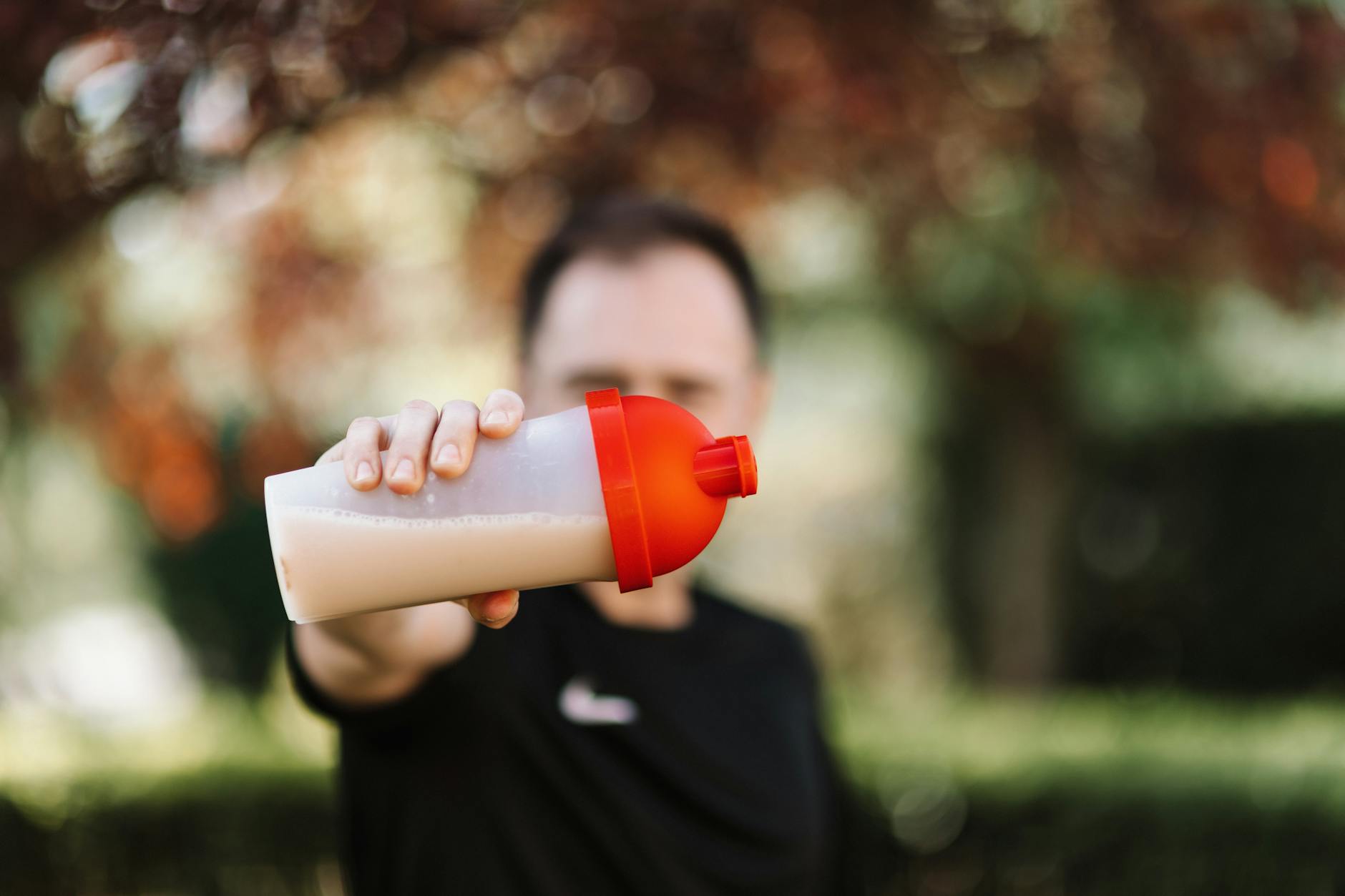
Don't be afraid of protein powder. It's not a magic supplement. It's just food, specifically dried milk protein in most cases. A scoop in your morning coffee, blended into a smoothie, or mixed into oatmeal is an easy 25-30 grams with minimal effort.
Batch cook. Spending 45 minutes on Sunday grilling chicken, browning ground turkey, and hard-boiling a dozen eggs gives you grab-and-go protein for the entire week. It's not glamorous, but it removes the daily decision-making that trips people up.
How BodyBuddy helps you hit your protein goals
Knowing what to do is half the battle. The other half is actually doing it, day after day, when life gets busy and meal planning falls apart.
That's what BodyBuddy is built for. It's an AI health coach that lives in your iMessage, so there's no extra app to open, no complicated dashboard to navigate. It checks in with you daily and keeps you accountable to the goals you've set, including your protein targets.
One of the simplest features is photo-based meal tracking. Snap a picture of your plate, send it in your iMessage conversation, and BodyBuddy's AI estimates the macros, including protein, and logs it for you. No searching through food databases. No weighing every ingredient. Just a photo and a few seconds.
Over time, BodyBuddy spots patterns. Maybe you're consistently low on protein at lunch, or your weekends look completely different from your weekdays. Your AI coach flags these trends and gives you specific, practical suggestions, not generic advice, but coaching tailored to how you actually eat.
It's the difference between reading an article about protein (like this one) and having someone in your corner who helps you apply it every single day.
FAQ
How much protein per day to lose weight for a woman?
The same principles apply regardless of sex. Aim for 0.7-1.0 grams per pound of body weight (or goal body weight if you have a lot to lose). A 150-pound woman looking to lose fat while keeping muscle should target 105-150 grams daily. Women don't need less protein than men on a per-pound basis. The absolute numbers are often lower simply because women tend to weigh less.
Can you eat too much protein?
For healthy individuals, the risks of high protein intake have been significantly overstated. A 2016 study published in the Journal of the International Society of Sports Nutrition had resistance-trained men eat up to 1.5 g/lb (3.4 g/kg) for a year with no adverse effects on kidney function, blood lipids, or liver enzymes. That said, there are diminishing returns above 1.0-1.2 g/lb for most people. The extra protein won't hurt you, but it won't help much either, and those calories could be better spent on carbs or fats.
Is plant protein as effective as animal protein for maintaining muscle?
Yes, with a caveat. Most individual plant proteins are lower in one or more essential amino acids, particularly leucine, which is the primary trigger for muscle protein synthesis. But if you eat a variety of plant proteins throughout the day (legumes, grains, soy, seeds), you'll cover your amino acid bases. A 2021 systematic review in Sports Medicine found no significant difference in muscle outcomes between plant and animal protein when total protein and leucine intake were matched.
Do I need protein shakes to hit my goals?
No. Protein shakes are convenient, not necessary. If you can hit your daily protein target through whole foods, that's perfectly fine and arguably preferable since whole foods come with other nutrients. But for most people eating 130+ grams per day, one shake makes the logistics significantly easier. Think of it as a tool, not a requirement.
Should I count protein on rest days too?
Yes. Muscle recovery and protein synthesis continue for 24-48 hours after training. Your muscles don't know it's a rest day. Keep your protein intake consistent every day, including days you don't work out. If anything, rest days are when your body is doing the most rebuilding.
Start building the habits that actually stick
Reading about protein is easy. Consistently eating enough of it, every day, while managing a calorie deficit, is the hard part. You don't need more information. You need a system that holds you accountable and makes tracking simple enough to sustain.
BodyBuddy gives you that system right inside iMessage. Daily check-ins, photo-based meal logging, and AI coaching that adapts to your actual eating patterns. No complicated apps to learn, no food diaries to maintain.
Try BodyBuddy free at bodybuddy.app and stop guessing whether you're eating enough protein.
Want daily accountability?
BodyBuddy texts you every day.
Build a healthier relationship with food and movement, one text at a time.