May 29, 2026

Circuit Workout for Beginners: A Full-Body Starter Plan

Circuit Workout for Beginners: A Full-Body Starter Plan

Circuit Workout for Beginners: A Full-Body Starter Plan
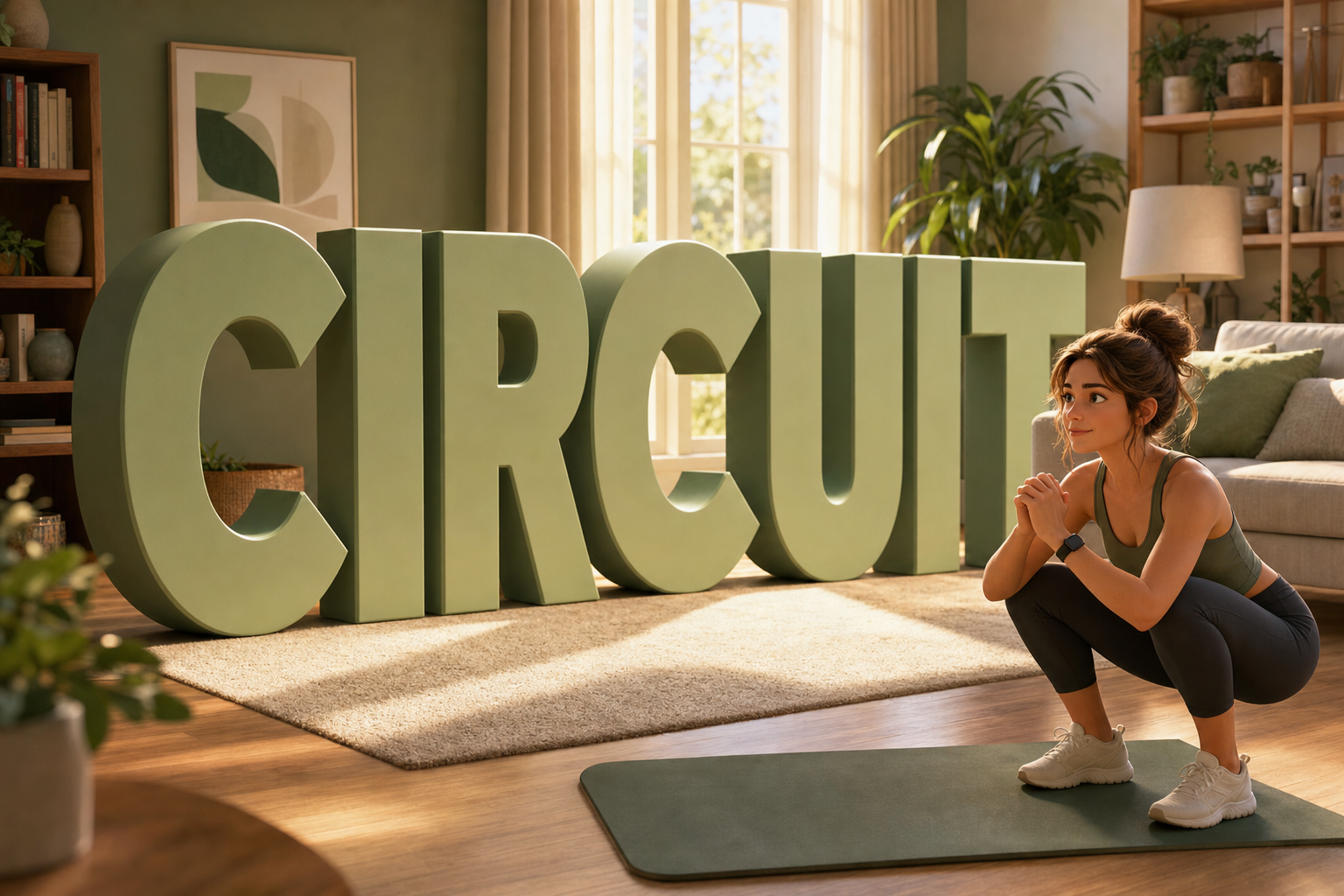
You want to start working out, but most beginner plans feel written for someone who already knows what they're doing. One article tells you to crush a sweaty full-body circuit. Another says just walk. A video starts with burpees, push-ups, and jump lunges, and now you're wondering whether exercise is supposed to feel confusing before it even starts.
That's why a good circuit workout for beginners matters. Not because it's trendy, and not because it's the hardest option, but because it gives you a repeatable structure. You don't have to make a hundred decisions. You just show up, move through a short list of exercises, and finish feeling like you did something useful.
For beginners, the main value of circuit training isn't one perfect workout. It's that circuits can help you build the habit of exercising without needing a long gym session, fancy equipment, or advanced skill. If you set it up well, it becomes one of the simplest ways to practice consistency.

Why Circuit Workouts Are Perfect for Beginners

Most beginners don't fail because they picked the wrong exercise. They stop because the plan was too complicated, too intense, or too hard to repeat during a normal week. Circuit training solves a lot of that.
Circuit training means doing a series of exercises back-to-back with little or no rest between stations. It isn't new. It was first developed in 1953 at the University of Leeds by R.E. Morgan and G.T. Anderson, and the common structure of 6–10 exercises done with minimal rest has been used for over 70 years as an adaptable training model for general fitness, according to Eisenhower Health's overview of circuit training.
notion image

It removes decision fatigue

A beginner usually does better with a clear container. Circuit training gives you one. Instead of wondering whether you should do cardio, strength, abs, or mobility, you blend a few simple movements into one session.
That matters if you're busy, inconsistent, or easily overwhelmed. You can save a routine and repeat it. You don't need to reinvent your workout every time.

It builds more than one fitness skill at once

A well-made circuit can train lower body, upper body, core, and basic conditioning in the same session. That's useful when you're starting from scratch because almost any beginner benefits from broad improvement instead of hyper-specialized training.
It also works well at home. If you're not ready for a gym yet, bodyweight circuits give you a practical entry point. If that's your setup, this guide to home workouts for weight loss without equipment pairs well with the routine below.

It's flexible without becoming random

Some people hear “circuit” and think chaos. Fast music, no rest, and advanced moves done badly. That's not what beginners need.
A beginner circuit should feel controlled. You should know when to work, when to rest, and how to adjust an exercise if your joints, balance, or current fitness level need a simpler version. The workout should challenge you enough to feel engaged, but not so much that your form falls apart halfway through.
What works is a circuit that's simple enough to repeat. What doesn't work is treating every session like a fitness test.

Your First Full-Body Circuit Workout Plan

Start with a plan that's almost boring in its simplicity. That's a good thing. A beginner doesn't need variety for the sake of variety. You need a routine addressing the basics, keeps your heart rate up, and leaves enough energy to come back for the next session.
A solid starting prescription for beginners is 2–3 circuit workouts per week, often using a 1:1 work-to-rest ratio such as 30 seconds of work followed by 30 seconds of rest. A 6-exercise circuit repeated 2–3 times can take as little as 15–20 minutes, based on Peloton's beginner circuit training guidance.

Beginner bodyweight circuit

Use this routine exactly as written for your first few sessions.
Exercise
Work Time
Rest Time
Primary Muscles Targeted
Bodyweight squat
30 seconds
30 seconds
Quads, glutes
Incline push-up or wall push-up
30 seconds
30 seconds
Chest, shoulders, triceps
Reverse lunge or supported split squat
30 seconds
30 seconds
Glutes, quads
Forearm plank
30 seconds
30 seconds
Core, shoulders
Glute bridge
30 seconds
30 seconds
Glutes, hamstrings
March in place or low-impact jumping jack
30 seconds
30 seconds
Full body, cardiovascular system
Complete all six exercises in order. Rest briefly, then repeat the full circuit for 2 rounds. If you finish and still feel steady, you can build toward 3 rounds over time.

Why this structure works

The 1:1 work-to-rest ratio is beginner-friendly because it keeps the session moving without pushing you into sloppy reps. You get enough recovery to reset your breathing, but not so much that the workout drags.
That balance matters more than most beginners realize. If rest is too short, your heart rate and fatigue take over, and your form usually gets worse. If rest is too long, the workout becomes harder to sustain from a time perspective and easier to skip.

How to use the plan correctly

A few simple rules will make this far more effective.
  • Start with a short warm-up. Walk around, march in place, or do easy mobility work until your body feels ready to move.
  • Treat the first round like practice. Learn the positions. Don't chase intensity.
  • Use the rest periods fully. Shake out tension, reset posture, and prepare for the next station.
  • Stop a few reps before form breaks down. Beginners often improve faster when they avoid grinding ugly reps.
  • Write down what happened. Note which exercises felt fine, which felt shaky, and whether 2 rounds felt manageable.

When to choose reps instead of time

Timed intervals are convenient, but they aren't always the best choice. If you're very deconditioned, returning after a long break, or dealing with pain, time can pressure you into continuing after your form has already slipped.
In that case, use a rep-based version instead. Do controlled repetitions of the same movements, rest as needed, and focus on quality. The point is to finish the workout feeling capable, not crushed.
A beginner circuit works best when it teaches rhythm. Show up, move well, recover, repeat. That pattern is what turns exercise into a routine instead of a one-off burst of motivation.

An Exercise-by-Exercise Form Guide

Most beginner programs say “modify if needed” and leave it there. That's not enough. Beginners need clear decision rules.
If a movement hurts, feels unstable, or turns into a completely different shape by the end of the set, the answer isn't to push harder. The answer is to change the version. That kind of scaling is one of the biggest gaps in beginner content, and practical options like incline push-ups or chair squats are important for helping people keep good form and avoid injury, as noted in Anytime Fitness's beginner circuit workout guidance.
notion image

Bodyweight squat

Stand with your feet about hip-width to shoulder-width apart. Push your hips back as if sitting into a chair, keep your chest lifted, and lower only as far as you can while staying balanced. Press through your feet to stand tall.
What it should feel like: work in the thighs and glutes, with your feet planted and your torso controlled.
Most common mistake: knees sliding forward while the torso collapses.
Best modification: chair squat. Sit down to a chair or bench lightly, then stand back up. Use this if free squats feel unstable or too deep.

Incline push-up or wall push-up

Place your hands on a wall, countertop, bench, or sturdy surface. Walk your feet back so your body forms a straight line. Lower your chest toward your hands with control, then press away.
What it should feel like: chest, shoulders, arms, and core working together.
Most common mistake: hips sagging or head jutting forward.
Best modification: use a higher surface. The more upright you are, the easier the movement becomes. If floor push-ups feel impossible, that doesn't mean you're weak. It means the version is too advanced right now.
A quick visual can help before your first session:

Reverse lunge or supported split squat

Step one foot back and lower under control. Keep most of your balance through the front foot, then push back to standing. If alternating steps feels awkward, stay in a split stance and lower up and down while lightly holding a wall or chair.
What it should feel like: front leg working hard, glutes engaged, and balance mildly challenged.
Most common mistake: taking too short a step, which crowds the knees and makes the movement feel jammed.
Best modification: supported split squat. Hold onto a chair, wall, or rail and shorten the range of motion.

Forearm plank

Set your forearms on the floor or a raised surface. Extend your legs behind you and brace your midsection. Think about making one straight line from head to heels.
What it should feel like: your abs, glutes, and shoulders all working to resist movement.
Most common mistake: lower back sagging because the person is trying to “hold longer” instead of hold well.
Best modification: raised plank on a bench, couch, or countertop. If needed, shorten the hold and focus on tension, not toughness.
Breathing helps here. Many beginners hold their breath in planks and push-ups, which creates extra tension in the neck and makes the set feel harder than it needs to. If you want to improve exercise breathing efficiency, that guide from Joint Ventures Physical Therapy gives useful cues you can apply right away.

Glute bridge

Lie on your back with knees bent and feet planted. Press through your heels, squeeze your glutes, and lift your hips until your body forms a straight line from shoulders through knees. Lower with control.
What it should feel like: the back of your hips doing the work, not your lower back.
Most common mistake: over-arching at the top instead of finishing with the glutes.
Best modification: reduce the height and pause lower. If hamstrings cramp, bring the feet slightly closer and think “squeeze hips” instead of “lift as high as possible.”

March in place or low-impact jumping jack

Stand tall and drive one knee up at a time while pumping the arms, or step one foot out at a time while the arms move overhead for a lower-impact jack.
What it should feel like: a steady rise in breathing and heart rate without panic or impact discomfort.
Most common mistake: rushing. Beginners often confuse frantic movement with effective movement.
Best modification: keep it low impact and smaller in range. If your joints don't like jumping, don't jump. You're not losing the benefit. You're choosing the version you can repeat consistently.

A simple rule for every exercise

Use the hardest version you can do with clean form for the full work period. If your shape changes, regress the exercise. If it feels easy and controlled, keep that in mind for later progression.
That's how a circuit workout for beginners becomes safe, useful, and sustainable.

How to Progress and Stay Consistent

The point of your first circuit isn't to prove anything. It's to create a baseline you can build from. Progress should feel deliberate, not dramatic.
A sustainable beginner plan often uses 2–3 sessions per week for 20–30 minutes. Progress can come from increasing 2 rounds to 3 rounds or changing the interval from 30/30 seconds to 45/30 seconds, which balances training stimulus with recovery, according to Just Move Fitness Club's beginner circuit training guidance.
notion image

Start by repeating, not upgrading

For the first phase, do the same circuit often enough that it feels familiar. Familiarity builds confidence. Confidence makes consistency easier.
If every session is a different challenge, beginners usually can't tell whether they're improving or just surviving.

Use one progression lever at a time

You don't need to make the workout harder in every possible way. Pick one.
  1. Add a round if you finish your current workout feeling steady.
  1. Extend work time slightly if your form stays clean.
  1. Reduce rest a little only when breathing and recovery feel manageable.
  1. Upgrade an exercise version if the current one feels too easy.
What doesn't work is changing all four at once. That usually leads to fatigue, sore joints, and skipped sessions.

Build around your week, not your motivation

Consistency gets easier when the workout fits your life as it already is. Put your sessions on days with the fewest scheduling surprises. Keep your exercise space simple. Remove setup friction.
If motivation fades after the first week, that's normal. A practical system matters more than hype. This guide on staying consistent with working out when motivation runs out is useful if you tend to start strong and disappear after a few sessions.

Know the difference between soreness and a bad signal

Some soreness is common when you start, especially after new movements. Sharp pain, joint irritation, or soreness that changes how you move is different. That usually means something needs adjusting.
If you're unsure what post-workout soreness means, MEDISTIK's pain management insights offer a helpful overview of how to think about normal soreness versus warning signs.

A habit-first mindset

A beginner who trains a little and keeps going will outperform the person who keeps restarting extreme plans. That's true in real life, where work stress, family obligations, low energy, and missed days happen.
Your goal for the first stretch isn't to become advanced. It's to become regular. Once regular exercise feels normal, progression becomes much easier.

Frequently Asked Beginner Questions

A lot of beginners think they need to feel wrecked, sweaty, or dramatically sore for a workout to count. That idea causes more setbacks than progress. A circuit workout for beginners should feel productive, but it shouldn't leave you dreading the next session.
notion image

Is soreness a sign that the workout worked

Not necessarily. Soreness can happen when you do something new, but it isn't a reliable scorecard. You can have an effective session and feel only mild fatigue. You can also get very sore from doing too much too soon.
What matters more is whether you moved with good form, completed the session, and recovered well enough to train again.

Can bodyweight circuits build muscle

Yes, especially for beginners, but only if the exercises are challenging enough for your current level and you perform them with control. You may eventually need harder variations, slower reps, pauses, or added resistance if your goal shifts toward more visible muscle development.
Beginners often underestimate how effective simple movements can be when done consistently. They also overestimate how useful random hard workouts are when repeated poorly.

What if I miss a workout

Then you missed a workout. That's all.
Beginners often turn one missed session into a full stop because they think the streak is broken. It's better to treat missed workouts like missed teeth brushing. You don't quit brushing. You do it at the next normal opportunity.

Are circuits the best option for fat loss

They can be a very good option because they're efficient and help you train multiple qualities in one session. But “best” is the wrong question for most beginners.
A more honest standard is sustainability. Beginners often ask whether circuits are the best strategy for fat loss, but the more useful answer is that the best plan is the one you can stick to. For some people, a simpler starting point like brisk walking may be more sustainable, as discussed in Gold's Gym's beginner full-body circuit article.

Should I do circuits every day

For most beginners, no. Your body needs recovery, and your routine needs space to feel manageable. On non-circuit days, easy walking, light mobility work, or rest are all fine choices.
Daily exercise doesn't have to mean daily hard exercise. That distinction matters.

Do I need equipment

No. Bodyweight circuits are enough to get started. Equipment can help later, but it isn't required to build the habit.
If you do add tools, keep it simple. A sturdy chair, a wall, a mat, and eventually a pair of dumbbells or resistance bands can go a long way.

How hard should a beginner circuit feel

You should feel like you're working, breathing harder, and staying focused. You should still be able to maintain positions and finish with decent technique. If you're gasping, dizzy, or losing form early, the workout is too hard.
Hydration also affects how a session feels, especially if you exercise in the morning, in a warm room, or after a busy workday. If that's an issue for you, this guide on improving hydration for peak performance gives practical reminders without overcomplicating it.

How do I know if I'm improving

Track more than body weight. Notice whether your rest periods feel calmer, your squats look cleaner, your push-up angle gets lower, or you complete the session with more confidence. Those are meaningful changes.
If you want a structured way to measure progress without obsessing over the scale, this guide on how to track fitness progress gives practical options.
A beginner circuit doesn't need to be flashy. It needs to be doable. That's what makes it powerful. When you stop chasing the “perfect” workout and start repeating a good one, fitness becomes easier to maintain.
If you want help turning workouts like this into an actual routine, BodyBuddy can help you stay accountable with daily check-ins, habit tracking, and a structured 90-day Habit Bootcamp. It's built for people who don't need more information. They need a system they'll actually stick with.

Want daily accountability?

BodyBuddy texts you every day.

Build a healthier relationship with food and movement — one text at a time.

Join 500+ usersstaying healthy