
Weight Loss Science|April 1, 2026|Francis
Why does my weight fluctuate so much? What the science actually says
A practical BodyBuddy guide to why does my weight fluctuate so much? what the science actually says, with useful considerations and next steps.
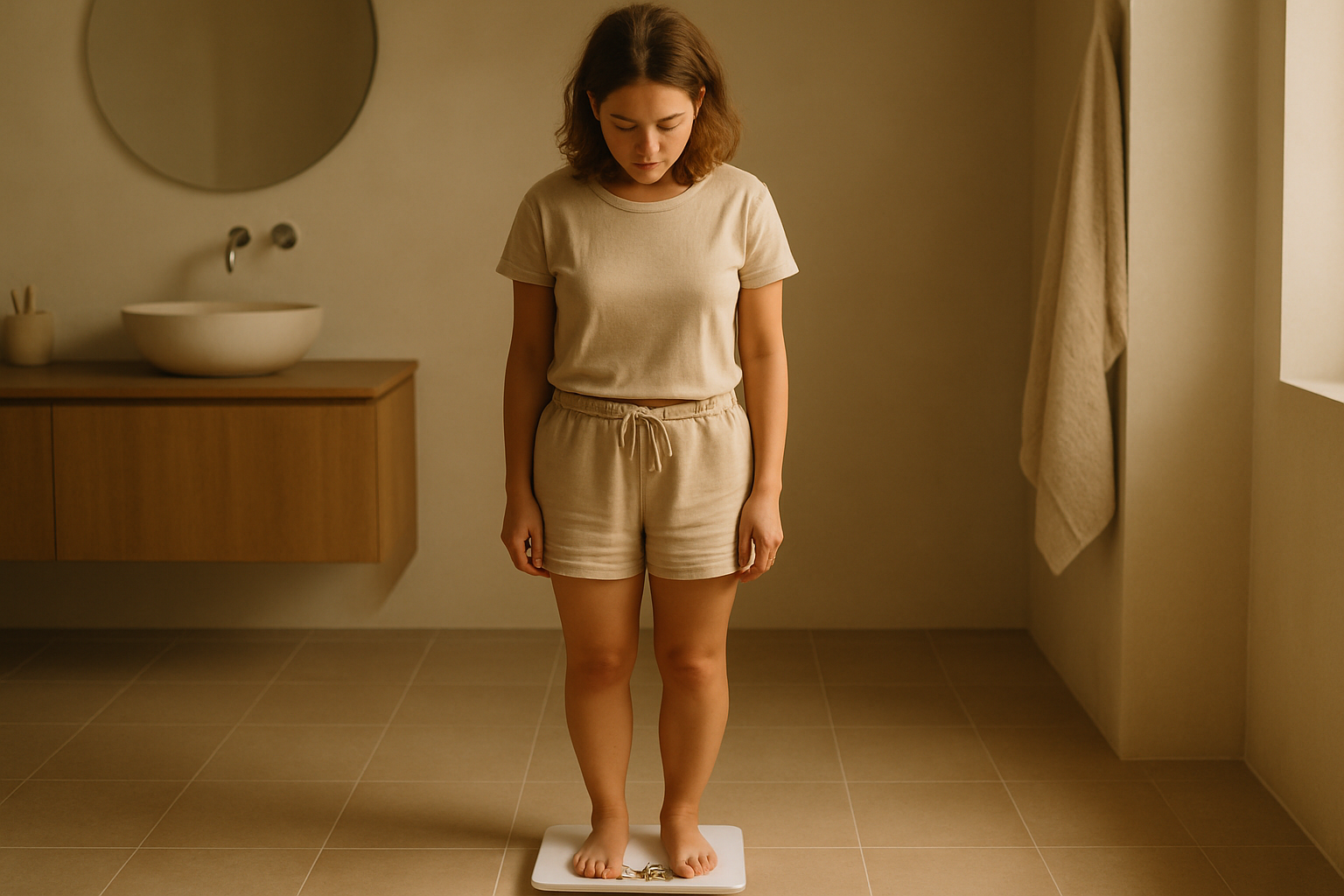
You weighed yourself yesterday morning: 168.4 pounds. Today, same scale, same time: 171.1. Nothing about your eating changed. You didn't go on a midnight pizza bender. And yet the scale says you gained nearly three pounds overnight.
If you've ever wanted to throw your scale out the window, you're not alone. Daily weight fluctuations are one of the most misunderstood parts of losing weight, and they derail people constantly. Not because the fluctuations matter, but because people think they matter.
Here's what's actually going on inside your body when the number jumps around, and what you can do about it.
How much weight fluctuation is normal?
Most adults fluctuate between 2 and 6 pounds within a single day. That's a range, not an error. A 2017 study published in Physiological Reports tracked daily weight in over 1,000 adults and found average daily swings of about 1.1% of body weight. For someone at 170 pounds, that's nearly two pounds in either direction, just from normal body processes.
The number on the scale represents everything inside your body at that moment: bone, muscle, fat, organs, food being digested, water in your cells, water between your cells, the contents of your bladder and intestines. Fat is just one small piece of that total.
When people say they want to "lose weight," they mean they want to lose fat. But the scale can't tell the difference between fat loss and the glass of water you drank ten minutes ago.
The real reasons your weight changes day to day
Water retention (the biggest culprit)
Water makes up about 60% of your body weight, and it shifts constantly. Eat a salty meal, and your body holds extra water to keep sodium levels balanced. This can easily add 2-4 pounds by the next morning. That's not fat. It's fluid.
Carbohydrates do the same thing. Every gram of glycogen (stored carbs) binds to roughly 3 grams of water. If you ate a larger-than-usual carb-heavy dinner, your body stored extra glycogen overnight, and all the water that comes with it. This is why low-carb diets produce such dramatic early weight loss. You're mostly losing water, not fat.
Hormones
For women, the menstrual cycle is one of the most reliable drivers of weight fluctuation. Estrogen and progesterone levels shift throughout the cycle, and both influence how much water your body retains. Many women see their weight climb 3-5 pounds in the luteal phase (the week or two before their period), then drop again once menstruation starts.
Cortisol, the stress hormone, also triggers water retention. Stressful week at work? Poor sleep? Your body may respond by holding more fluid. It's a survival mechanism, not a sign you're doing anything wrong.
Digestion and bowel patterns
Food takes between 24 and 72 hours to fully transit your digestive system. If you weigh yourself before a bowel movement vs. after, the difference can be half a pound to two pounds. Constipation, changes in fiber intake, travel, and dehydration all affect transit time.
The food itself also has physical weight. A large dinner weighs something. It doesn't become body fat instantaneously. It's just... in your stomach.
Exercise
Exercise creates its own temporary weight shifts. Sweating during a workout can drop your weight by a pound or more (you'll gain it back when you rehydrate, which is the point). Intense resistance training causes micro-tears in muscle fibers, which triggers inflammation and water retention as the muscles repair. This is why people often see the scale go up after starting a new workout program, even though they're losing fat.
Medications
Certain medications cause water retention as a side effect. Corticosteroids, some antidepressants, blood pressure medications, and hormonal birth control can all influence the scale. If you recently started or changed a medication and noticed a sudden weight jump, talk to your doctor before panicking. It's almost certainly water.

Why weight fluctuations mess with your head (and what to do about it)
Here's the real problem with daily weigh-ins: they feel like report cards. You ate well yesterday. You moved your body. You went to bed feeling good about your choices. Then the scale goes up, and suddenly all of that effort feels pointless.
This is where people quit. A 2020 study in Obesity found that people who reacted emotionally to daily weight fluctuations were more likely to abandon their weight loss efforts within 12 weeks. The fluctuation itself wasn't the problem. The interpretation was.
There's a mindset shift that separates people who successfully lose weight from people who bounce between starting and stopping: the successful ones learn to ignore single data points and focus on trends.
How to weigh yourself without losing your mind
If you're going to step on the scale, do it in a way that gives you useful information instead of emotional whiplash.
- Weigh yourself at the same time every day. First thing in the morning, after using the bathroom, before eating or drinking. This gives you the most consistent baseline.
- Track the weekly average, not the daily number. Add up your seven morning weights and divide by seven. Compare this week's average to last week's. If the trend is moving down over 2-4 weeks, you're losing fat, regardless of what any single day shows.
- Know your triggers. Had a high-sodium dinner? Expect the scale to bump up tomorrow. Started a new workout routine? You'll probably see a temporary increase. Understanding the cause takes the emotion out of it.
- Consider skipping the scale entirely. Some people do better without daily weigh-ins. If the number on the scale sends you into a spiral, try weighing yourself once a week, or use other markers of progress: how your clothes fit, your energy levels, your strength in workouts, or photos taken every few weeks.
When to actually worry about weight changes
Most daily fluctuations are noise. But some weight changes do warrant attention.
- Unexplained weight gain of more than 5 pounds in a week (especially with swelling in your legs, ankles, or face) could indicate a medical issue like heart or kidney problems. See a doctor.
- Steady upward trend over 4+ weeks, despite consistent eating and exercise, might mean your calorie estimates are off, your metabolism has adapted, or there's an underlying hormonal issue worth investigating.
- Unintentional weight loss of more than 5% of your body weight over 6-12 months without trying should be evaluated by a healthcare provider.
Outside of those scenarios, a few pounds up or down day to day is your body doing exactly what it's supposed to do.
How BodyBuddy helps you stop obsessing over the scale
One of the hardest parts of weight loss is the space between weighing yourself and deciding what to do next. Most people are alone in that moment. They see a number, feel something, and either spiral or push through with no one to talk to about it.
That's where BodyBuddy changes the equation. It's an AI coach that talks to you through iMessage, checking in daily with the kind of context that generic apps can't offer. Text your coach that the scale went up two pounds, and it'll remind you what you ate last night (salty ramen, probably), explain why that's not fat, and help you stay on track.
BodyBuddy coaches you through iMessage with a companion app that tracks your progress and shows your Future You, an AI-generated avatar of what you'll look like when you hit your goal. The daily check-ins, meal tracking via photo or text, and accountability nudges all happen in your messages. The companion iOS app gives you a full picture of your nutrition, daily missions to keep you engaged, and that Future You avatar that becomes more visible as you complete your goals.
The point isn't to make the scale less scary. It's to make the scale less important, because you've got something better to focus on: the daily habits that actually produce results.
Frequently asked questions
Can you gain 3 pounds overnight?
Yes, but it's not fat. To gain 3 pounds of actual fat overnight, you'd need to eat roughly 10,500 calories above what your body burns, which is basically impossible in a single day. A 3-pound overnight jump is almost always water retention from sodium, carbohydrates, or hormonal shifts. It'll come back down within a day or two.
Is it better to weigh yourself daily or weekly?
It depends on your relationship with the scale. Research from Cornell University found that daily weigh-ins can be effective for weight loss, as long as you're tracking the trend and not reacting to individual numbers. If daily weigh-ins stress you out, once a week (same day, same conditions) works fine. The data is less granular, but if it keeps you sane, it's the better choice.
Why do I weigh less in the morning?
Overnight, your body loses water through breathing and sweating (even while sleeping). You also haven't eaten or drunk anything for 7-8 hours. Your morning weight is your lightest, most consistent measurement point. By evening, you've consumed food and fluids that add temporary weight.
Does drinking more water cause weight fluctuation?
Temporarily, yes. A liter of water weighs about 2.2 pounds. But adequate hydration actually helps reduce water retention over time, because your body is less likely to hold onto excess fluid when it's consistently well-hydrated. Drinking more water is one of the simplest ways to stabilize your weight readings.
How long does water weight last after a cheat meal?
Usually 1-3 days. A high-sodium or high-carb meal can cause a temporary spike, but your body will normalize as it processes the extra sodium and depletes the additional glycogen stores. Go back to your normal eating pattern and the water weight will take care of itself.
The bottom line
Your weight is supposed to fluctuate. It always has. The problem isn't the fluctuation. It's that we've been taught to treat a single number on a single morning as a verdict on whether we're doing things right.
Fat loss is slow. Water weight is fast. If you can internalize that difference, you'll stop making decisions based on noise and start making decisions based on what's actually happening in your body.
Weigh yourself if it helps. Skip it if it doesn't. Either way, focus on the behaviors: eating well, moving, sleeping, managing stress. The scale will catch up.
If you want an AI coach that helps you stay focused on what matters (instead of panicking over a 2-pound water weight spike), check out BodyBuddy. It's $29.99/month, and it talks to you through iMessage like a friend who actually knows what they're talking about.
Related BodyBuddy guides
- Why does your weight fluctuate so much? What the science actually says
- How to lose belly fat: what the science actually says (not what Instagram tells you)
- Why weight loss gets harder after 40 (and what actually works)
- Cortisol and weight gain: why stress hormones make losing weight so hard
- How to lose weight without counting calories (and actually keep it off)
Want daily accountability?
BodyBuddy texts you every day.
Build a healthier relationship with food and movement, one text at a time.