All posts
Why do you crave junk food (and what your brain is actually doing)
A practical BodyBuddy guide to why do you crave junk food (and what your brain is actually doing), with useful considerations and next steps.
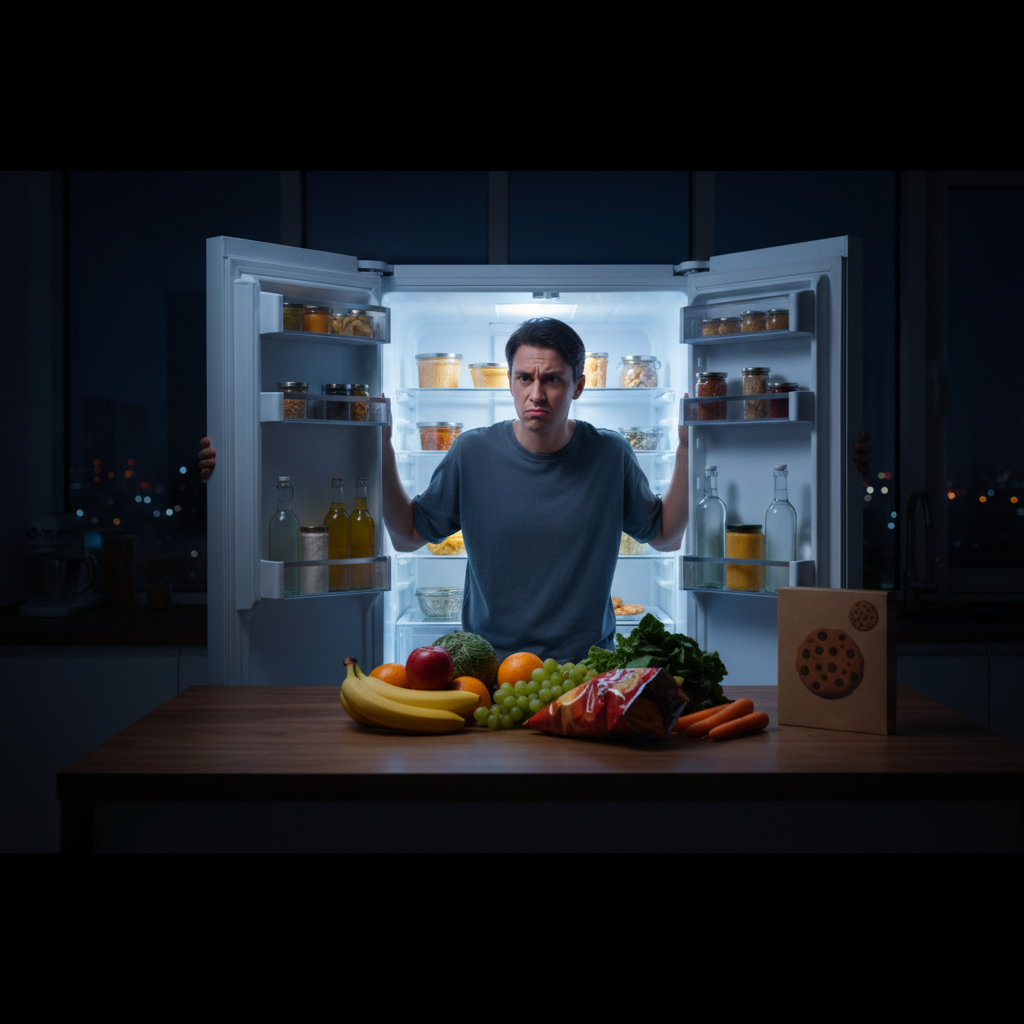
You're not broken. You're running brain software that was designed for a world that no longer exists.
That pull toward chips at 10pm or the drive-through after a bad day isn't a character flaw. It's your brain doing exactly what it evolved to do, just in an environment that exploits it.
I want to walk through what's actually happening in your head when a craving hits. Understanding the machinery is the first step to not being controlled by it.
Your brain treats junk food like a drug (literally)
When you eat something loaded with sugar, salt, and fat, your brain releases dopamine. Dopamine is the neurotransmitter behind wanting things. Not liking things. Wanting them. That distinction matters.
Your tongue has a direct line to dopamine-producing cells in the brain's reward center, the nucleus accumbens. It's the same circuit that lights up with nicotine, alcohol, and cocaine. Not hyperbole. Brain imaging studies confirm it.
A 2024 study in Molecular Psychiatry found that dopamine receptors and insulin receptors work together in the brain's central amygdala to control the desire for highly palatable food. When that system gets disrupted, resisting junk food becomes genuinely harder on a biological level.
Here's the part that stings: the more junk food you eat, the fewer dopamine receptors you have. A Lancet study found that people with higher BMI had significantly fewer D2 dopamine receptors. Fewer receptors means less satisfaction from the same amount of food. So you need more to feel the same thing.
It's tolerance. Same mechanism as any addiction.
Ultra-processed food is engineered to override your stop signals
This isn't conspiracy thinking. It's food science.
In a tightly controlled NIH study, adults ate roughly 500 extra calories per day when given ultra-processed food compared to whole food with the same nutritional profile. The macros and calories available were matched. People just ate more of the processed stuff, because it's designed to bypass the mechanisms that normally tell you to stop.
Your body has two main hormones for regulating hunger: ghrelin (makes you hungry) and leptin (tells you you're full). Ultra-processed food messes with both. Ghrelin spikes when you see or smell junk food. And leptin, which should tell you to stop, gets blunted by chronic exposure. The signal stops working.
So you're not fighting a willpower battle. You're fighting a system that's been tampered with.

Why cravings get worse at night
If you've noticed that cravings are worst after dark, you're not imagining it.
A study published in the journal Obesity found that your circadian system increases hunger and cravings for sweet, starchy, and salty foods in the evening. This made sense for our ancestors. Eating more in the evening helped them store energy for lean times. Now it just means you're reaching for cookies at 10pm.
There's also a depletion effect. You've been making decisions all day. The prefrontal cortex, the part of your brain that says "maybe don't eat that," is tired by evening. Willpower is a resource that gets spent, and by 9pm most of us are running on empty.
And if you've been restricting calories during the day, the evening binge is almost guaranteed. Your body will compensate. Under-eating earlier in the day is the number one predictor of overeating at night. This one catches a lot of people off guard.
Your emotions hijack the system
Here's something I find genuinely frustrating about this topic: most advice treats cravings as a food problem when they're usually an emotion problem wearing a food costume.
Cortisol, your main stress hormone, increases appetite and specifically drives cravings for high-calorie comfort food. Your brain learns that eating makes the stress feel temporarily better (because dopamine), and it files that away as a strategy.
Over time, this becomes automatic. Stressed? Eat. Bored? Eat. The trigger and the response get wired together through repetition, and the conscious decision drops out of the loop entirely.
This is how habits form: a cue (the emotion), a routine (the eating), and a reward (the brief dopamine hit). The more you repeat it, the more automatic it becomes. Eventually you're opening the fridge before you've registered what you're feeling.
What actually works to break the cycle
Knowing the science is useful. But you still need to do something with it.
Eat enough during the day. This is the single most effective thing you can do. If you're running a calorie deficit all day and then wondering why you binge at night, the answer is biological. Your body is demanding the energy you didn't give it. Eat regular meals with adequate protein and fiber. The evening cravings will quiet down.
Build a pause between the trigger and the response. When a craving hits, try naming what you're actually feeling before you act on it. Are you hungry? Or are you stressed, bored, tired? The act of labeling an emotion reduces its intensity. A doctor at Northwestern Medicine suggests the "carrot test": if you wouldn't eat a carrot right now, you're probably not physically hungry.
Change your environment instead of relying on willpower. You can't eat what isn't there. A 2012 study by Brian Wansink at Cornell found that women who kept chips visible on their counters weighed an average of eight pounds more than those who didn't. Move the junk off the counter. Put fruit where the candy was. Make the default choice the healthy one.
Find other things your brain wants. Exercise, sunlight, social time, music. These trigger dopamine without the crash. You don't need to replace chips with kale. You need to give your reward system something else to work with.
Stop treating slip-ups as catastrophes. This is where most people get stuck. They eat the bag of chips, decide they've "ruined it," and then eat more because the day is shot. One slip is information, not a verdict. A 2012 study in Appetite found that participants who practiced self-compassion after eating a donut ate less candy afterward than those who felt guilty. Guilt feeds the cycle. Letting it go breaks it.
How BodyBuddy helps
Knowing this stuff is one thing. Applying it at 10pm when you're tired and the ice cream is in the freezer is something else.
BodyBuddy coaches you through iMessage. When a craving hits, you can text your AI coach and get real-time help figuring out what's driving it and what to do about it. It meets you where you already are, in your texts, not in some app you'll forget to open.
The companion iOS app tracks your meals through photo-based logging, so you can actually see whether you're eating enough during the day. It gives you daily missions that build small habits over time, the kind that change your patterns without requiring heroic self-discipline.
There's also Future You, an AI-generated avatar of what you'll look like when you hit your goal. It makes the future feel concrete instead of abstract, and honestly, seeing a version of yourself that's already there is weirdly motivating.
BodyBuddy is $29.99/month. No free tier, no hidden upsells.
FAQ
Are junk food cravings a sign of nutritional deficiency?
Sometimes, but usually not how people think. Craving chocolate doesn't mean you need magnesium. Most junk food cravings come from the dopamine reward system, not from missing nutrients. That said, skimping on protein or fiber during the day will absolutely make cravings worse.
How long does it take for cravings to go away?
About two weeks for your dopamine system to start recalibrating after you cut back on ultra-processed food. The cravings won't vanish, but they get quieter. A study in the European Journal of Social Psychology found new eating habits take an average of 66 days to become automatic, with a range of 18 to 254 days. Some people adjust fast. Others need months. Both are normal.
Can you be addicted to junk food?
The brain circuits involved are similar to substance addiction. Same tolerance, same compulsive patterns despite negative consequences. Whether you label it "addiction" is partly a question of language. The biology is real either way, and it responds to similar approaches: environmental changes, alternative rewards, and gradual retraining of the habit loop.
Does exercise help with food cravings?
Yes. Exercise increases dopamine and serotonin naturally. One study found that a brisk 15-minute walk reduced chocolate cravings by about 12%. Regular exercise also helps regulate ghrelin and leptin. It won't eliminate cravings, but it makes them easier to ride out.
Why do I crave junk food when I'm tired?
Two things happen when you don't sleep enough. Ghrelin goes up (you feel hungrier). Leptin goes down (you don't feel full). On top of that, your olfactory system goes into overdrive, making food smell better, while your prefrontal cortex loses the ability to say no. Northwestern University research found that sleep-deprived people specifically chased high-fat, calorie-dense foods because their brain was overcompensating for the energy deficit.
Stop blaming yourself and start working with your brain
Your cravings aren't a moral failing. They're a predictable response to specific triggers, operating through brain circuits that evolved long before anyone invented Doritos.
The way out isn't more discipline. It's understanding the system and making changes that account for how your brain actually works. Eat enough during the day so your body isn't screaming for energy at night. Build pauses so you can catch yourself before you autopilot to the kitchen. And let yourself off the hook when you slip, because the guilt does more damage than the chips did.
If you want help with the practical side, BodyBuddy is built for this. AI coaching through iMessage, daily accountability, and habit-building tools that work with your biology instead of against it.
Related BodyBuddy guides
- How much protein do you actually need to lose weight?
- Gut health and weight loss: what your microbiome actually has to do with it
- Does meal timing actually matter for weight loss? What the science says
- How much protein do you actually need to lose weight? (It's probably more than you think)
- Why you feel so hungry on a diet (and what to do about it)
Everyone gives you a plan.BodyBuddy texts you until it happens.
BodyBuddy keeps you on track—from meals to doctor's appointments and everything in between.