
All posts
Ultra-processed food and weight loss: what the science actually says
A practical BodyBuddy guide to ultra-processed food and weight loss: what the science actually says, with useful considerations and next steps.
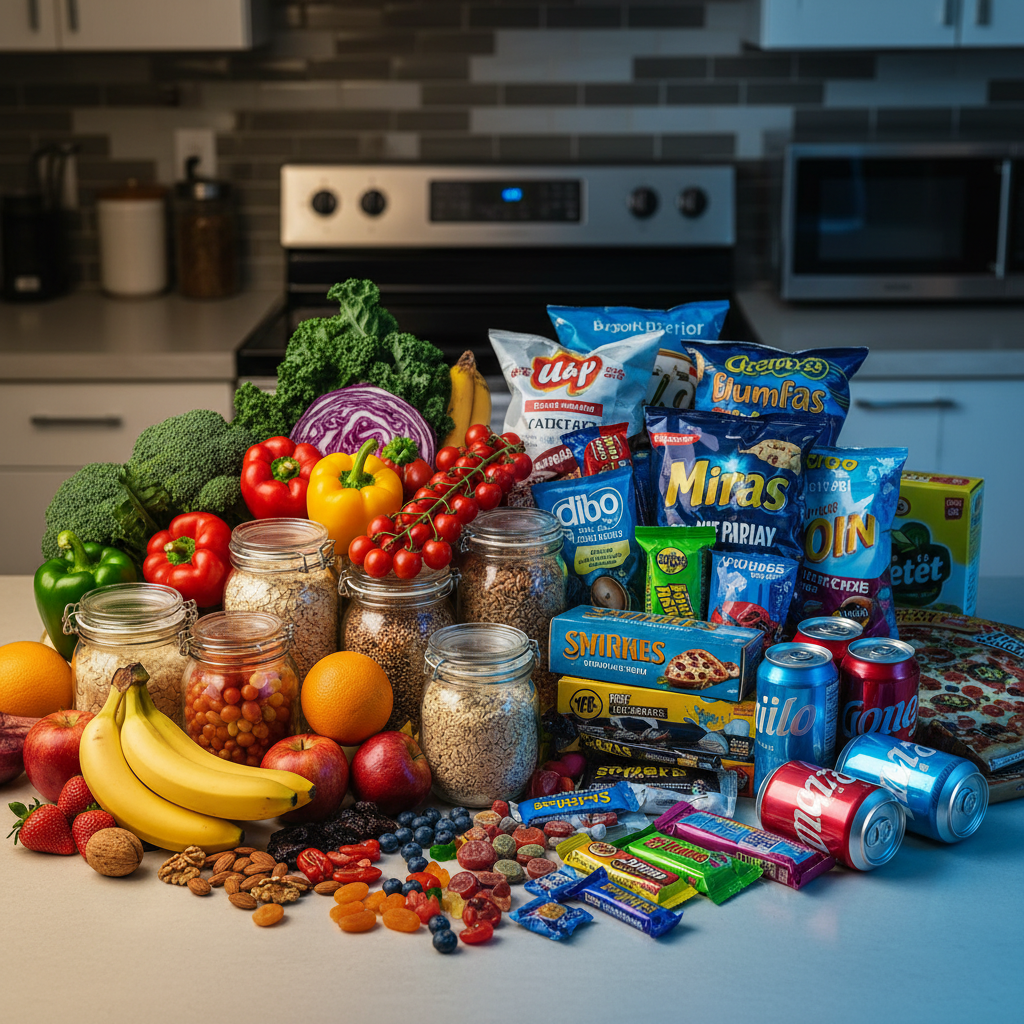
You're tracking calories. You're hitting the gym. You're doing everything "right." But the scale won't move, and you're not sure why.
Here's a question most diet advice skips entirely: how processed is the food you're eating?
A growing body of research -- including a landmark NIH study and multiple papers published in early 2026 -- shows that ultra-processed foods don't just add empty calories. They change how much you eat, how fast you eat it, and how your body responds to the meal. Two people can eat the same number of calories, and the person eating ultra-processed food will gain more weight. That's not a willpower problem. That's a food engineering problem.
This article breaks down what ultra-processed food actually is (it's not always obvious), why it makes weight loss harder according to current science, and what you can realistically do about it without overhauling your entire life.
What counts as ultra-processed food (and what doesn't)
The term "ultra-processed" comes from a classification system called NOVA, developed by researchers at the University of Sao Paulo. It sorts all food into four groups:
- Unprocessed or minimally processed -- fruits, vegetables, eggs, plain meat, nuts, grains. Things that look like they did when they came out of the ground or off the animal.
- Processed culinary ingredients -- oils, butter, sugar, salt, flour. Things you use to cook with, not eat by the handful.
- Processed foods -- canned beans, cheese, bread, smoked fish. Real food that's been preserved or enhanced with group 2 ingredients.
- Ultra-processed foods (UPFs) -- industrial formulations with five or more ingredients, usually including substances you wouldn't find in a home kitchen: high-fructose corn syrup, hydrogenated oils, emulsifiers, flavor enhancers, colorings.
The tricky part: a lot of UPFs look healthy. Protein bars. Flavored yogurts. Whole grain breakfast cereals. "Low-fat" frozen meals. If the ingredient list reads like a chemistry exam, it's probably ultra-processed -- regardless of what the front of the package says.
In the U.S. and UK, ultra-processed foods make up roughly 55-60% of total calorie intake for the average adult. For some people, it's closer to 80%. That's not a side issue. That's the majority of the diet.

Why ultra-processed food makes weight loss harder (even at the same calories)
In 2019, the National Institutes of Health ran a study that changed how nutrition scientists think about processed food. Researchers housed 20 adults in a metabolic ward for four weeks. For two weeks, participants ate ultra-processed meals. For two weeks, they ate minimally processed meals. Both diets were matched for calories, sugar, fat, fiber, and macronutrients. Participants could eat as much as they wanted.
The results were striking. On the ultra-processed diet, people ate about 500 more calories per day and gained roughly two pounds in two weeks. On the minimally processed diet, they lost about two pounds. Same participants. Same calorie availability. Completely different outcomes.
Research published in January 2026 confirmed this pattern in a larger setting. Participants who ate minimally processed diets lost twice as much body weight (2.06% vs 1.05%) over eight weeks, even when following similar nutritional guidelines. The processing level of the food mattered independently of its nutritional profile.
Several mechanisms explain why:
You eat it faster
Ultra-processed foods tend to be softer and require less chewing. That matters because your brain needs about 20 minutes to register fullness. When you can eat a 600-calorie fast-food meal in 8 minutes but a 600-calorie meal of chicken, rice, and vegetables takes 20+ minutes, the calorie math works against you before your satiety hormones even show up.
They're engineered to override your stop signals
Food scientists call it the "bliss point" -- the precise combination of salt, sugar, and fat that maximizes how much you want to keep eating. This isn't accidental. Companies spend millions optimizing texture and flavor to make foods hard to stop eating. A baked potato with butter has a natural stopping point. A bag of chips does not.
They mess with your hunger hormones
Ultra-processed foods appear to blunt the release of PYY (a hormone that signals fullness) and may increase ghrelin (the hunger hormone) more than whole foods with equivalent calories. Your body gets the calories but doesn't fully register that it ate. So you're hungry again sooner, and the next snack is right there in the pantry.
They're more calorie-dense per bite
Water and fiber -- both of which fill your stomach -- get stripped out during processing. A piece of fruit has water, fiber, and structure that slows digestion. Fruit juice concentrate in a cereal bar has the sugar without any of that. You get the calories in a smaller package, so you need more volume to feel full.
The gut connection: how ultra-processed food changes your microbiome
This one's newer and still being studied, but the early data is hard to ignore. Your gut microbiome -- the trillions of bacteria living in your digestive tract -- plays a real role in how your body processes food, stores fat, and regulates appetite.
Ultra-processed diets reduce microbial diversity. Fewer types of bacteria means less production of short-chain fatty acids, which help regulate inflammation and appetite. Some researchers now believe that chronic UPF consumption creates a feedback loop: the less diverse your gut bacteria, the more your body craves calorie-dense, processed foods. You're not weak. Your microbiome is compromised.
A February 2026 study found that people who swapped UPFs for minimally processed foods saw measurable changes in their gut bacteria within two weeks. They also consumed hundreds fewer calories daily without trying to restrict -- their bodies naturally gravitated toward eating less when the food quality improved.

How to reduce ultra-processed food without losing your mind
Let me be clear: the goal here is not perfection. Telling someone to "just stop eating processed food" is about as helpful as telling them to "just eat less." If your current diet is 60% ultra-processed, dropping to 40% is a win. You don't need to become a from-scratch home chef overnight.
Here's a practical approach that works for people with real lives:
Start with your biggest UPF habit
Don't overhaul everything at once. Look at what you eat most often and identify one or two items that are clearly ultra-processed. Breakfast cereal every morning? Try oatmeal with fruit for a week. Flavored yogurt? Switch to plain Greek yogurt and add your own honey or berries. Granola bars for snacks? Try nuts and an apple instead.
Use the five-ingredient rule as a rough filter
Flip the package over. If there are more than five ingredients and some of them sound like they belong in a lab, it's probably ultra-processed. This isn't scientific perfection -- some whole foods have long ingredient lists -- but it's a fast heuristic that catches most offenders. If you can't pronounce it and your grandmother wouldn't recognize it, proceed with caution.
Cook one more meal at home per week
Research consistently shows that home-cooked meals have fewer ultra-processed ingredients, even when people aren't trying to be healthy. The act of cooking from whole ingredients naturally reduces your UPF intake. You don't need to be Gordon Ramsay. Scrambled eggs, rice and beans, a stir-fry with whatever vegetables are in the fridge -- these count.
Don't demonize all convenience food
Frozen vegetables, canned beans, pre-cut fruit, plain canned tuna -- these are processed but not ultra-processed. They're fine. The line isn't "did a factory touch this" -- it's "was this engineered to be hyper-palatable and shelf-stable with a dozen additives." Keep things practical.
Where BodyBuddy fits into this
One of the hardest parts of reducing ultra-processed food is awareness. Most people don't realize how much of their diet is UPF until they start paying attention. That's where tracking helps, but traditional calorie-counting apps miss the point -- they'll log a protein bar and a chicken breast the same way if the macros match.
BodyBuddy takes a different approach. It's an AI coach that works through iMessage -- you text it what you ate (or snap a photo), and it tracks your meals while also giving you real feedback. Not just "you hit your protein goal," but actual coaching on food quality, patterns, and habits. The AI can flag when you're leaning heavily on processed convenience foods and help you find swaps that work for your life.
There's also a companion iOS app where you can see your tracked meals and nutrition data, complete daily missions, and check in with your Future You -- an AI-generated avatar that shows what you'll look like when you hit your goal weight. The game mechanic is simple: complete your daily missions, and Future You becomes more visible. It's a different kind of motivation than staring at a calorie number.
At $29.99/month, it's more than a basic tracking app -- but it's a fraction of what you'd pay for a human nutrition coach ($200-400/month), and the iMessage format means you're actually going to use it. No extra app to remember to open. Your coach texts you. Learn more at bodybuddy.app.
Frequently asked questions
Can you lose weight while still eating some ultra-processed food?
Yes. The research doesn't say UPFs make weight loss impossible -- it says they make it harder. If you're in a calorie deficit, you'll still lose weight. But you'll likely feel hungrier, have more cravings, and have a harder time sticking with it. Reducing UPFs makes the process less miserable, which makes you more likely to maintain the results.
What are the worst ultra-processed foods for weight loss?
The ones you eat the most of. Seriously. It's less about identifying the single worst offender and more about looking at volume. Sugary drinks (soda, sweetened coffee, energy drinks) tend to top the list because they deliver calories with zero satiety. After that, look at packaged snacks, breakfast cereals with added sugar, and frozen meals with long ingredient lists.
Is bread ultra-processed?
It depends on the bread. Sourdough made with flour, water, salt, and starter is processed but not ultra-processed. Mass-produced sandwich bread with high-fructose corn syrup, dough conditioners, and emulsifiers is. Check the ingredient list. If it has more than five or six ingredients and includes additives, it's likely in UPF territory.
How quickly will I see results from cutting ultra-processed food?
The 2026 research showed measurable weight differences within two weeks when people shifted from UPF-heavy to minimally processed diets. Most people also report reduced cravings and better energy within the first week. The gut microbiome shifts start within days, though full adaptation takes longer. Don't expect a dramatic overnight change, but two weeks is enough to feel a real difference.
Are protein bars and shakes ultra-processed?
Most of them are, yes. Whey protein isolate itself is processed, and most commercial bars and shakes add sweeteners, emulsifiers, and flavorings that push them firmly into UPF territory. That doesn't mean you should never use them. A protein shake after a workout is still better than skipping protein entirely. The issue is when they become a staple rather than an occasional convenience.
The bottom line
Ultra-processed food is one of the biggest overlooked factors in weight loss. Not because a single granola bar will derail your progress, but because a diet built around engineered food makes you eat more, feel hungrier, and fight your own biology. The science on this is getting harder to argue with.
You don't need to go full clean-eating extremist. Pick one or two swaps. Cook one more meal at home this week. Pay attention to ingredient lists instead of just calorie counts. Small shifts in food quality can make the calorie math work in your favor instead of against you.
If you want help tracking not just what you eat but how it's affecting your progress, BodyBuddy is an AI coach that lives in your iMessage and actually pays attention to your food choices -- not just the numbers. Because sometimes the difference between losing weight and being stuck isn't calories. It's what those calories are made of.
Related BodyBuddy guides
- 17 high protein snacks for weight loss that actually taste good
- Alcohol and weight loss: what actually happens when you drink (and how to handle it)
- Does drinking water help you lose weight? The science behind hydration and fat loss
- How much protein do you need to lose weight (without the bro-science)
- How to eat out and still lose weight (yes, it's actually possible)
Everyone gives you a plan.BodyBuddy texts you until it happens.
BodyBuddy keeps you on track—from meals to doctor's appointments and everything in between.