Healthy Eating|April 27, 2026|Francis
Portion control without counting calories: a practical guide
Portion control without counting calories: a practical guide
Calorie counting works. I'm not going to pretend it doesn't. But let's be honest about what it actually requires: weighing food on a scale, logging every ingredient in an app, remembering to account for cooking oil and sauces, and doing this multiple times a day, every day, indefinitely. For some people, that's sustainable. For most of us, it gets old fast.
The good news is that you don't need to count a single calorie to control your portions and lose weight. You need a few visual shortcuts, some awareness of your eating patterns, and the willingness to pay attention to what your body is actually telling you.
Why portion sizes are the real problem
American portion sizes have grown dramatically over the past 40 years. A "standard" bagel in the 1980s was about 3 inches in diameter and 140 calories. Today's average bagel is 6 inches and 350 calories. Restaurant plates have gotten bigger. Cups have gotten bigger. Our sense of what a "normal" serving looks like has shifted so far from reality that most people underestimate their portions by 25 to 50 percent.
This matters because even small daily overages compound. An extra 200 calories per day — about a tablespoon and a half of olive oil, or a slightly generous scoop of rice — adds up to roughly 20 pounds of weight gain over a year. You don't need to be dramatically overeating to gain weight. You just need to be slightly off, consistently.
Calorie counting tries to solve this with precision. Portion control solves it with awareness. Both can work, but awareness doesn't require a food scale.
The hand method: your built-in portion guide
Precision Nutrition popularized this approach, and it's remarkably effective. Your hand is proportional to your body size, which means it automatically scales to your individual needs. No measuring cups required.
Here's how it works:
- Your palm (thickness and size, not including fingers) equals one serving of protein. Think a chicken breast, a piece of fish, or a block of tofu roughly the size and thickness of your palm.
- Your fist equals one serving of vegetables. A fist-sized portion of broccoli, salad greens, or roasted carrots.
- Your cupped hand equals one serving of carbs. Rice, pasta, fruit, or potatoes that would fit in your cupped palm.
- Your thumb equals one serving of fat. Roughly a tablespoon of olive oil, nut butter, or a thumb-sized piece of cheese.
For most women, a meal would include one palm of protein, one fist of vegetables, one cupped hand of carbs, and one thumb of fat. For most men, double those amounts. This isn't precise down to the calorie, but it doesn't need to be. It gets you in the right range consistently, which is what matters for weight loss.
The plate method: even simpler
If the hand method feels like too much to remember at first, try the plate method instead. It's exactly what it sounds like.
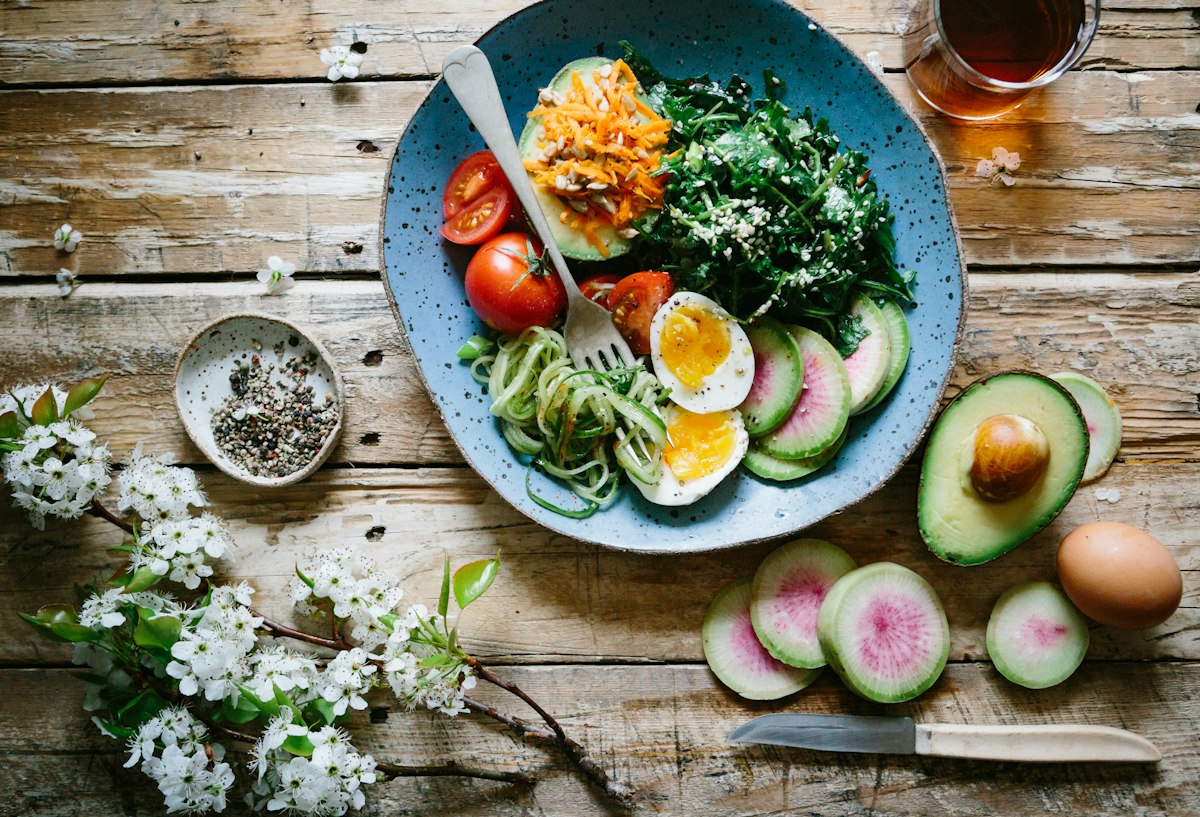
Fill half your plate with vegetables or salad. Fill one quarter with lean protein. Fill the remaining quarter with whole grains or starchy carbs. Add a small amount of healthy fat (dressing on the salad, a drizzle of olive oil, some avocado).
This works because it naturally limits calorie-dense foods while loading up on high-volume, low-calorie vegetables. You still eat a full plate, you still feel satisfied, but your total calorie intake drops without you having to do any math.
A study from the University of Calgary found that people using the plate method lost an average of 1.8% of their body weight over 6 months without any calorie counting. That might sound modest, but for someone weighing 180 pounds, that's about 3.2 pounds of fat loss from a change that takes zero effort once it becomes habit.
5 portion control habits that actually stick
Methods are great, but habits are what make them work long-term. These five don't require willpower — they change your environment so that smaller portions become the default.
1. Use smaller plates and bowls
A Cornell University study found that people served themselves 22% less food when using 10-inch plates instead of 12-inch plates — and they didn't notice the difference in satisfaction. This works because our brains judge portion size partly by how full the plate looks. The same amount of food on a smaller plate looks more generous.
Swap your dinner plates for salad plates. It's a one-time change that pays off at every meal.
2. Don't eat from the package
Chips from the bag, crackers from the box, ice cream from the carton — when you eat directly from a large container, you have no visual reference for how much you've consumed. Research on "unit bias" shows that people tend to eat until the container is done, regardless of portion size.
Pour a serving into a bowl. Put the rest away. This simple friction reduces mindless overconsumption without requiring you to count anything.
3. Serve food in the kitchen, eat in the dining room
Leaving serving dishes on the table during meals leads to second helpings. When food is within arm's reach, the barrier to eating more is basically zero. A study from Cornell's Food and Brand Lab found that people ate 20% less when serving plates were kept in the kitchen rather than placed on the dining table.
If you want seconds, you can still get them. But the act of getting up and walking to the kitchen creates a decision point that a serving dish on the table doesn't.
4. Eat slowly (aim for 20 minutes per meal)
Your brain takes about 20 minutes to register fullness signals from your stomach. If you finish a meal in 7 minutes, you're making food decisions without the full information your body is trying to give you.
Putting your fork down between bites, chewing thoroughly, and actually tasting your food all help slow you down. Some people find it helpful to eat with their non-dominant hand or to use chopsticks for foods they'd normally eat with a fork — anything that adds a small friction to the eating process.
5. Take photos of your meals
This one doesn't require any tracking app or calorie database. Just snap a picture of your plate before you eat. The act of photographing your food creates a micro-pause that increases awareness. And over time, scrolling back through your meal photos gives you an honest visual record that's harder to rationalize than memory.
Research published in the International Journal of Consumer Studies found that people who photographed their meals made healthier food choices and ate smaller portions, even when they weren't explicitly trying to diet.
When portion control isn't enough
Portion control is powerful, but it has limits. If you're eating well-portioned meals of highly processed, calorie-dense foods, you might not see results. A palm-sized portion of fried chicken and a cupped hand of white pasta is technically "portioned," but the food quality matters too.
The most effective approach combines portion awareness with food quality. Eat mostly whole foods — vegetables, fruits, lean proteins, whole grains, nuts, and seeds — and use the portion methods above to keep amounts in check. You don't need to be perfect with either one. You just need to be reasonable with both.
Also worth noting: some people's hunger and fullness signals are genuinely disrupted by years of dieting, hormonal issues, or certain medications. If you're consistently hungry even after well-portioned, balanced meals, it's worth talking to a doctor or registered dietitian.
How BodyBuddy makes portion control easier
The meal photo habit I mentioned earlier is baked directly into BodyBuddy. When you check in daily through iMessage, BodyBuddy asks about your meals and you can snap a photo of each one. The AI analyzes what's on your plate and gives you feedback — not just calorie estimates, but observations about balance, portion sizes, and patterns over time.
This matters because portion control works best with feedback. You might think your portions are reasonable, but a week of meal photos might reveal that your lunch portions have been creeping up, or that you're consistently light on vegetables. BodyBuddy catches these trends and brings them to your attention before they derail your progress.
The iMessage format means there's no separate app to open, no food database to search through. You just text a photo and get feedback. It's the kind of low-friction tracking that people actually stick with, which is ultimately what determines whether any weight loss strategy works.
Frequently asked questions
Can I lose weight just by controlling portions without exercise?
Yes. Weight loss is primarily driven by calorie balance, and portion control directly affects how many calories you consume. Exercise is valuable for health, muscle preservation, and metabolic function, but it's not required for weight loss. Many people lose significant weight through dietary changes alone.
How do I control portions when eating out?
Restaurant portions are typically 2 to 3 times larger than recommended servings. A few strategies: ask for a to-go box when your food arrives and immediately set aside half, order appetizer-sized portions as your main course, or share an entree. Also, eating a small protein-rich snack before going to a restaurant can reduce the urge to overeat once you're there.
Is it bad to eat the same portions every day?
Not at all. Consistent portions are actually one of the strongest predictors of long-term weight management. Your body thrives on regularity. The key is making sure those consistent portions are appropriate for your goals and that you're getting enough variety in the foods themselves.
How do I handle portion control at social events?
Don't try to be perfect. Survey what's available before filling your plate, choose the things you actually want (not everything), and use the plate method as a rough guide. One meal at a party won't make or break your progress. What matters is the pattern across weeks and months, not what you eat on a Saturday night.
Do I need to measure portions forever?
No. The hand method and plate method are training tools. After a few weeks of using them consistently, most people develop an intuitive sense of appropriate portions. You'll be able to eyeball a serving of rice or protein without thinking about it. Occasional check-ins — maybe one week per month of more deliberate portioning — can help prevent gradual drift.
Start with one meal
You don't need to overhaul every meal tomorrow. Pick one — lunch is usually the easiest — and apply the plate method for a week. Half vegetables, quarter protein, quarter carbs. See how you feel. Most people are surprised by how satisfied they are and how little they miss the extra food.
If you want help building this habit with daily accountability and visual meal tracking, BodyBuddy is designed for exactly this. AI coaching through iMessage that helps you eat better portions without the tedium of calorie counting — just photos, feedback, and a daily check-in to keep you on track.
Want daily accountability?
BodyBuddy texts you every day.
Build a healthier relationship with food and movement — one text at a time.
Join 500+ usersstaying healthy