Nutrition,Mindful Eating,Weight Loss|April 25, 2026|Francis
How to track your meals without counting a single calorie
How to track your meals without counting a single calorie
Calorie counting works. I won't pretend otherwise. The math is straightforward: eat fewer calories than you burn, and you'll lose weight. But here's what the calorie-counting evangelists leave out: most people hate doing it, and most people quit within two weeks.
A 2019 study in Obesity Science & Practice found that only 9% of people who started calorie tracking were still doing it consistently after six months. Nine percent. That's a 91% failure rate for the most commonly recommended weight loss strategy.
So if calorie counting is effective in theory but abandoned in practice, what's the alternative? You track your meals in a way that doesn't make you want to throw your phone across the room.
Why calorie counting burns people out
The problem with calorie counting isn't the concept. It's the execution. It requires you to:
- Look up or scan every food item
- Estimate portion sizes (and be honest about that second scoop)
- Log every snack, drink, and bite throughout the day
- Do math at every meal
- Deal with the anxiety of going "over" your number
It turns eating — something that should be enjoyable — into an accounting exercise. For some people, this precision is motivating. For most, it creates a toxic relationship with food where every meal becomes a pass/fail test.
There's also the accuracy problem. Research from Stanford shows that food labels can be off by up to 20%, and people underestimate their calorie intake by an average of 40%. So even when you're diligently logging, the numbers may not reflect reality.
Method 1: the photo journal
This is the simplest, most effective alternative to calorie counting, and it's backed by solid research.
A 2017 study in the International Journal of Behavioral Nutrition and Physical Activity found that people who photographed their meals ate 16% fewer calories than those who didn't track at all — without counting a single calorie. Just the act of taking a photo before eating created enough awareness to change behavior.
Here's why it works:
- It takes two seconds. No logging, no scanning, no estimating.
- Seeing your food laid out in a photo gives you an objective view. That "small snack" suddenly looks like a full meal.
- Over time, you build a visual diary that reveals patterns you'd never notice otherwise.
- There's no judgment built into the system. A photo is neutral. A calorie number says "good" or "bad."
The protocol is dead simple: before you eat anything, take a photo. That's it. Don't analyze it. Don't feel guilty about it. Just document.
Method 2: the plate method
Developed by diabetes educators and recommended by the USDA, the plate method requires zero math:
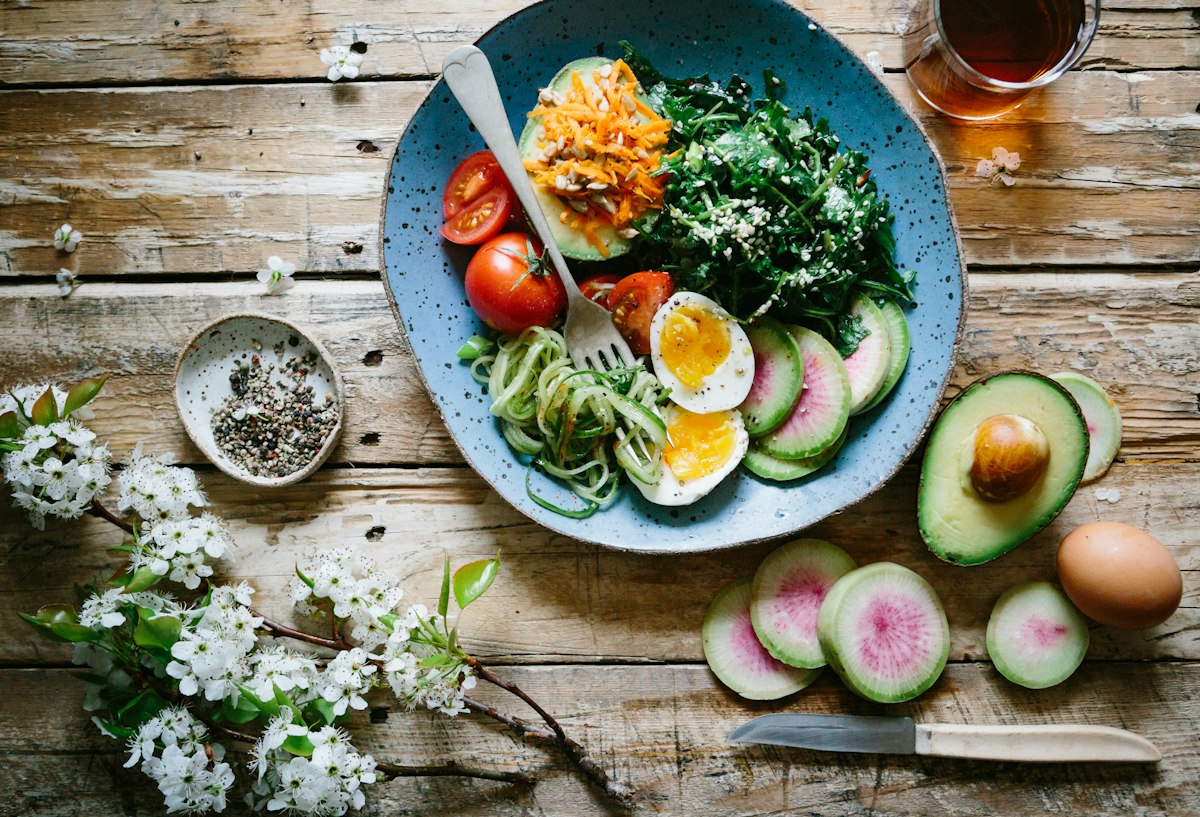
- Fill half your plate with vegetables (non-starchy ones like broccoli, spinach, peppers)
- Fill a quarter with protein (chicken, fish, tofu, eggs)
- Fill a quarter with complex carbs (brown rice, sweet potato, whole grain bread)
- Add a thumb-sized portion of healthy fat (olive oil, avocado, nuts)
This isn't precise, and that's the point. You don't need to know that your chicken breast is exactly 4 ounces. You need to know that protein takes up roughly a quarter of your plate. The visual simplicity makes it sustainable.
A 2020 study in Diabetes Care found that the plate method produced comparable weight loss results to traditional calorie counting over 12 months, with significantly higher adherence rates.
Method 3: hunger and fullness tracking
Instead of tracking what you eat, track how you feel.
Rate your hunger before eating on a scale of 1-10 (1 = not hungry at all, 10 = ravenous). Rate your fullness after eating on the same scale. The goal is to start eating around a 6-7 and stop eating around a 3-4.
This sounds too simple to work, but it reconnects you with internal signals that years of dieting may have suppressed. Many people have lost touch with what actual hunger feels like versus boredom, stress, or habit.
Keep a simple note with three columns: time, hunger before, fullness after. After a week, patterns emerge. Maybe you eat lunch at noon every day even though you're never hungry until 1:30. Maybe you always overeat at dinner because you let yourself get too hungry in the afternoon.
Method 4: the hand portion method
Precision Nutrition popularized this approach, and it works well for people who eat out frequently:
- One palm of protein per meal (about 4 oz / 25-30g protein)
- One fist of vegetables per meal
- One cupped hand of carbs per meal
- One thumb of fats per meal
Your hands scale with your body size, so the portions naturally adjust. No measuring cups. No food scale. Just your hands, which you always have with you.
For weight loss, women typically start with one of each per meal (3-4 meals per day) and men start with two of each. Adjust based on results after two weeks.
Combining methods for the best results
These methods aren't mutually exclusive. The most effective approach we've seen combines the photo journal with one structural method:
- Use the plate method or hand portions to guide what goes on your plate
- Take a photo before eating to reinforce awareness
- Check in with your hunger/fullness levels to fine-tune portion sizes over time
This gives you structure without rigidity. Guidelines without guilt.
How BodyBuddy turns meal photos into actual insights
Taking photos of your food is step one. Making sense of them is step two. That's where BodyBuddy comes in.
BodyBuddy is an AI accountability coach that lives in your iMessage. When you snap a photo of your meal and send it, BodyBuddy doesn't just say "looks good" — it analyzes what's on your plate. Is there enough protein? Are you heavy on processed carbs? Is the portion size reasonable for your goals?
The magic is in the daily check-ins. BodyBuddy asks about your meals, your energy levels, and how you're feeling. It notices patterns over weeks that you'd miss in the daily noise. And because it's in iMessage — not a separate app you have to remember to open — it actually gets used.
No calorie counting. No barcode scanning. No food guilt. Just photos, conversation, and gradual improvement. Give it a try.
Frequently asked questions
Can you lose weight without tracking anything?
Yes, but some form of awareness helps. People who track in any format (even just photos) lose more weight than those who don't, according to a 2019 meta-analysis. You don't need to count calories, but you do need to pay attention to what you're eating.
Is calorie counting ever the right choice?
For some people, absolutely. If you enjoy data, find precision motivating, and don't develop anxiety around food, calorie counting can be effective. It's a tool, not a moral imperative. If it works for you and you can sustain it, keep going.
How do I know if I'm eating the right amount without counting?
Your body gives clear signals. If you're losing 0.5-1 pound per week, your intake is right. If weight isn't changing after two weeks, reduce portions slightly (one fewer cupped hand of carbs per day is a good start). If you're constantly tired and irritable, you're probably eating too little.
Do meal tracking apps work without calorie counting?
Most traditional apps are built around calorie databases. BodyBuddy is different because it's photo-based and conversational. You send a meal photo, get feedback, and move on. No logging required.
What if I eat out a lot?
The hand portion method was designed for exactly this situation. You can use it at any restaurant without looking up menu items. Take a photo of your plate before eating, use your hand as a rough portion guide, and you're covered.
Start where you are
The best tracking method is the one you'll actually use three months from now. If calorie counting hasn't stuck for you, stop blaming yourself and try something different. Take a photo of your next meal. Use the plate method for dinner tonight. Check in with your hunger before reaching for a snack.
Small changes, consistently applied, beat perfect systems perfectly abandoned. And if you want an AI coach to help you stay consistent without the calorie-counting headache, BodyBuddy is built for exactly that.
Want daily accountability?
BodyBuddy texts you every day.
Build a healthier relationship with food and movement — one text at a time.
Join 500+ usersstaying healthy