All posts
How to stop eating junk food (when you know better but can't seem to quit)
A practical BodyBuddy guide to how to stop eating junk food (when you know better but can't seem to quit), with useful considerations and next steps.
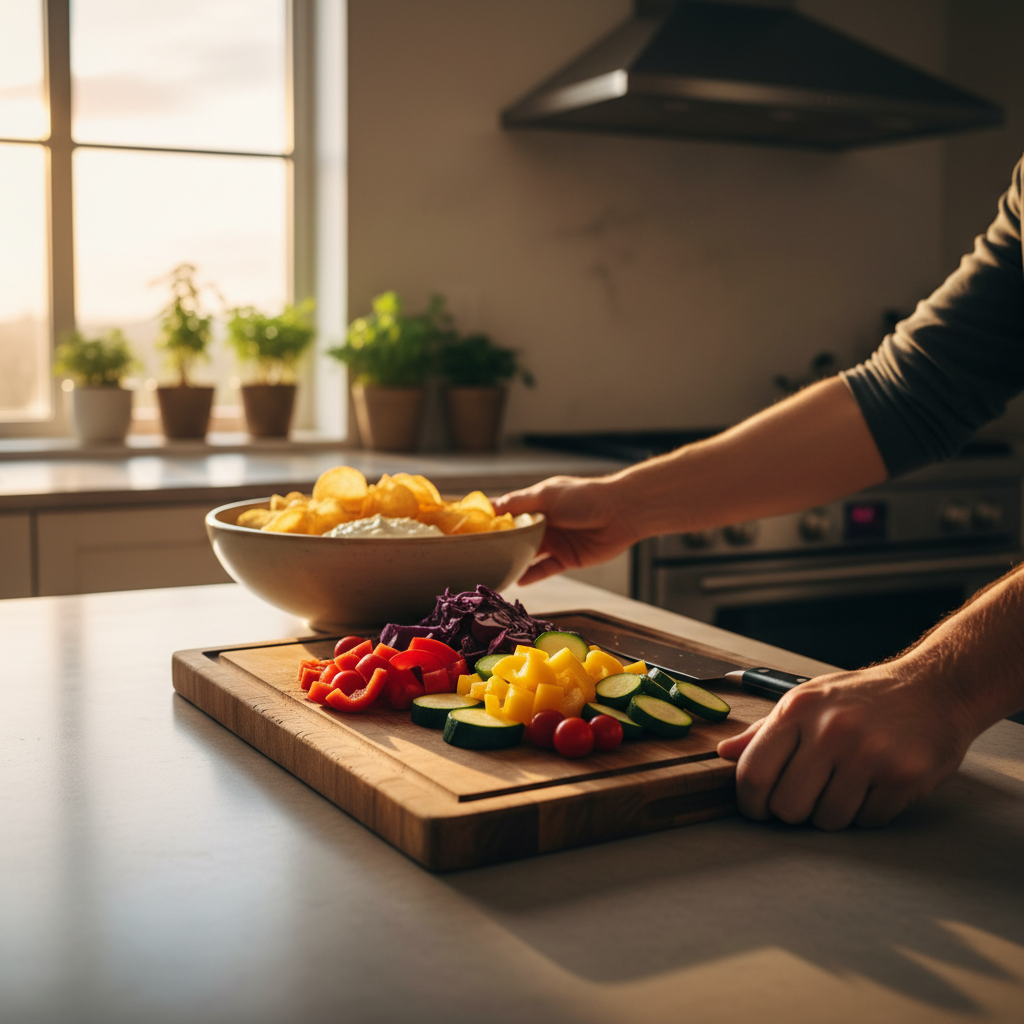
You already know the bag of chips isn't helping. You've read the articles, watched the documentaries, maybe even meal-prepped on a Sunday or two. And yet here you are, 10pm, elbow-deep in something crunchy and salty, wondering why knowing better never seems to translate into doing better. If you've ever Googled "how to stop eating junk food" while actively eating junk food, this one's for you. The gap between understanding nutrition and actually changing your eating habits is wider than most people admit. I want to talk about why that gap exists and what to do about it.
Why you can't just "decide" to stop eating junk food
Here's the uncomfortable truth: your brain is being played. Processed food companies spend billions engineering products that hit your dopamine receptors in exactly the right way. That perfect ratio of salt, sugar, and fat in a Dorito? It didn't happen by accident. Food scientists call it the "bliss point," and it's designed to make you eat past the point of fullness.
Your brain responds to these hyper-palatable foods the same way it responds to other rewarding stimuli. A 2023 study published in Nature Metabolism found that ultra-processed foods activate reward circuits more aggressively than whole foods with identical calorie counts. You're not weak. You're responding normally to an abnormal food environment.
Then there's the habit loop, which Charles Duhigg laid out years ago: cue, craving, response, reward. You sit on the couch after work (cue). Your brain wants something pleasurable (craving). You grab the cookies (response). Sugar hits your bloodstream (reward). Do this enough times and the behavior becomes automatic. You're not making a conscious choice anymore. Your brain has already decided before you've opened the cabinet.
This is why the "just have more willpower" advice is so useless. Willpower is a finite resource, and it depletes throughout the day. By evening, when most junk food binges happen, you're running on fumes. The answer isn't to white-knuckle your way through cravings. It's to change the systems and environment that trigger them in the first place.
The real reasons junk food keeps winning
Knowing that junk food is engineered to be addictive is one piece. But there are several other forces working against you, and they stack on top of each other.
Convenience wins by default. After a 10-hour day, the choice between cooking chicken and vegetables or microwaving a frozen pizza isn't really a choice. Junk food requires zero prep, zero cleanup, and zero cognitive effort. When you're exhausted, your brain will always choose the path of least resistance.
Emotional eating is real, and it's common. Stress, boredom, loneliness, anxiety. Food is one of the most accessible coping mechanisms available. You don't need a prescription, you don't need an appointment, and it works immediately (even if the relief lasts about four minutes before the guilt kicks in). I'd estimate that at least half of the junk food people eat has nothing to do with hunger.
The blood sugar rollercoaster keeps you trapped. Eat a candy bar, your blood sugar spikes. Insulin floods in to bring it down. Blood sugar crashes. Now you're tired, irritable, and craving another hit of sugar to bring it back up. This cycle can repeat all day, and each crash makes the next craving harder to resist. Whole foods with fiber, protein, and fat don't trigger this cycle because they digest slowly.
Sleep deprivation makes everything worse. Research from Harvard Medical School shows that getting less than seven hours of sleep increases ghrelin (your hunger hormone) and decreases leptin (the hormone that tells you you're full). Sleep-deprived people consume an average of 385 extra calories per day, and they disproportionately reach for high-carb, high-sugar foods. If you're sleeping six hours a night and wondering why you can't stop snacking, start there.

What actually works to stop eating junk food
I'm not going to tell you to "just eat clean." That kind of advice assumes you live in a vacuum with unlimited time, energy, and motivation. Here's what actually moves the needle for most people trying to break unhealthy eating habits.
Replace, don't remove. Banning foods backfires. Research on restrictive eating consistently shows that the forbidden food becomes more desirable, not less. Instead of saying "I can never eat chips again," find a swap that scratches the same itch. Want something crunchy and salty? Try salted nuts, roasted chickpeas, or even air-popped popcorn. Want something sweet? Frozen grapes, dark chocolate, or Greek yogurt with honey. The goal is to redirect the craving, not suppress it.
Prep your environment. This is the single most effective change you can make. If junk food isn't in your house, you won't eat it at 10pm. You just won't drive to the store for it. The friction is too high.
- Don't keep trigger foods in the pantry
- Stock your fridge with grab-and-go whole foods (pre-cut vegetables, hummus, fruit, hard-boiled eggs)
- Put healthy snacks at eye level, not hidden in the back
- If you live with people who buy junk food, ask for a designated shelf you don't touch
Eat enough real food during the day. This sounds obvious, but most people who binge on junk food at night are under-eating earlier in the day. They skip breakfast, have a light lunch, and arrive home starving with depleted willpower. Eat three actual meals with protein and fat. You'll be surprised how much your junk food cravings diminish when you're not running a calorie deficit by 6pm.
Fix your sleep. I mentioned the ghrelin/leptin connection above. Getting seven to eight hours consistently is one of the most underrated interventions for junk food cravings. It won't eliminate them, but it takes the edge off significantly.
Name the trigger out loud. This sounds silly, but it works. When you catch yourself reaching for junk food, pause and say (literally, out loud): "I'm reaching for this because I'm bored, not because I'm hungry." Or stressed, or procrastinating, or whatever it is. This tiny act of labeling interrupts the automatic habit loop and gives your prefrontal cortex a chance to weigh in. You won't always choose differently. But you'll start noticing the pattern, and awareness is where change begins.
How BodyBuddy helps you actually follow through
Knowing what to do is the easy part. Doing it consistently, day after day, when you're tired and stressed and the cookies are right there? That's where most people fall off. It's also where BodyBuddy fits in.
BodyBuddy is an AI coach that works through iMessage. You text your check-in, report what you ate, mention that you're craving pizza at 9pm, and you get an immediate, personalized response. No scheduling, no waiting for office hours, no judgment. It's like having a nutritionally-aware friend in your pocket who actually remembers what you said yesterday.
The companion iOS app adds a few things that texting alone can't do. You can snap a photo of your meal and get a full nutritional breakdown without logging every ingredient manually. There's a daily missions system that builds better habits gradually. You're not overhauling your entire diet on day one. You're making one small change, then another, then another.
The feature I think matters most is Future You. It's an AI-generated avatar that shows what you'll look like when you reach your goal. Not a stock photo of a fitness model. An image based on you, at your target. Looking at a concrete visual of your future self changes decision-making in a way that abstract goals ("lose 20 pounds") don't. Research on "future self continuity" backs this up: the more connected you feel to your future self, the better choices you make today.
BodyBuddy runs $29.99/month. There's no free tier, which honestly filters for people who are serious about changing. If you've been stuck in the cycle of knowing what to do but not doing it, having an AI coach that checks in with you daily through a channel you already use (your texts) removes a lot of the friction that makes other approaches fail.
How long does it take to stop craving junk food?
The often-cited "21 days to form a habit" is a myth. Research from the European Journal of Social Psychology found that habit formation takes anywhere from 18 to 254 days, with a median of 66 days. For food cravings specifically, most people notice a significant reduction after two to four weeks of consistently eating whole foods. The cravings don't disappear entirely, but they lose their urgency. Your taste buds also recalibrate. After a month without hyper-sweetened foods, a regular apple starts tasting remarkably sweet.
Is it okay to eat junk food sometimes?
Yes. An all-or-nothing approach almost always leads to failure. If you eat well 80-90% of the time, the occasional slice of pizza or bowl of ice cream isn't going to derail your health. The problems come from frequency and defaults, not occasional indulgences. The distinction matters: choosing to enjoy a treat at a birthday party is different from mindlessly plowing through a bag of chips every night because you're bored.
What should I eat instead of junk food when I'm craving something?
Match the craving category:
- Crunchy/salty: Roasted nuts, popcorn, rice cakes with peanut butter, cucumber with everything bagel seasoning
- Sweet: Frozen fruit (frozen mango is absurdly good), dark chocolate, dates with almond butter, Greek yogurt with berries
- Rich/creamy: Avocado toast, full-fat Greek yogurt, a handful of macadamia nuts
- Carb-heavy/comfort: Sweet potato with butter, oatmeal with banana, whole grain toast with honey
The key is having these alternatives prepped and accessible. If you have to wash, chop, and cook something while a bag of Doritos is sitting on the counter, the Doritos win every time.
Why do I crave junk food at night?
Several things converge at night. Your willpower is at its lowest after a full day of decisions. You're often tired, which spikes ghrelin. You're likely in relaxation mode on the couch, which your brain has paired with snacking through years of repetition. And if you under-ate during the day, your body is genuinely trying to make up the calorie deficit. The fix is a combination of eating enough during the day, having a structured evening snack (protein-heavy, planned in advance), and breaking the couch-to-kitchen autopilot by doing something else with your hands for the first ten minutes of a craving.
Stop reading about it and start doing something different
You now have a solid understanding of why junk food cravings happen and a concrete set of strategies to deal with them. But information without action is just entertainment. Pick one thing from this article and do it today. Not tomorrow, not Monday. Today.
If the thing you pick is "get help staying consistent," BodyBuddy exists for exactly that. Text-based AI coaching, meal tracking, visual motivation, daily missions. One less excuse between you and the version of yourself that doesn't need to Google this article again.
Related BodyBuddy guides
- How to stop snacking at night: 7 strategies that actually work
- How to build healthy eating habits that actually stick
- Cristiano Ronaldo's Daily Routine: Diet, Workout, Sleep & Recovery
- How to Stay Consistent with Your Diet: 7 Science-Backed Strategies That Actually Work
- How to stop sugar cravings when you're trying to lose weight (8 strategies that actually work)
Everyone gives you a plan.BodyBuddy texts you until it happens.
BodyBuddy keeps you on track—from meals to doctor's appointments and everything in between.