
Weight Loss|March 23, 2026|Francis
How to meal prep for weight loss: a week-by-week system that actually works
How to meal prep for weight loss: a week-by-week system that actually works
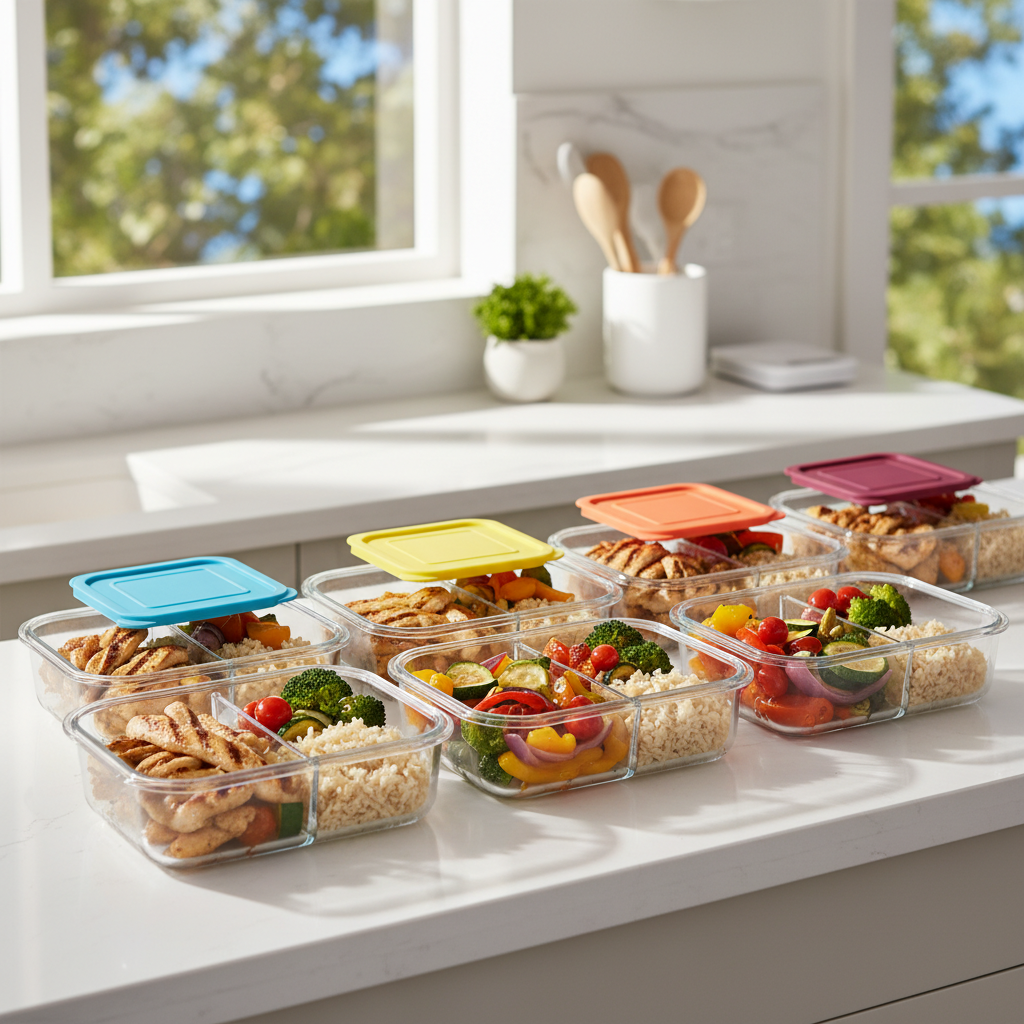
It is Sunday night. You have spent $90 on groceries, chopped vegetables for an hour, and stacked fourteen containers in the fridge like a game of edible Tetris. By Wednesday, half of it is brown and sad. By Friday, you are ordering pad thai again.
I have done this more times than I want to admit. The problem was never motivation. It was that I treated meal prep like an all-or-nothing project instead of a system. Once I figured out how to meal prep for weight loss in a way that actually scaled with my life, the weight started coming off and staying off. Here is the exact week-by-week approach I use and recommend.
Why meal prep works for weight loss
Most people think meal prep is about saving time. It is, but that is the least interesting benefit when your goal is losing weight. The real power is in what it removes from your day: decisions.
Every food decision you make during the day chips away at your willpower. By noon, you have already decided what to wear, how to respond to seventeen emails, and whether to take the stairs. When lunch rolls around and you have to also figure out what to eat, the path of least resistance wins. That path usually involves a drive-through or a vending machine.
Meal prep eliminates that decision entirely. Your lunch is already made. The calories are already counted. The portions are already set. You just grab a container and eat. That sounds boring, and honestly, it kind of is. But boring is effective when you are trying to maintain a calorie deficit.
There is another angle people miss. When you prep meals in advance, you commit to specific portions before hunger enters the equation. This is a big deal. Hungry-you and rational-you are different people. Rational-you measures out 6 ounces of chicken and a cup of rice. Hungry-you grabs the whole container of leftover pasta and eats it standing over the sink.
Meal prep also makes calorie tracking almost effortless. If you prep five identical lunches on Sunday, you log the recipe once and copy it across the week. Compare that to logging a different restaurant meal every day, guessing at portion sizes and cooking methods. I have tried both approaches. Prepped meals take me about two minutes to log for the entire week. Restaurant meals take five minutes per meal and I am still probably off by 200 calories.
The people I know who have lost weight and kept it off almost all have some version of meal prep in their routine. It is not glamorous. Nobody posts their seventh identical chicken bowl on Instagram. But it works because it turns weight loss from a daily battle into a weekly habit.
The week-by-week ramp-up system
The biggest meal prep mistake is going from zero to fourteen prepped meals in one weekend. You burn out by week two. Instead, ramp up gradually over a month.
Week 1: Prep lunches only
Pick one protein, one carb, one vegetable. Cook enough for five lunches. That is it. I like chicken thighs, jasmine rice, and roasted broccoli. It takes about 45 minutes on Sunday. The goal this week is not perfection. It is proving to yourself that you can open the fridge on a Tuesday and grab something you made. If you eat out for dinner every night, fine. You are still ahead of where you were.
Week 2: Add dinners
Keep your lunch recipe the same or swap it. Now add a second recipe for dinners. I usually go with a different protein to keep things tolerable. Ground turkey with sweet potatoes and green beans is a solid option. You are now cooking two recipes on Sunday, which takes about 90 minutes. You have ten prepped meals in the fridge.
Week 3: Add breakfasts
Breakfast prep is the easiest because it can be dead simple. Overnight oats in mason jars. Egg muffins. Greek yogurt parfaits you assemble in two minutes. Pick something you can make five of without thinking. I do overnight oats with protein powder, berries, and chia seeds. It takes fifteen minutes to prep five jars.
Week 4: Full system
By now you have a rhythm. Sunday is prep day. You have three recipes you rotate through. The whole process takes about two hours. You know your grocery list by heart. You are spending less money on food than before because you are not impulse-buying lunch every day. More importantly, every meal in your fridge is already portioned for your calorie target. You are not making food decisions during the week. You are just eating what past-you already decided was the right call.
This ramp-up matters because habit research shows that stacking too many changes at once leads to abandoning all of them. One meal at a time keeps the barrier low enough that you actually stick with it.
How to calculate portions for your deficit
Meal prep without portion control is just cooking in bulk. To lose weight, you need to know your numbers. Here is the process I walk people through.
First, calculate your total daily energy expenditure (TDEE). This is how many calories your body burns in a day, including activity. There are a dozen calculators online. Use one, plug in your stats, and get a number. For most people it lands somewhere between 1,800 and 2,800 calories. That number is your maintenance level.
Next, subtract 500 calories. That gives you a deficit that should produce about one pound of fat loss per week. If your TDEE is 2,400, your target is 1,900 calories per day. Do not go lower than a 500-calorie deficit unless you are working with a doctor. Aggressive deficits lead to muscle loss, irritability, and the kind of binge eating that erases a week of progress in one sitting.
Now split those calories across your meals. If you eat three meals and one snack, a simple split looks like this: 400 calories for breakfast, 500 for lunch, 600 for dinner, and 400 for snacks. Adjust based on when you are hungriest. I front-load my calories because I am useless after 3pm if I have not eaten enough.
For macros, a good starting point for weight loss is 40% protein, 30% carbs, 30% fat. Protein is high because it keeps you full and preserves muscle while you are in a deficit. On 1,900 calories, that works out to about 190g protein, 142g carbs, and 63g fat. You do not need to hit these numbers perfectly. Get within 10% and you are fine.
When you portion your containers, use a kitchen scale. I resisted this for years because it felt obsessive. It is not. It takes five extra seconds per ingredient and it is the difference between a 500-calorie meal and a 700-calorie meal. Eyeballing rice is how people end up eating 300 calories more than they think.
Common meal prep mistakes that stall weight loss
I have made all of these. Learn from my wasted groceries.
Eyeballing portions. I already mentioned this but it deserves its own callout. A "tablespoon" of peanut butter that you scoop with a regular spoon is probably two tablespoons. That is an extra 90 calories you did not count. Multiply that across a few ingredients and you can erase your entire deficit without realizing it.
Prepping too much variety. I get the appeal. You want Monday to feel different from Tuesday. But five different recipes means five different grocery lists, five different cook times, and five different calorie counts to track. Start with two recipes per week, max. Boring works. Save the variety for weekends.
Not accounting for cooking oils and sauces. A tablespoon of olive oil is 120 calories. If you drizzle oil on your pan, toss your vegetables in sauce, and add a splash of soy sauce, you can easily add 200-300 untracked calories to a meal. Measure your oils. Use cooking spray when you can. Log every sauce.
Giving up after one bad week. You will have a week where the food goes bad, or you get sick of chicken, or life gets chaotic and you skip prep entirely. That is normal. It does not mean the system failed. It means you are a person with a life. Do a smaller prep the next Sunday. Even prepping three lunches is better than prepping nothing.

How BodyBuddy makes meal prep tracking effortless
The hardest part of meal prep for weight loss is not the cooking. It is the tracking. Weighing ingredients, logging recipes, doing math on macros. This is where most people quietly stop bothering after a few weeks.
BodyBuddy is an AI coaching service that makes this part stupid simple. After you finish prepping, you text a photo of your containers to your BodyBuddy coach over iMessage. The AI identifies what is in each container and logs the meals for you. No manual entry. No searching a database for "homemade chicken rice bowl." Just a photo and you are done.
Throughout the week, your AI coach checks in via iMessage to keep you on track. Did you eat your prepped lunch or did you cave and order delivery? No judgment either way, but the accountability matters. The companion iOS app shows all your tracked meals, a progress dashboard, and your "Future You" avatar. This is a Pixar-style 3D version of your goal self that becomes more visible as you complete daily missions. It is a small thing, but watching that avatar sharpen up is weirdly motivating.
BodyBuddy costs $29.99 per month. There is no free tier. But if you are serious about meal prep for weight loss, having an AI that logs your food from a photo and nudges you daily is worth more than another set of containers. Check it out at bodybuddy.app.
Frequently asked questions
How many days in advance can I meal prep?
Most cooked meals stay good in the fridge for four days. If you need to cover five weekdays, prep on Sunday and freeze two portions for Thursday and Friday. Thaw them in the fridge overnight.
Do I need to eat the same thing every day?
No, but it helps. Eating the same meals simplifies tracking and shopping. If you need variety, rotate between two recipes per meal. More than that and you are creating unnecessary work that makes the system harder to maintain.
Can I meal prep if I have a family?
Yes. Prep your deficit-portioned meals separately from family meals, or cook the same base recipe and portion yours with a scale before adding extras for everyone else. It adds maybe ten minutes to the process.
What containers should I use?
Glass containers with snap lids. They do not stain, they microwave well, and they last years. Get two-compartment ones so your rice does not get soggy from your vegetables. A set of ten runs about $30.
How long does meal prep take each week?
Once you have your system down, about two hours on Sunday for 15 meals. The first few weeks take longer because you are learning recipes and figuring out your kitchen flow. It gets faster.
Meal prep for weight loss comes down to one idea: make your food decisions on Sunday so you do not have to make them on Wednesday. Start with lunches. Add meals as you build the habit. Use a scale. Keep it simple. And if you want an AI coach that tracks your prep from a photo and keeps you accountable over iMessage, give BodyBuddy a try. Your future self will thank you.
Want daily accountability?
BodyBuddy texts you every day.
Build a healthier relationship with food and movement, one text at a time.