
Weight Loss,Health|May 2, 2026|Francis

How to keep weight off after stopping Ozempic or Wegovy

How to keep weight off after stopping Ozempic or Wegovy

How to keep weight off after stopping Ozempic or Wegovy
You lost the weight. Maybe 30 pounds, maybe 60. Ozempic or Wegovy did exactly what the commercials said it would do. The food noise quieted down, your appetite shrank, and for the first time in years, eating felt manageable instead of like a daily battle.
And then you stopped taking it.
Maybe your insurance changed. Maybe the side effects got old. Maybe you just didn't want to be on a medication indefinitely. Whatever the reason, you're now staring down a question that millions of people are asking right now: how do I keep this weight off without the drug?
The honest answer is that it's hard. A 2026 study found that former GLP-1 users tend to regain lost weight within about 18 months of stopping. That's a sobering number. But it's also not the whole story. The people who regain everything tend to be the ones who relied entirely on the medication and didn't build any supporting habits while they were on it. The ones who do keep it off? They used the time on the medication to rewire how they eat, move, and think about food.
Here's what that actually looks like in practice.

Why weight regain happens after GLP-1 medications

Before we get into solutions, it helps to understand what's actually going on in your body when you stop these medications.

Your appetite comes back, and it comes back loud

GLP-1 medications work by mimicking a hormone that tells your brain you're full. When you stop taking them, that artificial satiety signal disappears. Your appetite doesn't just return to normal. It often comes back stronger than before, because your body has been in a caloric deficit and it's wired to compensate.
This is the part that catches people off guard. You've spent months eating smaller portions without much effort, and suddenly every meal feels insufficient. You're not weak or lacking discipline. Your biology is doing exactly what it evolved to do: push you to eat more after a period of restriction.

Your metabolism has adjusted

If you lost a significant amount of weight on GLP-1 medications, your metabolic rate has likely decreased. A smaller body burns fewer calories. This is basic physics, but it means the amount of food that maintained your weight before you started the medication is now more than your body needs. The math has changed, and most people don't recalibrate.

You may not have built the habits you need

Here's the uncomfortable truth: GLP-1 medications are incredibly effective at reducing appetite, but they don't teach you how to eat. They don't help you learn portion sizes, build cooking skills, or figure out how to navigate a restaurant menu. If you spent your time on the medication just eating less of the same foods without thinking about why, you're going to struggle when the appetite suppression goes away.

What actually works for maintaining weight after stopping

Protein at every meal, no exceptions

This is the single most important dietary change you can make. Protein is the most satiating macronutrient, and it helps preserve muscle mass, which is critical for keeping your metabolism from tanking further.
Aim for 25-35 grams of protein at each meal. That's roughly a palm-sized portion of chicken, fish, tofu, or Greek yogurt. If you were eating protein-light meals while on the medication because you just weren't hungry enough to care, now is the time to get intentional about it.
I'd argue this matters more than any other single thing on this list. Muscle loss during weight loss is the hidden saboteur that nobody talks about enough. The more muscle you lose, the fewer calories you burn at rest, and the easier it becomes to regain fat.

Build a movement practice you'll actually maintain

Exercise during GLP-1 treatment is associated with significantly less weight regain after stopping. But the key word is "during." If you wait until after you stop the medication to start exercising, you've missed the window where it's easiest to build the habit.
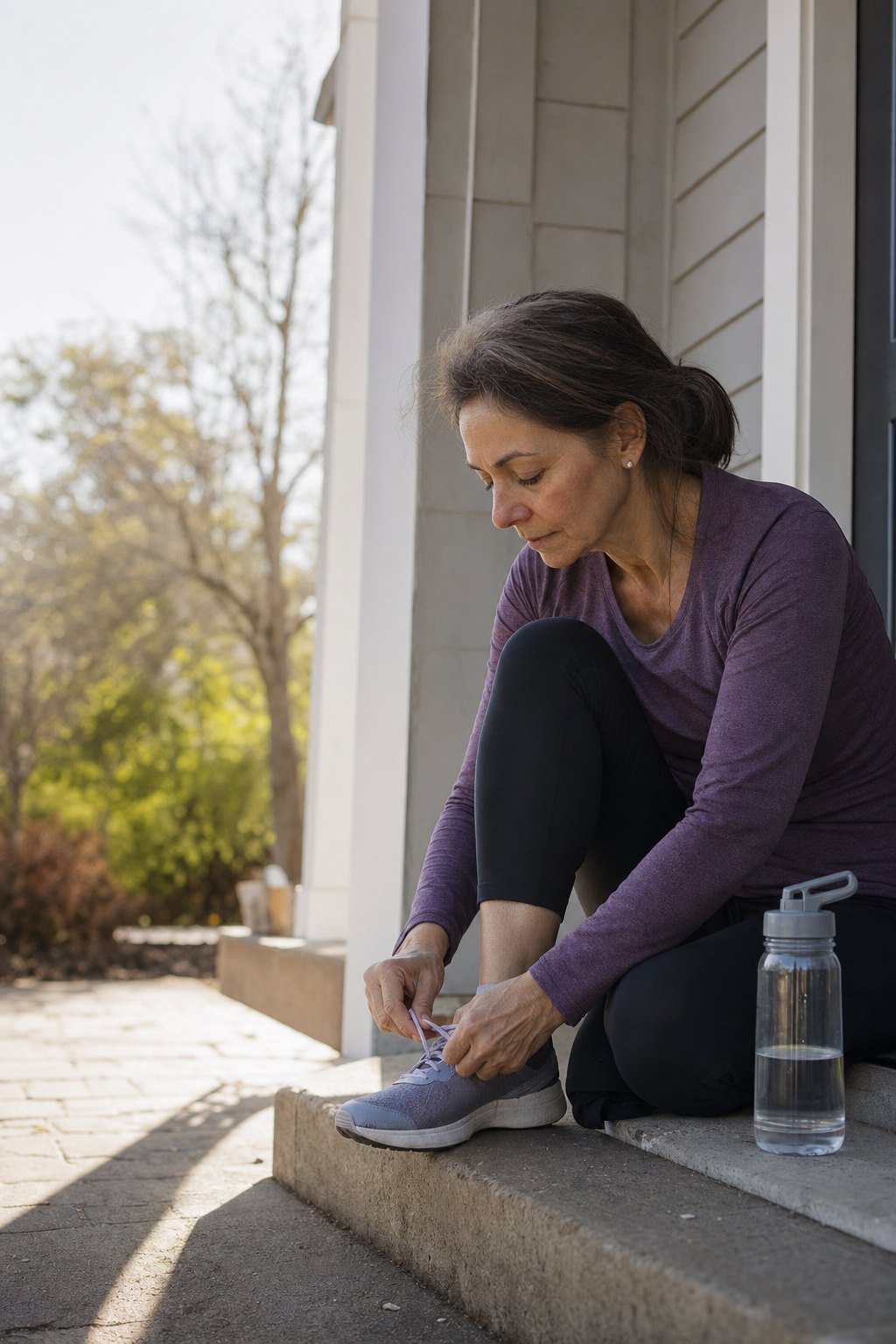
That said, it's never too late. The goal isn't to run a marathon or deadlift twice your bodyweight. It's to find movement you can do consistently three to five times per week. Walking counts. Yoga counts. Dancing in your kitchen counts. The best exercise for weight maintenance is the one you'll actually do next Tuesday.
Resistance training deserves special emphasis here. It's the most effective way to preserve and build muscle, which directly supports your metabolism. Even two sessions per week of basic strength work makes a measurable difference.

Track your food, but don't obsess

This is where things get nuanced. Tracking every gram of food is exhausting and unsustainable for most people. But having zero awareness of what you're eating is how portions creep up without you noticing.
The middle ground? Track loosely. Take a photo of your meals. Check in with yourself a few times a week to see if your portions have drifted. You don't need to log every calorie, but you do need some feedback mechanism that keeps you honest.
This is especially important in the first six months after stopping GLP-1 medications. Your appetite is recalibrating, your portions are naturally going to increase, and without some form of tracking, it's easy to end up eating 500+ extra calories per day without realizing it.

Address the food noise directly

"Food noise" is the constant background chatter about food that many people experience. What should I eat? When can I eat next? Should I have eaten that? GLP-1 medications are famous for silencing this noise, and when you stop taking them, it often comes roaring back.
The strategies that help here aren't exciting, but they work. Eat at regular intervals so you're not constantly making decisions about food. Plan your meals loosely so you're not standing in front of the fridge at 6pm trying to figure out dinner. And if the food noise becomes genuinely distressing, that's worth talking to a therapist or dietitian about. It can be a sign of disordered eating patterns that existed before the medication and were just masked by it.

Get comfortable with a slower pace

On GLP-1 medications, weight loss can be dramatic. Two pounds a week. Three pounds a week. You get used to the scale moving steadily downward. After stopping, weight maintenance means the scale stays roughly the same, maybe fluctuating a pound or two in either direction. That's the goal. But psychologically, it can feel like failure after months of visible progress.
Reframing success is important here. Maintaining your weight loss is a genuine achievement. Not gaining is winning. It doesn't feel as exciting as losing, but it's the part that actually determines your long-term health.

How BodyBuddy helps with post-GLP-1 maintenance

The transition off GLP-1 medications is exactly the kind of situation where daily accountability makes a massive difference. You're building new habits while your body is actively fighting you. That's when having something check in with you every day matters most.
BodyBuddy works through iMessage, so there's no separate app to open or forget about. You text a photo of your meals, and it gives you feedback on your nutrition without requiring you to weigh or measure anything. For someone coming off Ozempic or Wegovy, this is the sweet spot: enough awareness to catch portion creep early, without the obsessive tracking that leads to burnout.
The daily check-ins also help you notice patterns you'd otherwise miss. Maybe you're eating well during the week but your weekends have gone off the rails. Maybe your protein intake has dropped since you stopped the medication. These are the kinds of things that are hard to spot on your own but obvious when you have a record of what you've been eating.

Frequently asked questions

How much weight will I regain after stopping Ozempic?

Research suggests that without intervention, most people regain a significant portion of their lost weight within 12-18 months of stopping GLP-1 medications. However, this isn't inevitable. People who maintain regular exercise, prioritize protein intake, and use some form of food tracking tend to retain much more of their weight loss. The key is having a maintenance plan before you stop the medication, not after.

Can I go back on Ozempic if I start regaining weight?

Yes, many people do cycle on and off GLP-1 medications, though this isn't generally what doctors recommend. About 27% of people who stop a GLP-1 switch to a different medication within a year. If you're considering going back on, talk to your prescriber about whether it makes sense for your situation and what you can do differently this time to build more sustainable habits.

What's the best diet after stopping Wegovy?

There's no single "best" diet, but the principles that matter most are consistent protein intake, regular meals, and adequate fiber. Many people find success with a Mediterranean-style eating pattern that emphasizes whole foods, healthy fats, and plenty of vegetables. The worst thing you can do is go on a restrictive crash diet to try to prevent regain. That almost always backfires.

How long does it take for appetite to normalize after stopping GLP-1?

Most people report that the first two to four weeks are the hardest. Your appetite typically increases noticeably within the first week of stopping and may continue ramping up for a month or more. By about six to eight weeks, most people report that their hunger has stabilized at a new baseline. This baseline will be higher than what you experienced on the medication, but it doesn't have to be as intense as it was before you started.

Should I exercise more after stopping Ozempic to prevent weight regain?

Exercise helps, but don't try to out-exercise a returning appetite. The research is clear that you can't compensate for dietary changes with exercise alone. That said, maintaining a consistent exercise routine, especially resistance training, supports muscle preservation and metabolic health. Aim for at least 150 minutes of moderate activity per week, with two strength training sessions included.

Conclusion

Stopping a GLP-1 medication doesn't have to mean losing everything you gained. But it does require a plan, and ideally one you start building while you're still on the medication. Prioritize protein. Move your body regularly. Keep some form of food awareness in your routine. And be patient with yourself during the transition.
The people who maintain their weight loss long-term aren't the ones with the most willpower. They're the ones with the best systems. Daily accountability, consistent habits, and enough self-awareness to catch problems early. That's the formula. It's not glamorous, but it works.
If you're looking for a low-friction way to stay accountable during this transition, BodyBuddy can help. It's daily nutrition coaching through iMessage, no calorie counting required. Just real feedback on what you're eating, every day.

Want daily accountability?

BodyBuddy texts you every day.

Build a healthier relationship with food and movement — one text at a time.

Join 500+ usersstaying healthy