
All guides
How often should you weigh yourself (and when the scale does more harm than good)
A practical BodyBuddy guide to how often should you weigh yourself (and when the scale does more harm than good), with useful considerations and next steps.
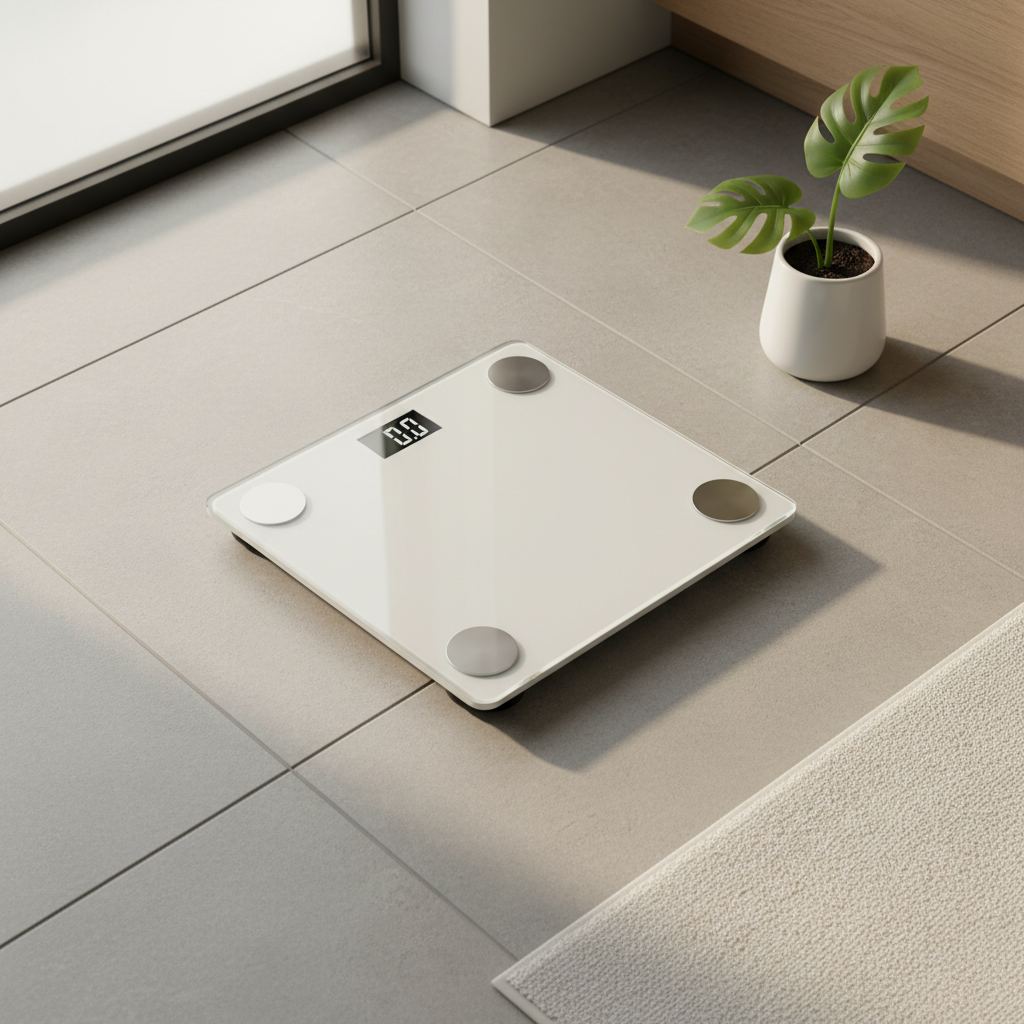
You step on the scale Monday morning and you're down two pounds. Great. Tuesday, you're up three. By Wednesday you're questioning everything you ate since Sunday and wondering why you bother.
The internet has strong opinions about weighing yourself. Some fitness influencers say you should weigh in every single day. Others say throw the scale in the trash. The research, predictably, lands somewhere in between, and the right answer depends on who you are more than what some study says.
I've spent a lot of time thinking about this because it comes up constantly with people trying to lose weight. So here's what I actually believe, backed by what the science shows.
Your weight fluctuates more than you think
Before we talk about how often to step on the scale, you need to understand what the number actually means on any given morning.
Your body weight can swing 2 to 5 pounds in a single day. That's not fat. That's water, food sitting in your digestive system, sodium levels, hormones, and about a dozen other things that have nothing to do with whether your diet is working.
A salty dinner can add two pounds overnight. A hard workout can drop weight temporarily through sweat, then bounce it back when you rehydrate. Women often see 3 to 5 pound shifts around their menstrual cycle. Even a big glass of water right before stepping on the scale adds half a pound.
This is why a single weigh-in on a single morning is nearly useless as a progress indicator. You're looking at your body's water balance at that exact moment. That's it. Not your fat loss. Not your fitness. Just water and food and timing.
What the research actually says about weighing frequency
A 2015 study published in the Journal of the Academy of Nutrition and Dietetics found that people who weighed themselves daily lost about 13 more pounds over six months than those who weighed less frequently. That sounds like a slam dunk for daily weighing.
But a systematic review of 12 studies found that weekly weighing produced similar weight loss benefits. The real difference was between people who weighed regularly (daily or weekly) versus people who rarely stepped on a scale at all.
The American Heart Association reviewed the evidence and landed here: weighing yourself regularly helps, but there's no strong evidence that daily is better than weekly for most people.
So the weighing itself might not be the magic. What seems to matter is the habit of checking in and staying aware. Whether you do that once a day or once a week appears to be less important than doing it consistently.
When daily weigh-ins help
For some people, daily weighing works well. If you can see a two pound jump after a restaurant meal and think "that's just water weight from the sodium, it'll pass by Thursday," daily data is useful. You start seeing your weight as a trend line instead of a fixed number, and the daily noise stops bothering you.
Research from Cornell University found that daily weighers who tracked their data as a trend line lost more weight and kept it off longer. The key was that they weren't reacting to individual numbers. They were watching the direction over weeks.
Daily weighing can also catch real changes early. If your weekly average is creeping up by a pound a week for three weeks in a row, that's a signal to look at what's changed, and you'll see that pattern faster with daily data.
People who tend to do well with daily weigh-ins:
- They can separate the number from their self-worth
- They understand water weight and daily fluctuations
- They track a weekly average rather than fixating on any single number
- They use the data as information, not judgment

When the scale does more harm than good
And then there's the other side. A study in the journal Body Image found that frequent self-weighing was associated with increased body dissatisfaction, depressive symptoms, and unhealthy weight control behaviors, particularly in women under 30.
Psychology Today has documented a real condition called gravitophobia, the fear of stepping on the scale, which develops in people who've tied their emotional state to that number for too long.
Scale anxiety looks like this: You weigh yourself, see a number you don't like, and it wrecks your mood. You either restrict food aggressively to "fix" it or you think "screw it, the diet isn't working anyway" and overeat. Both responses push you further from your goal.
If any of these sound like you, the scale might be hurting more than helping:
- A bad number ruins your day or changes what you eat
- You weigh yourself multiple times per day
- You avoid the scale entirely because you're afraid of what it'll say
- You feel anxious the night before a weigh-in
- A good number makes you feel like you've "earned" a treat
None of these are rational responses to a data point. They're emotional patterns. And there's no amount of weight loss education that makes them disappear. If the scale triggers disordered thinking, stop using it. There's no weigh-in protocol clever enough to override that kind of wiring.
Better alternatives to the scale
Weight is one metric. It's not the only metric, and honestly, it's not even the best one for most people.
Here are some that tell you more about what's actually changing in your body.
Your clothes are the most obvious one. If you're building muscle and losing fat, you might weigh the same but drop a pants size. The scale would call that a failure. Your jeans would call it progress.
Progress photos are underrated. Take one in the same lighting, same clothes, same angle every two weeks. The mirror lies to you because you see yourself every day. Photos taken weeks apart show changes you'd never notice otherwise.
Pay attention to your energy and sleep. When your nutrition and movement are actually working, you sleep better and feel more alert during the day. I trust these signals more than a number on a screen.
Fitness matters too. Can you walk further than you could a month ago? Lift more? Get through a workout without gasping? Those gains are real even when the scale hasn't budged.
And a tape measure around your waist is honestly a better predictor of health risk than body weight. Visceral fat, the kind packed around your organs, is what drives disease risk, and waist circumference tracks it more directly than the scale ever will.
A practical framework for deciding
If you can look at a scale number and just see data, weigh yourself daily and track a 7-day rolling average. Use a scale that syncs to an app, and look at the trend line, not the daily number. This gives you the most information with the least emotional noise.
If you're somewhere in the middle, weigh yourself once a week. Same day, same time (first thing in the morning, after using the bathroom, before eating). Write it down. Compare it to last week. That's enough.
If the scale messes with your head at all, skip it. Use the alternative metrics above. Check in with how you feel, how your clothes fit, and whether you're actually doing the things you planned to do. You can lose weight without ever looking at a scale.
The right answer is boring: pick the frequency that gives you useful information without making you miserable. If that's daily, fine. If that's never, also fine. The goal was never to become good at weighing yourself.
How BodyBuddy approaches this differently
Most weight loss apps put the scale front and center. You log your weight, stare at a graph, and your whole week gets filtered through whether that line went up or down. I find that exhausting.
BodyBuddy works differently. It coaches you through iMessage with a companion iOS app that shows your Future You, an AI-generated avatar of what you'll look like when you hit your goal. The daily check-ins are about what you did, not what you weigh. Did you eat the meals you planned? Move your body? Sleep enough?
You can still weigh yourself if it works for you. But BodyBuddy doesn't organize your entire experience around a graph. For $29.99/month, you get an AI coach focused on the habits that actually produce results, which in my experience matters more than any scale.
FAQ
How often should I weigh myself to lose weight?
Research suggests weighing yourself at least once a week leads to better weight loss outcomes compared to not weighing at all. Whether daily or weekly works better depends on your personality. If you can handle daily fluctuations without stressing, daily with a weekly average works great. If the number affects your mood, once a week is plenty.
Why did I gain 3 pounds overnight?
Water. A salty meal, a hard workout, hormonal shifts, or eating later than usual can all cause your body to hold onto fluid. To actually gain 3 pounds of fat you'd need to eat roughly 10,500 extra calories in a single day. So no, it's not fat. Give it a day or two and it'll pass.
What is the best time of day to weigh yourself?
First thing in the morning, after using the bathroom and before eating or drinking anything. This gives you the most consistent reading since you've fasted overnight and your hydration is at a baseline. The key is consistency: same time, same conditions, every time.
Should I stop weighing myself if it makes me anxious?
Yes. If stepping on the scale triggers anxiety, affects your eating, or ruins your mood, it's doing more harm than good. Track your progress with other metrics like how your clothes fit, progress photos, energy levels, or waist measurements instead. Weight is one data point among many, and it's not worth sacrificing your mental health over.
How much can your weight fluctuate in a day?
Anywhere from 2 to 5 pounds for most adults. Sodium, carbs, hormones, food sitting in your gut, and how much water you've had all play a role. It's normal. It says nothing about whether you gained or lost fat.
Related BodyBuddy guides
- How to stay motivated to lose weight (when willpower isn't enough)
- How to stop emotional eating (without white-knuckling it)
- How to get back on track after falling off your diet (without starting over)
- How to stop emotional eating (and what to do instead)
- Emotional eating vs real hunger: how to tell the difference and break the cycle
Everyone gives you a plan.BodyBuddy texts you until it happens.
BodyBuddy keeps you on track—from meals to doctor's appointments and everything in between.