Nutrition|March 16, 2026|Francis
How much protein do you need to lose weight (and why most people get it wrong)
How much protein do you need to lose weight (and why most people get it wrong)
Most people trying to lose weight obsess over cutting calories. Cut the carbs, cut the fat, cut the joy out of eating entirely. But here's what rarely gets talked about: the single macronutrient that makes the biggest difference in whether you actually lose fat (not just weight) and keep it off is protein. And most people aren't eating nearly enough of it.
I'm not talking about bodybuilder amounts. I'm not going to tell you to chug six protein shakes a day. But the research on protein and weight loss is genuinely compelling, and the practical takeaways are simpler than you'd expect.
Why protein matters more than you think during weight loss
When you eat in a calorie deficit, your body doesn't just burn fat. It also breaks down muscle tissue for energy. This is a problem for two reasons: muscle is metabolically active tissue (it burns calories even at rest), and losing muscle makes you weaker, more tired, and more likely to regain the weight later.
Protein is the main lever you have to prevent this. A 2016 study published in the American Journal of Clinical Nutrition put two groups on identical calorie deficits. The high-protein group (1.1g per pound of body weight) gained muscle while losing fat. The lower-protein group (0.5g per pound) lost fat too, but also lost some lean mass. Same calorie deficit. Very different outcomes.
This is why the scale can be misleading. Two people can weigh the same, but if one preserved their muscle through adequate protein intake, they'll look leaner, feel stronger, and have a higher resting metabolic rate. That last part matters — it means their body burns more calories doing nothing, which makes maintaining the weight loss much easier down the road.
So how much protein do you actually need?
The short answer: more than the government recommendation, but less than the fitness industry wants you to believe.
The RDA for protein is 0.36 grams per pound of body weight. For a 160-pound person, that's about 58 grams. This is the minimum to avoid deficiency. It is not the optimal amount for someone trying to lose weight while preserving muscle.
Research consistently points to a range of 0.7 to 1.0 grams per pound of body weight as the sweet spot during a calorie deficit. For that same 160-pound person, that's 112 to 160 grams per day.
Here's a quick reference:
- 130 lbs: aim for 91-130g protein daily
- 150 lbs: aim for 105-150g protein daily
- 180 lbs: aim for 126-180g protein daily
- 200 lbs: aim for 140-200g protein daily
If you're significantly overweight, use your goal body weight or lean body mass instead. A 300-pound person doesn't need 300 grams of protein. Using a target weight of 200 pounds and aiming for 140-160g is perfectly reasonable.
One thing worth noting: going above 1g per pound hasn't shown meaningful additional benefits for fat loss in most studies. You won't hurt yourself eating more, but you're probably just spending extra money on chicken breast for diminishing returns.

What actually happens when you eat enough protein
Beyond preserving muscle, protein does several practical things that make losing weight less miserable:
It keeps you full longer. Protein is the most satiating macronutrient. A breakfast with 30g of protein will keep you satisfied until lunch in a way that a bagel with cream cheese simply won't. This isn't willpower — it's hormones. Protein triggers the release of peptide YY and GLP-1, both of which signal fullness to your brain.
It has a higher thermic effect. Your body uses about 20-30% of the calories in protein just to digest it. Compare that to 5-10% for carbs and 0-3% for fat. If you eat 200 calories of chicken breast, roughly 50 of those calories get burned during digestion. This adds up over time.
It reduces cravings. A study in the journal Obesity found that increasing protein intake to 25% of total calories reduced cravings by 60% and cut the desire for late-night snacking in half. If you've ever demolished a bag of chips at 10pm, inadequate protein during the day might be part of the story.
Where to get your protein (without hating your meals)
The biggest complaint I hear is "I can't eat that much protein." Fair. If you're currently eating 60g a day and need to hit 130g, that feels like a lot. But it's more manageable than it sounds when you spread it across the day.
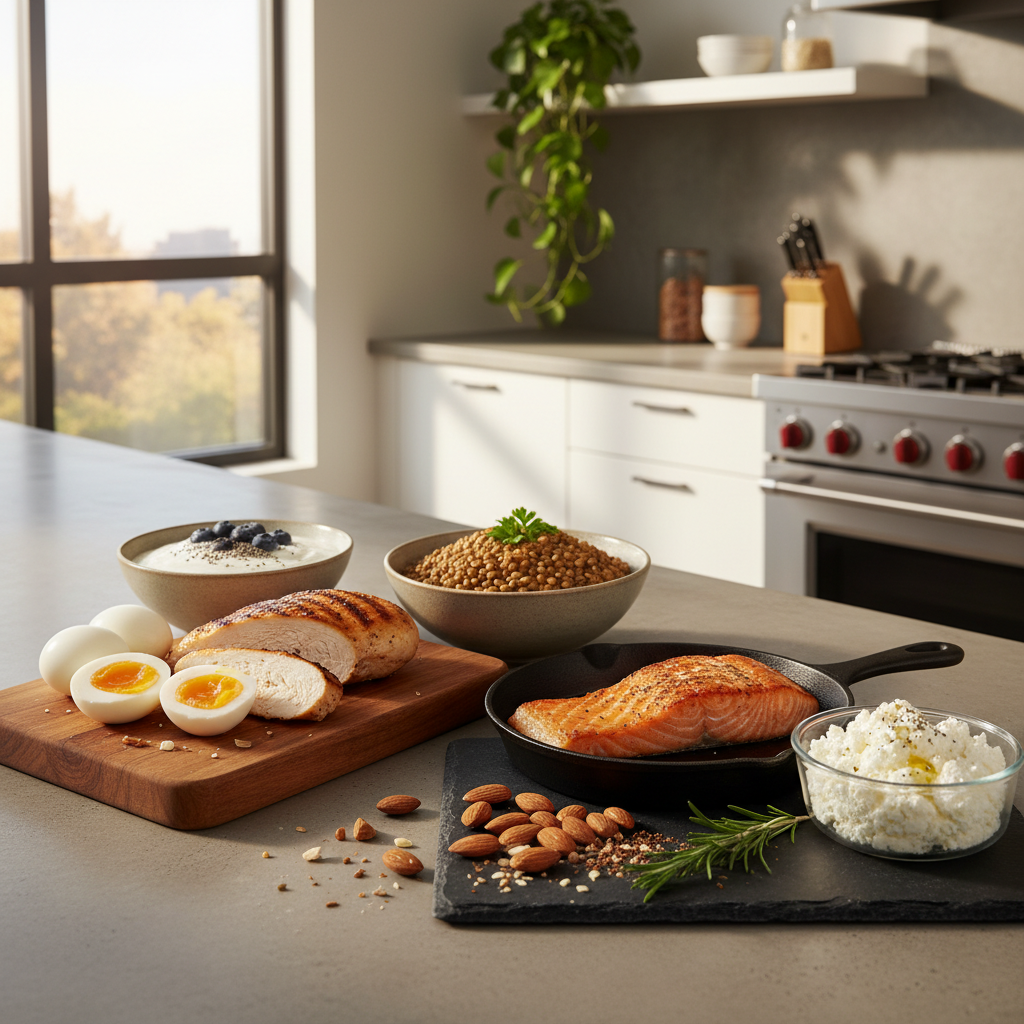
Here's what 30g of protein looks like from different sources:
- 4 oz chicken breast (about the size of your palm)
- 5 eggs
- 1 cup Greek yogurt plus a handful of almonds
- 1 scoop whey protein in water or milk
- 6 oz salmon fillet
- 1 cup cottage cheese
- 1.5 cups cooked lentils
A realistic day might look like: Greek yogurt with berries for breakfast (20g), a chicken salad for lunch (35g), an apple with a protein bar as a snack (20g), and salmon with vegetables for dinner (40g). That's 115g without trying very hard.
The key is building protein into every meal rather than trying to cram it all into dinner. Your body can only use so much at once for muscle protein synthesis — roughly 25-40g per meal seems to be the effective range. Spreading it out across 3-4 eating occasions makes both the biology and the logistics work better.
Common mistakes people make with protein and weight loss
Mistake 1: Relying on protein bars as a primary source. Most protein bars are candy bars with extra whey powder. Check the sugar content. If it has 20g of sugar alongside 20g of protein, you're basically eating a Snickers with better marketing. Look for bars with under 5g of sugar if you use them.
Mistake 2: Forgetting about protein at breakfast. The typical American breakfast — cereal, toast, a muffin, orange juice — is almost entirely carbs. Swapping to eggs, Greek yogurt, or even last night's leftover chicken makes a massive difference in your total daily intake and how hungry you feel by 11am.
Mistake 3: Only counting the obvious sources. Protein adds up from places you might not track. A cup of oatmeal has 5g. A cup of broccoli has 3g. Two slices of whole grain bread have 7g. These don't replace dedicated protein sources, but they contribute more than people realize.
Mistake 4: Going all-in on protein shakes instead of food. Shakes are convenient, but whole food sources keep you fuller and provide micronutrients that powder doesn't. Use shakes to fill gaps, not as your primary strategy.
How BodyBuddy helps you hit your protein targets
Tracking protein doesn't have to mean weighing every ounce of chicken on a food scale. BodyBuddy is an AI coach that lives in your iMessage — you can snap a photo of your meal and get an instant protein estimate without opening a separate app or scanning barcodes.
The daily check-ins through iMessage help you stay aware of your protein intake across the day, not just at dinner when it's too late to course correct. If you're consistently low on protein at lunch, your AI coach will notice the pattern and nudge you with practical suggestions.
BodyBuddy also has a companion iOS app where you can see your tracked meals, nutrition breakdowns, and progress over time. There's a "Future You" feature — an AI-generated avatar that shows what you'll look like when you hit your goal weight. Complete your daily missions (like hitting your protein target) and your Future You becomes more visible. It's a surprisingly motivating way to connect today's choices with tomorrow's results.
At $29.99/month, it costs less than two protein powder tubs and does a lot more for your consistency than any supplement will.
Frequently asked questions
Can you eat too much protein?
For most healthy adults, no. Your kidneys handle protein just fine unless you have pre-existing kidney disease. The old myth about protein damaging healthy kidneys has been debunked by multiple large-scale studies. That said, if you have kidney issues, talk to your doctor before significantly increasing intake.
Does the type of protein matter for weight loss?
Not hugely for fat loss itself — a gram of protein is a gram of protein from a calorie perspective. But animal proteins tend to be more bioavailable and contain all essential amino acids. Plant proteins work great too, you just might need to combine sources (like rice and beans) to get a complete amino acid profile. Either way, total daily intake matters more than source.
Should I eat protein before or after working out?
The "anabolic window" — the idea that you need protein within 30 minutes of lifting — is mostly overblown. What matters is your total protein intake across the day. That said, having a protein-rich meal within a couple hours of training is still a good practice. Don't stress about chugging a shake in the locker room.
Will eating more protein make me bulky?
No. Building significant muscle requires a calorie surplus, progressive resistance training, and years of consistency. Eating adequate protein during a calorie deficit helps you preserve the muscle you already have. You won't accidentally look like a bodybuilder. I promise.
The bottom line
Protein isn't magic, but it's probably the highest-leverage dietary change you can make during weight loss. Aim for 0.7-1.0g per pound of body weight, spread it across your meals, and prioritize whole food sources. You'll stay fuller, preserve muscle, and have a much easier time maintaining your results long-term.
If tracking protein feels overwhelming, BodyBuddy makes it as easy as texting a photo of your plate. Sometimes the best nutrition strategy is the one that doesn't feel like work.
Want daily accountability?
BodyBuddy texts you every day.
Build a healthier relationship with food and movement — one text at a time.
Join 500+ usersstaying healthy