Nutrition|April 25, 2026|Francis
How much protein do you actually need to lose weight? (It's probably more than you think)
How much protein do you actually need to lose weight? (It's probably more than you think)
Ask ten people how much protein they need and you'll get ten different answers. Some say 50 grams a day is plenty. Others chug protein shakes like their life depends on it. The actual science on protein for weight loss is clearer than you'd expect, and most people are eating far less than they should.
I spent weeks digging through the research on this, and the short answer is: if you're trying to lose weight, you almost certainly need more protein than you're currently eating. Here's why, and exactly how much to aim for.
Why protein matters more during weight loss
When you eat fewer calories than you burn, your body doesn't just burn fat. It also breaks down muscle for energy. Losing muscle is a problem because muscle drives your metabolic rate. Less muscle means fewer calories burned at rest, which makes weight loss progressively harder and regain almost inevitable.
Protein is the macronutrient that prevents this. A 2016 meta-analysis in the American Journal of Clinical Nutrition found that higher protein intake during caloric restriction preserved significantly more lean mass compared to lower protein diets, even when total calories were identical.
But that's not the only reason protein matters:
- Protein is the most filling macronutrient. It reduces hunger hormones (ghrelin) and boosts satiety hormones (GLP-1 and PYY). You eat less without trying.
- It has the highest thermic effect of food. Your body uses 20-30% of protein calories just to digest it, compared to 5-10% for carbs and 0-3% for fat.
- It stabilizes blood sugar, which prevents the crashes that trigger cravings.
In practical terms, eating more protein means you're less hungry, burn more calories digesting food, keep your muscle, and have fewer cravings. It's not a silver bullet, but it's close.
The number: how many grams per day
The RDA for protein is 0.36 grams per pound of body weight (0.8g/kg). For a 160-pound person, that's about 58 grams per day. This number gets thrown around a lot, but here's the thing: the RDA is the minimum to prevent deficiency, not the optimal amount for weight loss.
For weight loss specifically, the research converges on a much higher number:
- 0.7-1.0 grams per pound of body weight (1.6-2.2 g/kg) is the sweet spot for preserving muscle during a calorie deficit
- For a 160-pound person, that's 112-160 grams per day
- For a 200-pound person, that's 140-200 grams per day
A 2018 study in the International Journal of Sport Nutrition and Exercise Metabolism found that participants eating 1.0 g/lb lost more fat and retained more muscle than those eating 0.5 g/lb, even on the same exercise program.
If those numbers seem high, you're not alone. Most Americans eat about 70-100 grams of protein per day. Closing that gap is one of the single most effective dietary changes you can make.
What does 120 grams of protein actually look like?
Numbers are abstract. Here's a realistic day of eating that hits about 120 grams:
- Breakfast: 3 eggs scrambled with spinach (21g protein) plus Greek yogurt (15g)
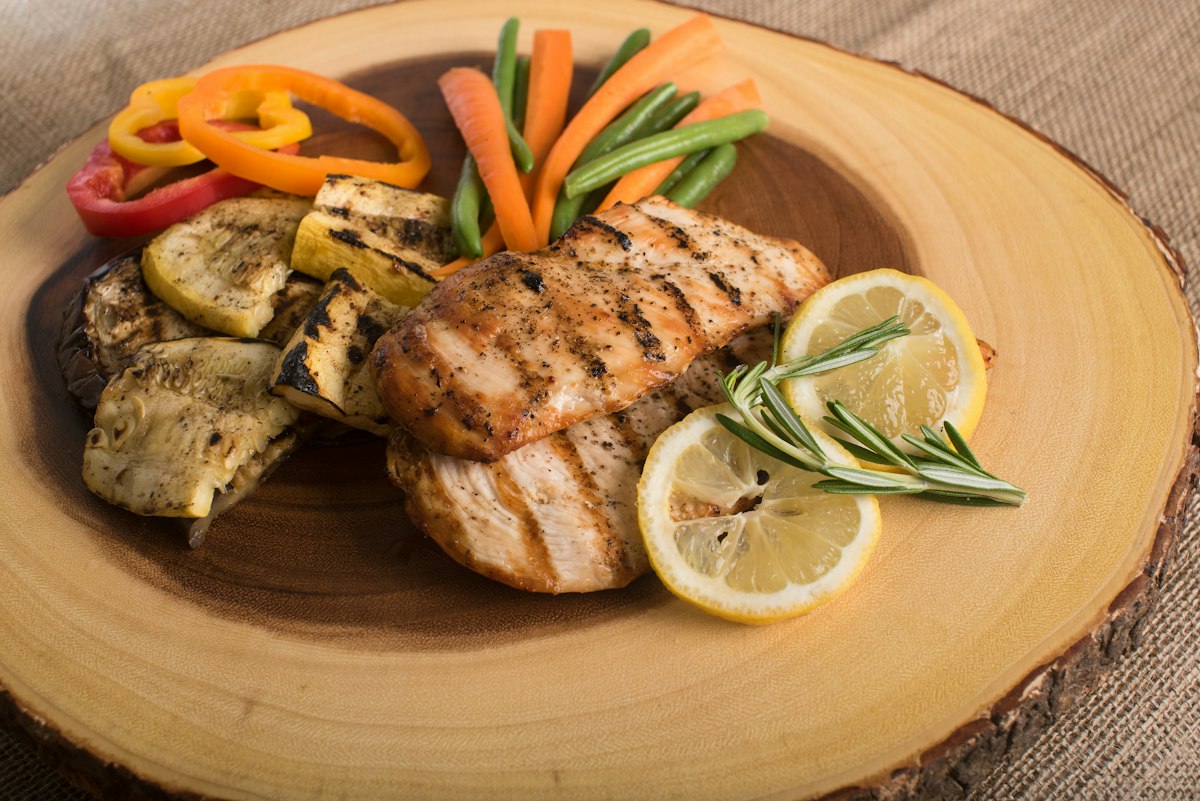
- Lunch: Chicken breast salad with mixed greens and vinaigrette (35g)
- Afternoon snack: A handful of almonds and a string cheese (12g)
- Dinner: Salmon fillet with roasted vegetables (38g)
Total: roughly 121 grams. No protein powder required, though a scoop in a smoothie makes it easier on busy days.
Notice there's protein at every meal and snack. Spreading intake across the day matters because your body can only use about 25-40 grams of protein per meal for muscle synthesis. Front-loading everything into dinner isn't as effective.
Common mistakes people make with protein
Thinking all protein sources are equal
A chicken breast and a handful of nuts both contain protein, but they're not equivalent. Animal proteins (meat, fish, eggs, dairy) contain all essential amino acids in proportions your body needs. Most plant proteins are missing or low in one or more essential amino acids.
This doesn't mean plant protein is useless. It means you need to combine sources: beans with rice, hummus with pita, tofu with quinoa. If you eat a varied plant-based diet, you can absolutely hit your protein needs. It just requires more planning.
Skipping protein at breakfast
A bagel with cream cheese has about 10 grams of protein. Three eggs have 21 grams. That difference at breakfast cascades through the entire day. People who eat a high-protein breakfast report less hunger and fewer cravings through the afternoon, according to a 2015 study in the Journal of the Academy of Nutrition and Dietetics.
Relying on protein bars
Most protein bars are candy bars with extra protein powder. Check the sugar content. If it has more than 8-10 grams of sugar, it's working against you. Better options: jerky, cottage cheese, hard-boiled eggs, or a simple shake with protein powder and water.
Worrying about kidney damage
This myth won't die. Multiple systematic reviews have confirmed that high protein intake does not harm kidney function in people with healthy kidneys. A 2018 meta-analysis in the Journal of Internal Medicine followed participants eating up to 1.5 g/lb for over a year with no adverse renal effects. If you have existing kidney disease, talk to your doctor. Everyone else can stop worrying.
How BodyBuddy makes protein tracking painless
Counting grams of protein is tedious. Nobody wants to weigh their chicken breast at a restaurant. That's why BodyBuddy takes a different approach.
Snap a photo of your meal and send it via iMessage. BodyBuddy's AI analyzes what's on your plate and gives you feedback — including whether you're hitting your protein targets. No manual logging. No scanning barcodes. Just a photo and a conversation.
Over time, BodyBuddy spots patterns. Maybe you consistently under-eat protein at lunch, or maybe your breakfasts are carb-heavy. These are the kinds of insights that a food scale can't give you. Try it for yourself and see what your protein intake actually looks like.
Frequently asked questions
Can you eat too much protein?
Technically, yes, but it's hard to do. Most people would need to eat over 2 g/lb consistently to potentially cause issues, and even then, the main side effect is digestive discomfort rather than anything dangerous. For weight loss purposes, staying in the 0.7-1.0 g/lb range is both safe and effective.
Do older adults need more or less protein?
More. After age 40, your body becomes less efficient at using protein for muscle maintenance (a process called anabolic resistance). Adults over 50 should aim for the higher end of the range — closer to 1.0 g/lb — to offset age-related muscle loss.
Does the timing of protein intake matter?
Somewhat. Spreading protein across 3-4 meals is better than eating it all at once. The post-workout "anabolic window" is real but much wider than gym bros claim — you have about 4-6 hours, not 30 minutes. Don't stress about chugging a shake in the locker room.
Is whey protein better than plant-based protein powder?
Whey has a more complete amino acid profile and higher leucine content (the amino acid most responsible for triggering muscle synthesis). But pea protein and soy protein are solid alternatives. If you go plant-based, look for blends that combine multiple sources.
Will more protein make me bulky?
No. Building significant muscle requires a calorie surplus, progressive resistance training, and years of consistent effort. Eating adequate protein during a calorie deficit helps you retain the muscle you already have. It doesn't magically create new bulk.
What to do this week
Forget trying to overhaul your entire diet at once. Do this instead:
- Track your protein intake for three days using a simple notes app or BodyBuddy. Don't change anything. Just observe.
- Identify the meal where you eat the least protein. For most people, it's breakfast or lunch.
- Add one high-protein swap to that meal. Greek yogurt instead of regular. Eggs instead of cereal. Chicken instead of a plain salad.
That's it. One swap, consistently applied, will move the needle more than any complicated meal plan you'll abandon by Thursday.
Want daily accountability?
BodyBuddy texts you every day.
Build a healthier relationship with food and movement — one text at a time.
Join 500+ usersstaying healthy