
Nutrition|March 28, 2026|Francis
Fiber and weight loss: the boring nutrient that actually works
A practical BodyBuddy guide to fiber and weight loss: the boring nutrient that actually works, with useful considerations and next steps.
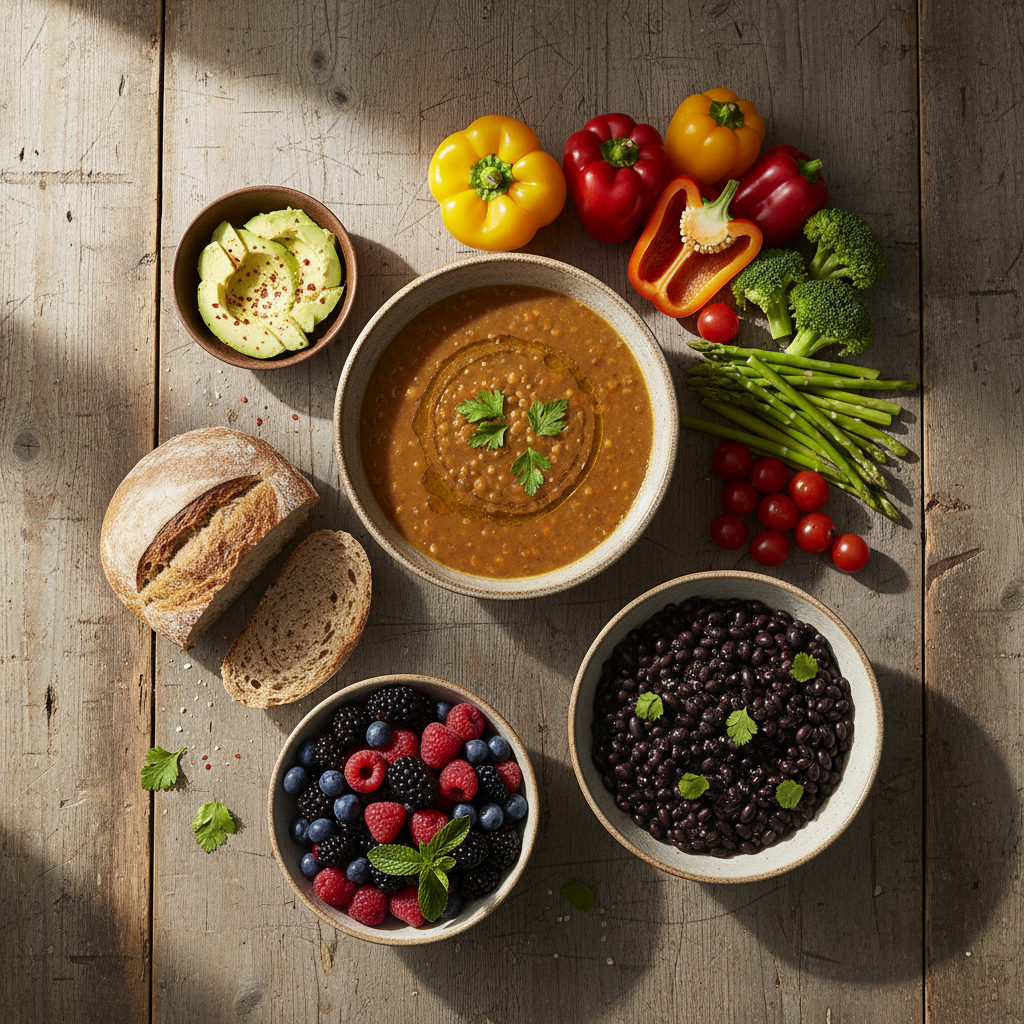
Most people chasing weight loss obsess over protein, carbs, and fat. They count macros, cut calories, try keto or paleo or whatever shows up on their feed this week. Meanwhile, fiber sits in the corner like the quiet kid in class who actually knows the answer.
Here's what's wild: fiber and weight loss have one of the strongest connections in nutrition research. People who eat more fiber tend to weigh less. They feel fuller. They eat fewer calories without really trying. And yet almost nobody talks about it the way they talk about protein shakes or intermittent fasting windows.
The average American eats about 15 grams of fiber per day. The recommendation is 25-30 grams. That gap matters more than you think.
What fiber actually does in your body
Fiber is the part of plant food your body can't digest. That sounds useless, but it's the opposite. Because your body can't break it down quickly, fiber slows everything down in ways that directly affect hunger and fat storage.
There are two types, and both matter:
- Soluble fiber dissolves in water and forms a gel-like substance in your gut. It slows digestion, which means sugar enters your bloodstream more gradually. You'll find it in oats, beans, apples, and chia seeds.
- Insoluble fiber doesn't dissolve. It adds bulk to your stool and helps things move through your digestive tract. Think whole wheat, nuts, cauliflower, and the skins of fruits.
When you eat a high-fiber meal, your stomach takes longer to empty. That means the "I'm full" signal sticks around longer. It's not a hack or a trick. It's just how your digestive system works when you give it the right material.
Fiber also feeds the bacteria in your gut. Those bacteria produce short-chain fatty acids that influence everything from inflammation to how your body stores fat. We covered the gut-weight connection in our gut health and weight loss article, but fiber is the single biggest lever you have over your microbiome.

Why fiber helps you lose weight (the research)
A 2015 study in the Annals of Internal Medicine found that simply adding more fiber to your diet -- without changing anything else -- led to meaningful weight loss. Participants who aimed for 30 grams of fiber daily lost nearly as much weight as people following a complex multi-component diet plan.
Read that again. Just eating more fiber. No food restrictions. No calorie counting. Nearly the same results.
Here's why that works:
- Fiber-rich foods are less calorie-dense. A cup of broccoli has 55 calories. A cup of pasta has 220. When you fill your plate with high-fiber vegetables, legumes, and whole grains, you eat more food by volume but fewer calories overall.
- Fiber slows glucose absorption. When blood sugar stays stable, you don't get the crash-and-crave cycle that sends you to the vending machine at 3pm. Insulin resistance makes this even more relevant -- fiber directly helps with insulin sensitivity.
- Fiber increases satiety hormones. Your gut releases peptide YY and GLP-1 in response to fiber. These hormones tell your brain you're satisfied. It's the same mechanism that makes GLP-1 medications like Ozempic work, just at a lower, natural level.
A meta-analysis published in The Lancet reviewed 185 studies and over 135 million person-years of data. The conclusion: people who ate 25-29 grams of fiber daily had a 15-30% lower risk of dying from any cause, plus lower rates of heart disease, type 2 diabetes, and colorectal cancer. Weight was part of that picture.
How much fiber you actually need
The general recommendation is 25 grams per day for women and 38 grams for men. But most nutrition researchers say anything above 30 grams is where the real benefits kick in.
If you're currently eating 15 grams (which is average), don't jump to 35 overnight. Your gut bacteria need time to adjust. Ramping up too fast leads to bloating, gas, and the kind of digestive discomfort that makes people quit before they see results.
A better approach:
- Figure out roughly where you are now. Track your food for a few days and look at the fiber column.
- Add 5 grams per week. That's one apple, a half cup of beans, or a serving of oatmeal.
- Drink more water as you increase fiber. Soluble fiber absorbs water, and you need enough fluid for everything to move smoothly.
- Spread your fiber intake across meals instead of dumping it all into one big salad.
Within 3-4 weeks, you should be eating 25-30+ grams without any digestive drama.
The best high-fiber foods for weight loss
Not all fiber sources are equal when your goal is losing weight. You want foods that are high in fiber per calorie -- maximum fullness, minimum caloric impact.
Here are the heavy hitters:
Legumes are the king of fiber. One cup of black beans has 15 grams of fiber and 227 calories. Lentils pack 16 grams per cup. Chickpeas, split peas, kidney beans -- they're all in the same ballpark. If you're not eating legumes regularly, this is the single biggest change you can make.
Berries are surprisingly fiber-dense for fruit. A cup of raspberries has 8 grams of fiber for only 64 calories. Blackberries are similar. Compare that to a banana, which has 3 grams for 105 calories.
Vegetables like broccoli, Brussels sprouts, artichokes, and sweet potatoes all deliver solid fiber with minimal calories. An artichoke has 10 grams of fiber. Brussels sprouts have 4 grams per cup.
Whole grains matter here too. Oats, quinoa, barley, and bulgur wheat all outperform refined grains by a wide margin. A cup of cooked barley has 6 grams of fiber. White rice has less than 1.
Seeds like chia (10 grams per ounce) and flaxseed (8 grams per ounce) are easy to sprinkle on yogurt, oatmeal, or smoothies.
One pattern you'll notice: these are all whole, minimally processed foods. That's not a coincidence. Processing strips fiber out. A whole apple has 4.4 grams of fiber. Apple juice has zero.
Common mistakes people make with fiber
Relying on fiber supplements instead of food. Metamucil and psyllium husk have their place, but they don't come with the vitamins, minerals, and phytonutrients that whole foods provide. A fiber supplement also won't fill your stomach the way a bowl of lentil soup does. Use supplements as a bridge, not a replacement.
Going too fast. I mentioned this already but it's worth repeating because it's the number one reason people abandon high-fiber eating. Start slow. Your gut microbiome literally needs to grow new bacterial populations to handle the increased fiber. That takes weeks, not days.
Ignoring water intake. Fiber without adequate water can actually make constipation worse. Aim for at least 8 glasses a day, more if you're active.
Thinking fiber bars and cereals are the answer. Many "high-fiber" packaged products are loaded with added sugar, artificial sweeteners, or other junk. A Fiber One bar has 9 grams of fiber, but also chicory root extract that causes bloating in a lot of people. Read labels, but prioritize real food.
A simple day of high-fiber eating
Here's what 30+ grams of fiber looks like in practice:
- Breakfast: Oatmeal with chia seeds and raspberries (10g fiber)
- Lunch: Black bean soup with a side of roasted broccoli (14g fiber)
- Snack: Apple with almond butter (5g fiber)
- Dinner: Grilled chicken with quinoa and roasted Brussels sprouts (8g fiber)
That's 37 grams of fiber without any supplements, weird powders, or foods you'd hate eating. It's also genuinely delicious food. Nobody is suffering here.
How BodyBuddy helps you eat more fiber
Tracking fiber consistently is where most people fall off. You know you should eat more of it, you have good intentions at the grocery store, and then Wednesday hits and you're ordering takeout.
BodyBuddy coaches you through iMessage with a companion app that tracks your progress and shows your Future You -- an AI-generated avatar of what you'll look like when you hit your goal. When you text a photo of your lunch, BodyBuddy's AI breaks down the nutrition including fiber content, so you can see whether you're hitting your target without manually logging every ingredient.
The daily check-ins through iMessage are where the real behavior change happens. Your AI coach nudges you toward higher-fiber choices, suggests swaps (brown rice instead of white, berries instead of crackers), and keeps you accountable to the goals you set. The companion app tracks your meals, runs daily missions, and lets you watch your Future You become clearer as you stay consistent.
At $29.99/month, it's a fraction of what a human nutrition coach costs -- and it's available every time you open your messages, not just during a scheduled appointment.
Frequently asked questions
Does fiber reduce belly fat specifically?
Fiber doesn't target belly fat directly -- no food does. But research from Wake Forest Baptist Medical Center found that for every 10-gram increase in daily soluble fiber, visceral belly fat decreased by 3.7% over five years. The mechanism is likely tied to reduced inflammation and improved insulin sensitivity, both of which affect where your body stores fat.
Can you eat too much fiber?
Technically yes, but it's hard to do with whole foods alone. Above 70 grams per day, some people experience nutrient absorption issues because fiber can bind to minerals like iron, zinc, and calcium. For most people trying to lose weight, the problem is eating too little, not too much.
Is fiber better than protein for weight loss?
They work differently and you need both. Protein preserves muscle mass and has a high thermic effect (your body burns calories digesting it). Fiber increases fullness and feeds your gut bacteria. The best weight loss approach includes adequate protein (0.7-1g per pound of body weight) and 25-30+ grams of fiber daily.
Do fiber supplements help with weight loss?
Some studies show modest benefits from glucomannan and psyllium husk supplements, but the effect is smaller than what you get from eating high-fiber whole foods. Whole foods bring additional nutrients and take up more physical space in your stomach, which increases satiety more than a capsule.
How long does it take for fiber to help with weight loss?
Most people notice reduced hunger within the first week of increasing fiber intake. Measurable weight changes typically show up within 2-4 weeks, assuming you're in a calorie deficit. The gut microbiome adaptations that improve metabolic health take about 4-6 weeks to fully develop.
The bottom line
Fiber isn't flashy. Nobody's making TikToks about lentils. But the research is clear: eating more fiber is one of the simplest, most effective things you can do for weight loss. It makes you fuller, stabilizes your blood sugar, feeds the good bacteria in your gut, and it comes packaged with the nutrients your body actually needs.
Start where you are. Add 5 grams this week. Swap one refined grain for a whole grain. Throw some beans into a soup. Pay attention to how you feel after a week of eating this way -- the reduced cravings and steady energy usually sell people on fiber more than any study ever could.
If you want help building these habits consistently, BodyBuddy tracks your fiber intake automatically and keeps you on track through daily iMessage coaching. Sometimes the hardest part isn't knowing what to eat -- it's remembering to do it day after day.
Put this into practice
Choose a useful next step
Related BodyBuddy guides
- How to meal prep for weight loss: a week-by-week system that actually works
- Meal prep for weight loss: a beginner's guide that actually sticks
- Meal prep for weight loss: a beginner's guide that actually saves time
- 17 high protein snacks for weight loss that actually taste good
- How to read nutrition labels for weight loss (a beginner's guide that actually helps)
Want daily accountability?
BodyBuddy texts you every day.
Build a healthier relationship with food and movement, one text at a time.