Fitness,Nutrition|April 14, 2026|Francis

Body recomposition: how to lose fat and build muscle at the same time

Body recomposition: how to lose fat and build muscle at the same time

Body recomposition: how to lose fat and build muscle at the same time
You step on the scale. Same number as last month. You've been eating well, going to the gym three times a week, doing everything "right." Nothing.
Most fitness advice treats the scale like the final verdict. But it can't tell the difference between five pounds of fat and five pounds of muscle. If you're losing one while gaining the other, the scale will happily report zero progress while your body changes underneath.
That process has a name: body recomposition. Losing fat and building muscle at the same time. It's why some people look completely different without dropping a single pound.
I used to think you had to pick one. Bulk or cut. Every gym bro on the internet said so. The science disagrees, at least for a lot of people.

What body recomposition actually is

Body recomposition means changing your ratio of fat to muscle without necessarily changing your total weight. You get leaner and more muscular simultaneously. The mirror changes. The scale doesn't.
A 2020 meta-analysis in Sports Medicine confirmed that simultaneous fat loss and muscle gain is real, and it works best in three groups: beginners with less than a year of structured training, people returning to exercise after a break, and people carrying higher body fat (roughly above 20% for men, 30% for women).
Most people starting a fitness journey fall into at least one of those categories. So the odds are in your favor.

Why the scale lies during recomposition

Muscle is denser than fat. A pound of muscle takes up about 20% less space. Someone who loses five pounds of fat and gains five pounds of muscle will weigh exactly the same but look noticeably different. Their jeans fit differently. The scale didn't get the memo.
This is why weighing yourself every morning can mess with your head during recomposition. The number barely moves, and your brain reads that as failure. It isn't.
Better ways to track progress:
  • How your clothes fit (looser in the waist, tighter in the thighs?)
  • Progress photos every two weeks, same lighting, same angle
  • Strength gains (if your squat went from 95 lbs to 135 lbs, something happened)
  • Waist measurements with a tape measure
The scale can be one data point. It just shouldn't be the only one.

The nutrition side: small deficit, high protein

This part trips people up because body recomposition eating is different from traditional dieting. You need enough of a calorie deficit to lose fat, but enough fuel to build muscle. Cut too aggressively and your body won't have the raw material for muscle growth.
What the research says:
A small calorie deficit of 200 to 300 calories below maintenance. Not the 800-calorie crash diet someone in your office tried in January. Small deficits preserve muscle. Severe ones destroy it.
High protein. Multiple studies land around 1.6 to 2.2 grams of protein per kilogram of body weight per day. For a 170-pound person, that's roughly 120 to 170 grams daily. This is probably more than you're eating now, and it's the single most important nutritional change you can make for recomposition.
Don't fear carbs. Carbohydrates fuel your workouts. Cut them too far and you'll feel flat in the gym, your lifts will stall, and recomposition gets harder.
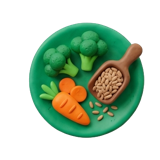
A practical plate looks like: a palm-sized portion of protein (chicken, fish, eggs, tofu), a fist of carbs (rice, potatoes, oats), a thumb of fat (olive oil, avocado), and vegetables filling the rest.
A balanced meal prep plate for body recomposition: high protein, moderate carbs, healthy fats

The training side: lift heavy things

I know some people don't want to hear this, but you cannot recompose your body with cardio alone. Running burns calories and that's useful, but it doesn't tell your muscles to grow.
Resistance training is the part you can't skip. Your muscles need a reason to get bigger, and progressively heavier weights give them that reason.
For beginners, this is enough:
  • Lift three to four days a week
  • Focus on compound movements (squats, deadlifts, bench press, rows, overhead press)
  • Add a little weight, an extra rep, or an extra set each week
  • Keep cardio moderate, two to three sessions of 20 to 30 minutes
You don't need a fancy program. A basic upper/lower split works for the first year. What matters is showing up and making your workouts slightly harder over time. If you lifted the same weight last month and you're lifting the same weight this month, your body has no reason to change.

How long this honestly takes

Most people see visible changes between weeks 8 and 12. Some notice things at week 4 to 6, especially if they're new to lifting.
Body recomposition is slower than pure weight loss because you're doing two things at once. The tradeoff is that the results actually last. Crash diets give you fast scale drops followed by rebounds. Recomposition gives you a body that stays.
In my experience, the trajectory usually looks something like this: The first month, you feel stronger and your clothes might fit a little different, but you don't look much different. Month two, other people start noticing before you do. Your lifts are going up. Maybe you lose a belt notch. By month three, progress photos tell a clear story. You look different even though you weigh about the same. And between months three and six is where it really adds up. Significant visual change, minimal scale movement.

Mistakes that stall recomposition

Eating too little is the biggest one. People slash calories to 1,200 a day, their body starts breaking down muscle for energy, and they end up with the "skinny fat" look they were trying to avoid.
Skipping protein comes in second. If you're eating 1,400 calories and only getting 50 grams of protein, you're not recomposing. You're just losing weight, and a chunk of it will be muscle.
Only doing cardio is the third. Cardio helps with health and calorie burn, but without weights, your body has no stimulus to build or maintain muscle tissue.
And then there's the scale obsession. If you weigh yourself daily and judge your entire program by that number, you'll probably quit body recomposition before it has a chance to work.
Sleep matters more than people think, too. Growth hormone releases during deep sleep. Cortisol spikes when you're sleep deprived. Both work against recomposition. Seven to nine hours isn't optional if you're serious about this.

How BodyBuddy helps with body recomposition

Recomposition is simple to understand but hard to stick with because it requires patience over weeks and months. Most people know what to eat. They know they should lift. The part where they fall off is doing it consistently long enough to see results.
BodyBuddy coaches you through iMessage with a companion app that shows your Future You, an AI-generated avatar of what you'll look like when you hit your goal. When the scale isn't cooperating (and during recomposition, it won't be), seeing where you're headed keeps you going.
The AI coach texts you daily. You can track meals by snapping a photo. It monitors your protein intake and adjusts based on what's actually working. There's no human on the other end. It's fully AI-powered, which means it's available at midnight when you're debating whether to raid the fridge, and it won't judge you if you do.
At $29.99/month, it costs less than a single session with most personal trainers. For body recomposition specifically, daily accountability matters more than any workout plan. The hard part was never knowing what to do.
Try BodyBuddy and see your Future You.

Frequently asked questions

Can you do body recomposition in a calorie deficit?

Yes. A small deficit (200-300 calories below maintenance) is actually the standard approach. The word "small" is doing a lot of work in that sentence. A large deficit makes muscle building almost impossible. Pair the deficit with high protein (1.6-2.2g per kg of body weight) and a progressive resistance training program.

How do I know if I'm recomposing or just losing weight?

Track more than your weight. If your strength is going up, your waist measurement is going down, and the scale is flat, you're recomposing. Progress photos every two weeks are the clearest signal.

Does body recomposition work for women?

Yes. The mechanisms are identical regardless of sex. Women may build muscle a bit more slowly due to lower testosterone levels, but many women see great recomposition results because they often have untapped potential for muscle growth when they start lifting for the first time.

Do I need supplements?

No supplements are required. Focus on whole foods, adequate protein, and progressive training. Creatine monohydrate (3-5g per day) has solid research behind it for muscle building, but it's optional. Protein powder can help if you're struggling to hit your protein target through food. Everything else is marketing.

How is body recomposition different from bulking and cutting?

Bulking and cutting are separate phases: you eat a surplus to gain muscle, then a deficit to lose fat. You toggle back and forth. Body recomposition does both at once with a small deficit and high protein. Bulking/cutting can produce faster results in each direction, but you gain some fat during bulks. Recomposition is slower but avoids the cycle entirely.

The actual bottom line

Body recomposition won't show up on the scale, and it won't happen in two weeks. But if you eat enough protein, lift progressively heavier weights, keep a small calorie deficit, and give it three months of real consistency, you will look different even if you weigh the same.
You're building something that lasts. Not a crash diet body that rebounds the moment you relax. An actual shift in what your body is made of.
Ditch the daily weigh-ins. Measure progress by the mirror, the tape measure, and how you feel. And if you want daily coaching to keep you accountable through the slow middle months, BodyBuddy was built for exactly this.

Want daily accountability?

BodyBuddy texts you every day.

Build a healthier relationship with food and movement — one text at a time.

Designed by anAccountability Coach