June 10, 2026
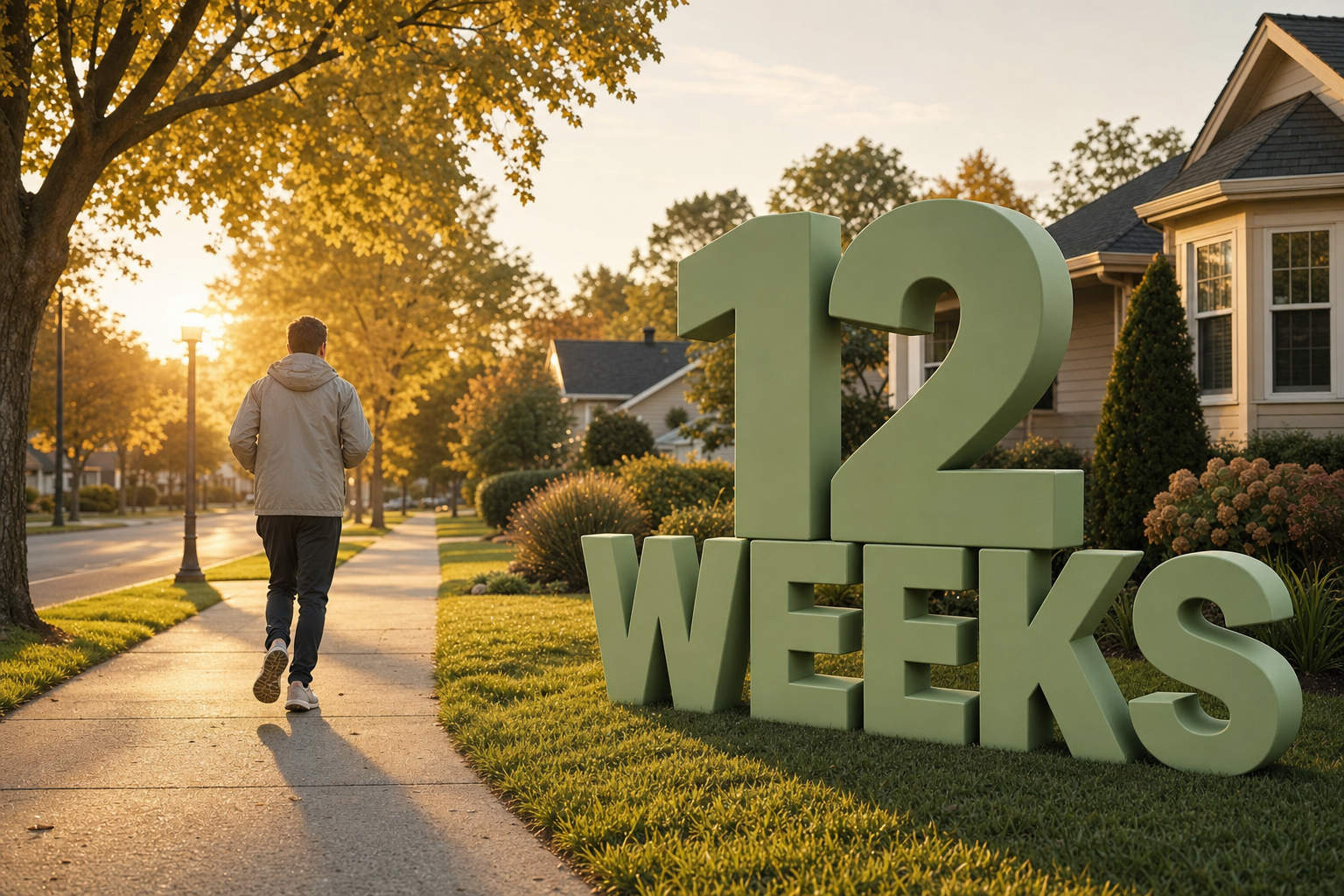
Best Walking Routine for Weight Loss: A 12-Week Plan

You're busy, your calendar is full, and most weight loss advice still acts like you have unlimited time, energy, and motivation. You try a strict meal plan, then miss two days and feel behind. You try hard workouts, then your schedule blows up and the routine disappears. A lot of professionals end up in that loop.
Walking breaks that pattern.
Not because it's magical, and not because it burns off every mistake. It works because it's repeatable. You can do it before work, after lunch, during calls, or in two shorter sessions when a full workout won't happen. Done with structure, walking becomes one of the most practical fat-loss tools you can use.
Walking Is the Underrated Tool for Lasting Weight Loss
The individuals I coach often don't fail because they picked the wrong exercise. They fail because the plan asked too much of real life. Gym commutes, changing clothes, showering, recovering from intense sessions, and finding a full hour all add friction. Walking removes a lot of that friction.
That matters more than people think. A walking plan you can repeat for months beats an aggressive routine you quit after two weeks.
Why walking deserves more respect
Walking gets dismissed as “better than nothing” exercise. That's a mistake. It's low impact, accessible, and easy to recover from, which means you can do it often enough to build momentum.
The catch is that walking alone usually produces modest weight loss unless you treat it like part of a bigger system. A meta-analysis of pedometer-based walking programs found average loss of about 0.05 kg per week, or roughly 1 lb every 10 weeks, with average total loss around 1 kg over longer programs in the PubMed review of walking interventions.
That's the honest starting point. Casual walking helps, but random steps and wishful thinking don't create dramatic change.
What actually makes walking effective
The smart approach is simple. Use walking as your base activity, make some of those walks brisk, progress the workload over time, and pair it with better eating habits. That combination is what turns walking from “nice to do” into a real weight-loss routine.
If you want a deeper look at where walking fits into the bigger picture, this guide on whether walking is enough to lose weight is worth reading.
Here's the shift I want you to make:
- Stop chasing intensity you can't sustain. The hardest workout isn't the best one if it wrecks consistency.
- Stop treating step count as the whole goal. Steps matter, but pace, structure, and weekly volume matter too.
- Stop expecting fast proof. Walking pays off through repetition, not heroics.
For busy professionals, the best walking routine for weight loss is usually the one that fits into a normal Tuesday. Not a perfect week. A normal one.
The Foundation of a Weight Loss Walking Plan
The biggest mistake people make is thinking about walking only in terms of steps. A better way to think about it is training stimulus. Your body responds to how often you walk, how long you walk, and how hard you walk.

The weekly target that matters
For general health, many guidelines start at 150 minutes per week of moderate activity. For weight loss, the target rises to at least 250 minutes per week, or about 50 minutes a day, 5 days a week, according to AARP's walking-for-weight-loss guidance.
That's the benchmark many individuals need to understand. If your current plan is a couple of easy strolls and a high daily step goal that you rarely hit, you probably don't need more guilt. You need a clearer weekly dose.
The three levers you can control
Frequency
How many days do you walk?
This is the habit lever. Busy people do better when walking shows up often enough to feel automatic. If you only walk on the weekends, you never really build rhythm.
Duration
How long does each walk last?
Longer sessions increase your weekly total. Shorter sessions are easier to schedule. Both work. What matters is whether your total adds up and whether you can repeat it.
Intensity
How hard are you walking?
Many routines often fall apart at this juncture. A pleasant stroll and a purposeful brisk walk are not the same training input. Brisk means you can talk, but you can't comfortably carry on a full conversation. That's the zone where walking starts acting like meaningful aerobic work rather than just movement.
What progressive overload looks like in walking
Progressive overload sounds technical, but it's simple. Over time, you ask your body to do a little more. That can mean:
- More time: adding minutes to a session
- More challenge: adding brisk intervals
- More terrain: using hills or incline
- More frequency: adding an extra walking day
The best walking routine for weight loss isn't built on random effort. It's built on small, repeatable increases that your schedule and joints can handle.
How to Structure Your Walks for Maximum Results
A good walking workout has shape. It doesn't start at full speed and end when you remember you're hungry. It has a beginning, a work phase, and a finish.

The three parts of an effective walk
Warm up
Start with 5 minutes at an easy pace. This gives your joints, calves, and hips time to loosen up and lets your heart rate rise gradually.
A lot of beginners skip this because walking feels simple. Then they go too fast too soon and wonder why their shins or feet complain.
Main set
Now, the important work happens.
A structured progression often uses a 5-minute warm-up, then intervals such as 1 minute brisk and 4 minutes easy, repeated several times, according to EatingWell's walking progression guide. That kind of gradual overload helps you build fitness without jumping straight into a pace you can't sustain.
There are two strong options here:
- Steady-state brisk walking if you want simplicity
- Interval walking if you want more punch in less time
Cool down
Finish with about 5 minutes of slower walking. Let your breathing settle. This makes the session easier to recover from and creates a cleaner transition back into work or family life.
When steady walking is enough
If you're newer, steady brisk walking is often the right choice. You don't need to complicate things. Just lock into a challenging but sustainable pace and hold it.
This can be especially useful if you're still learning what brisk really feels like.
For readers who are focused on steps and how that compares to workout time, this breakdown of how many steps you actually need for walking-based weight loss can help you connect the two.
A quick demonstration can help if you like to follow along visually:
Why intervals work so well for busy people
Intervals are efficient. They let you raise effort without having to hold a hard pace the entire time. They also make walks less boring.
A simple structure looks like this:
- Easy start: 5 minutes relaxed
- Work rounds: brisk segment, then easier recovery segment
- Easy finish: 5 minutes downshift
The exact ratio can change, but the principle stays the same. You alternate challenge with recovery. That gives you a stronger stimulus while keeping the workout manageable.
If you only have a limited window, interval walking is often the smartest version of the best walking routine for weight loss.
Your Progressive 12-Week Walking Plan for Weight Loss
This plan is built for real schedules. The goal isn't to impress yourself in week one. The goal is to build enough consistency and progression that you're still going in week twelve.
Use the Starter track if you're coming from inconsistent activity or you haven't done structured cardio in a while. Use the Challenger track if walking is already part of your week and you can handle more volume.
12-Week Progressive Walking Plan
Week | Starter Plan (3-4x/week) | Challenger Plan (4-5x/week) |
1 | 3 walks. 20 minutes total: easy pace, include 5-minute warm-up and easy finish. | 4 walks. 25 to 30 minutes total: brisk but controlled on main portion. |
2 | 3 walks. 25 minutes total: 5-minute warm-up, short brisk sections, easy finish. | 4 walks. 30 minutes total: one walk includes light pace changes. |
3 | 4 walks. 25 minutes total: 5-minute warm-up, repeat 1 minute brisk and 4 minutes easy, finish easy. | 4 walks. 30 to 35 minutes total: two walks at brisk steady pace. |
4 | 4 walks. 30 minutes total: same structure, slightly more brisk repeats. | 5 walks. 30 to 35 minutes total: one interval session, others steady. |
5 | 4 walks. 30 minutes total: two steady brisk, two interval-based. | 5 walks. 35 minutes total: two interval sessions, others brisk steady. |
6 | 4 walks. 30 to 35 minutes total: add one longer steady walk. | 5 walks. 35 to 40 minutes total: one longer walk, two brisk sessions. |
7 | 4 walks. 35 minutes total: brisk pace more consistent through main set. | 5 walks. 40 minutes total: interval day plus one hill or incline walk. |
8 | 4 walks. 35 to 40 minutes total: one longer walk, one interval walk. | 5 walks. 40 to 45 minutes total: keep one recovery-style easy walk. |
9 | 4 walks. 40 minutes total: alternate steady and interval sessions. | 5 walks. 45 minutes total: two interval-focused walks, others steady. |
10 | 4 walks. 40 to 45 minutes total: aim for stronger brisk segments. | 5 walks. 45 to 50 minutes total: one longer walk approaches weekly peak volume. |
11 | 4 walks. 45 minutes total: one long brisk walk, one interval walk, others moderate. | 5 walks. 50 minutes total on most sessions, with one easier day. |
12 | 4 walks. 45 to 50 minutes total: choose a mix you can sustain beyond the plan. | 5 walks. Around 50 minutes total on key sessions, with varied intensity across the week. |
How to make the plan work
Don't read the table like a rigid contract. Read it like a progression.
If a week feels manageable, move on. If your feet, calves, or schedule are protesting, repeat the same week before adding more. That's not failure. That's intelligent training.
A few coaching rules help:
- Protect the walking days first. Put them on your calendar before the week fills up.
- Keep one easier session. Not every walk should feel like a test.
- Use intervals strategically. They're great, but too much intensity can make consistency harder.
- Think in weekly totals. One missed day doesn't ruin the plan if the rest of the week stays intact.
What progress should feel like
By the end of the plan, you should notice that brisk walking feels more normal. Your breathing should recover faster. The same route should feel easier, or you should cover it at a stronger pace.
That's the point. The best walking routine for weight loss should improve body composition and fitness at the same time. If your routine only makes you tired and sore, it's not the right routine.
Beyond the Walk Nutrition Recovery and Tracking
Walking helps create the opportunity for weight loss. Your eating and recovery habits decide whether that opportunity turns into results.
That's the part many guides skip. They tell you to walk more, but they don't tell you how to balance walking with food intake, sleep, stress, and measurement. If you miss that trade-off, you can do a lot of walking and still feel stuck.

Diet does not become optional because you walk
Mayo Clinic's guidance is clear. Weight loss depends on how long and intensely you walk and what your diet is like, and combining activity with calorie reduction works better than exercise alone in Mayo Clinic's walking and weight-loss FAQ.
That doesn't mean you need a complicated diet. It means you need enough nutritional structure that your walking effort isn't erased by overeating.
A practical approach looks like this:
- Build meals around protein and fiber. They usually make walking-based fat loss easier because they help with fullness.
- Watch “earned it” eating. A solid walk can trigger the feeling that you deserve a large reward meal.
- Use post-meal walks when possible. They fit busy schedules well and help reinforce an active routine.
- Create a modest deficit, not a punishing one. If you want help doing that without turning your life into math homework, this guide on how to calculate a calorie deficit without overcomplicating it is useful.
For some people, cravings are the main sticking point. If that's your issue, this overview of best supplements for reducing cravings can help you think through options alongside food habits, not instead of them.
Recovery keeps the plan alive
Busy professionals often try to solve everything with more effort. That backfires.
If your feet ache, your sleep is poor, and your stress is high, your adherence usually drops before your fitness does. Recovery is what keeps the plan repeatable.
Focus on three basics:
- Sleep enough to recover well. Poor sleep makes appetite and routine harder to manage.
- Keep easy days easy. Not every walk needs to push.
- Pay attention to nagging pain early. A small issue is easier to fix than a forced layoff.
Track what matters
The scale matters, but it's incomplete. Walking-based weight loss often shows up first in stamina, consistency, and how your clothes fit.
A simple scorecard works better than obsessive tracking:
- Your walking streak or weekly completion
- How your energy feels across the day
- How your clothes fit around the waist
- Your mile time at weeks 0, 4, 8, and 12
If you want extra accountability, use a simple notes app, a spreadsheet, or a tool like BodyBuddy, which provides daily text check-ins for habits like meals, workouts, and sleep. The tool matters less than the feedback loop. You need a way to see whether you're following the plan.
Making Your Walking Routine Stick in a Busy Life
Adherence is the whole game. A routine doesn't need to look perfect. It needs to survive meetings, travel, fatigue, bad weather, and low-motivation days.
Short, frequent walks can help with that. Guidance summarized by Men's Health notes that even 10-minute brisk walks daily provide measurable benefits, and strategies like walking during calls or after dinner help you build activity without needing one long workout block in Men's Health on walking for weight loss.
Build your routine around friction, not motivation
Individuals often make the same planning mistake. They ask, “What's the ideal plan?” A better question is, “What plan still happens on a crowded day?”
Try these anchors:
- After your last meeting: go straight into a walk before you sit down again
- During phone calls: turn audio-only calls into walking time when possible
- After dinner: make the walk part of closing out the day
- Before your first email: get movement done before the day starts pulling at you
This is habit stacking in plain language. Tie the walk to something that already happens.
Use smaller blocks without guilt
You do not need one perfect workout window. If your schedule won't allow a longer walk, split it up.
A practical way to view this:
Situation | Better choice |
Packed workday | Two shorter walks |
Travel day | A brisk airport or hotel-area walk |
Low-energy day | An easier walk instead of skipping |
Rain or heat | Treadmill or indoor loop |
That flexibility is what keeps your routine from becoming fragile.
Drop the all-or-nothing mindset
This mindset wrecks more progress than any dessert ever will.
People tell themselves that if they can't do the full session, it doesn't count. Then they do nothing. But a shorter walk keeps the habit alive, improves your day, and makes the next workout more likely.
That matters if you eventually want to do more than walk, too. Once your routine is stable, some people naturally want to add jogging. If that's you, a beginner-friendly guide to a running journey with Swift Running can be a helpful next step.
Keep the standard simple
Your walking routine is working if:
- You're doing it consistently
- You're progressing gradually
- You're keeping diet aligned with the goal
- You're not burning yourself out
That's it.
The best walking routine for weight loss isn't the longest route, the hardest interval session, or the highest step day you've ever had. It's the one you can carry through a busy month, not just a motivated Monday.
If you want better results from walking, build the routine around your real schedule, keep the pace purposeful, and track whether your eating supports the goal. Consistency is what turns walking into fat loss.
Want daily accountability?
BodyBuddy texts you every day.
Build a healthier relationship with food and movement — one text at a time.
Join 500+ usersstaying healthy