
Nutrition|March 14, 2026|Francis
Is counting calories effective? What the research actually says
Is counting calories effective? What the research actually says
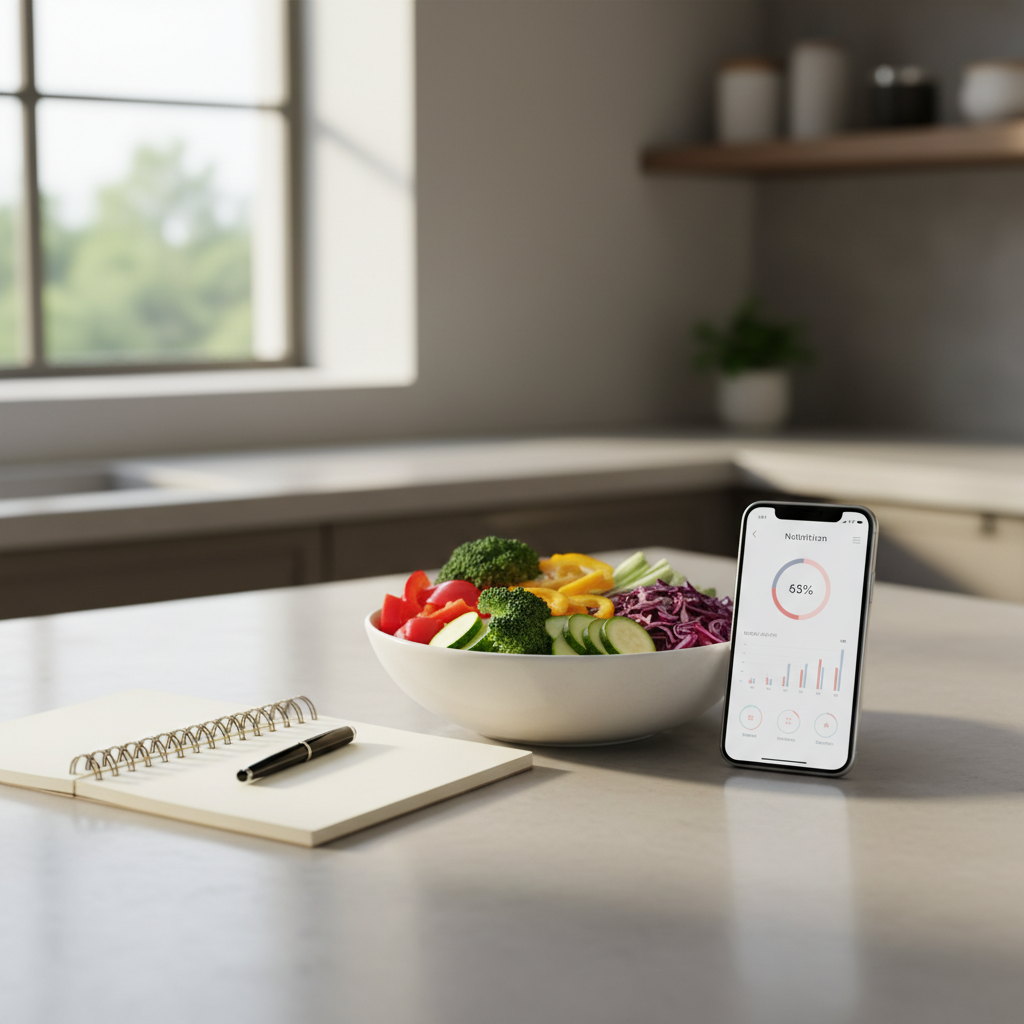
I've counted calories on and off for about ten years. Some stretches went well. Others made me miserable, anxious about restaurant meals, and weirdly competitive with myself over hitting an arbitrary number. So when someone asks me whether calorie counting works, my honest answer is: it depends on who you are, what your goals are, and how you do it.
Let's look at what the research says, because the answer is more nuanced than either the "calories in, calories out" crowd or the "calories don't matter" crowd would have you believe.
The basic science is solid
The first law of thermodynamics applies to human bodies. If you consume less energy than you expend, you will lose weight. This isn't controversial among researchers. Metabolic ward studies, where participants live in controlled environments and every bite is measured, have confirmed this repeatedly.
A landmark 2009 study by Sacks et al., published in the New England Journal of Medicine, randomly assigned 811 overweight adults to one of four diets with different macronutrient compositions. After two years, the total calorie deficit predicted weight loss regardless of whether participants ate more fat, more protein, or more carbs. The macro split didn't matter much. The calorie deficit did.
Kevin Hall's metabolic ward research at the NIH has further demonstrated that when calories are tightly controlled, the body responds predictably. His 2015 Cell Metabolism study showed that cutting fat calories and cutting carb calories produced similar body fat loss when total calories were matched.
So the science behind calorie counting is real. But science under lab conditions and life in the real world are different things.
When calorie counting works
Calorie counting works best in a few specific scenarios.
Short-term awareness building. Most people have no idea how many calories are in a tablespoon of olive oil (about 120) or a handful of almonds (around 170). Tracking for even two or three weeks can recalibrate your sense of portion sizes. A 2019 study in Obesity found that the simple act of self-monitoring food intake was the strongest predictor of weight loss, more than exercise or any particular diet composition.
People who like data and structure. If you're the type who tracks your runs, your sleep, your budget, calorie counting can slot into that mindset naturally. It gives you a clear, measurable target.
Breaking a plateau. When someone has been losing weight and stalls out, a brief period of tracking can reveal portion creep or snacking patterns that crept in without notice.
When calorie counting backfires
Here's where it gets complicated.
The numbers are less precise than they look. FDA regulations allow nutrition labels to be off by up to 20%. A 2013 study in the Journal of the American Dietetic Association tested frozen meals and found calorie counts were understated by an average of 8%. Restaurant meals were off by even more. So that "500 calorie" lunch might actually be 600. When your target deficit is 500 calories per day, a consistent 100-calorie error matters.
It can feed obsessive patterns. Research published in Eating Behaviors (2017) found that among college students, calorie tracking via apps was associated with higher eating disorder symptomatology. This doesn't mean tracking caused the disorders, but it can amplify tendencies that are already there. If you find yourself unable to eat a meal without logging it first, or feeling genuine anxiety about untracked food, that's a warning sign.
Willpower fatigue is real. Decision fatigue compounds over time. A 2018 review in Appetite noted that the cognitive burden of constant food monitoring can itself become a barrier to sustained weight management. People burn out. And when they stop tracking cold turkey, they often don't have the intuitive eating skills to maintain their progress.
It ignores food quality. You can hit 1,800 calories a day with fast food. You can also hit it with whole foods, vegetables, and lean protein. Your body will respond very differently to those two approaches, even if the calorie count is identical. Satiety hormones, gut microbiome effects, and nutrient density all matter in ways that a simple number can't capture.

Alternatives worth considering
Strict calorie counting isn't the only path to managing your weight. Several approaches have research backing them.
Mindful eating. A 2017 meta-analysis in Psychosomatic Medicine reviewed 12 randomized controlled trials and found that mindfulness-based interventions reduced binge eating and emotional eating. The idea is simple: pay attention to hunger cues, eat slowly, and stop when you're satisfied. It sounds basic, but most of us eat on autopilot.
Hand-based portion control. Precision Nutrition popularized this approach: a palm of protein, a fist of vegetables, a cupped hand of carbs, a thumb of fat. It's imprecise by design, but it's also sustainable. You don't need an app at the dinner table.
Habit tracking instead of calorie tracking. Rather than counting every gram, track behaviors: Did I eat protein at breakfast? Did I have vegetables at lunch? Did I stop eating when I was 80% full? These process-oriented goals often produce better long-term results than outcome-oriented calorie targets.
Photo-based food logging. This is interesting because it provides accountability and a record without requiring you to weigh and measure everything. A 2015 International Journal of Behavioral Nutrition and Physical Activity study found that photo-based food diaries improved dietary choices, partly because the act of photographing your meal makes you more conscious of what you're eating.
A smarter approach to tracking
I think the best approach borrows from calorie counting without becoming enslaved to it. You want the awareness benefits without the obsessive downsides.
That's actually the philosophy behind how BodyBuddy works. Instead of making you log every gram in a database, you text a photo of your meal or describe it in a quick iMessage. The AI coach processes what you ate and keeps a running picture of your nutrition, but it doesn't bombard you with numbers or shame you for going over some arbitrary limit.
BodyBuddy coaches you through iMessage with a companion app that tracks your progress and shows your Future You, an AI-generated avatar of what you'll look like when you hit your goal. The daily check-ins and accountability nudges happen in your text messages, which means you don't have to remember to open a separate tracking app. And because the AI adapts to your patterns, it can tell the difference between someone who benefits from seeing specific numbers and someone who does better with general guidance like "you're low on protein today."
The companion iOS app lets you review your tracked meals and nutrition data, complete daily missions for gamification, and watch your Future You avatar become clearer as you stay consistent. It's $29.99 per month, and there's no free tier, which I think is actually a feature: you're more likely to stick with something you're invested in.
Frequently asked questions
Is counting calories necessary to lose weight?
No. Calorie counting is one tool among many. You can lose weight through portion control, mindful eating, or structured meal plans without ever counting a single calorie. What matters is maintaining a consistent energy deficit, however you achieve that. Some people find tracking helpful for building initial awareness, but it's not a requirement.
How accurate is calorie counting really?
Less accurate than most people assume. Between label inaccuracies (up to 20% variance allowed by the FDA), individual differences in absorption, and the thermic effect of different foods, your actual calorie intake could differ from your logged intake by 200-300 calories on any given day. It's a useful approximation, not an exact measurement.
Can calorie counting cause eating disorders?
Calorie counting doesn't cause eating disorders on its own, but it can trigger or worsen disordered eating patterns in people who are predisposed. If tracking makes you feel anxious, guilty, or unable to eat unlogged food, it's worth stepping back and trying a less rigid approach. Talk to a healthcare provider if these patterns persist.
What is the best app for tracking calories?
It depends on your personality. If you want granular control with barcode scanning, MyFitnessPal and Cronometer are popular choices. If you want something lighter that doesn't require manual logging, BodyBuddy lets you track meals through iMessage by sending photos or text descriptions, with AI coaching built in. The best app is the one you'll actually use consistently.
How long should you count calories?
Most nutrition researchers suggest tracking for two to four weeks to build awareness, then reassessing. Long-term tracking works for some people but leads to burnout for many others. A good middle ground is tracking periodically, maybe one week per month, to stay calibrated without making it a daily obligation.
The bottom line
Is counting calories effective? Yes, as a short-term tool for building awareness and breaking through plateaus. The underlying science of energy balance is solid. But as a permanent lifestyle strategy, strict calorie counting fails most people because of accuracy issues, cognitive burden, and the risk of developing an unhealthy relationship with food.
The better question might be: what's the minimum amount of tracking that keeps you moving toward your goals without taking over your life? For some people, that's a detailed food diary. For others, it's a quick photo of each meal. For others still, it's just paying attention to portion sizes and hunger cues.
Find the approach that you can sustain for years, not weeks. That's what actually works.
Want daily accountability?
BodyBuddy texts you every day.
Build a healthier relationship with food and movement — one text at a time.
Join 500+ usersstaying healthy